
Invisible to the system: Problems faced by Serbs with residence in Kosovo in obtaining Kosovo documents
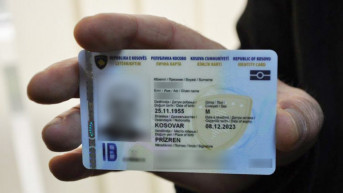
Citizens who possess only documents issued by the Republic of Serbia bearing the names of cities in Kosovo find themselves in an increasingly difficult position. These individuals, often born in central Serbia but residing in Kosovo due to marriage, education, or property, have for years attempted to obtain Kosovo documents, only to encounter administrative barriers, inconsistent application of laws, and refusals by the competent authorities to recognize Serbian birth certificates.
Despite a decision by Kosovo’s Ministry of Internal Affairs in November last year that enabled the issuance of documents based on Serbian documentation, many remain "invisible" to the system—without citizenship or identity cards, unable to move freely, gain employment, or access assistance.
The deadline for obtaining Kosovo documents based on those issued by Serbian institutions for cities in Kosovo expired on April 30.
Many citizens, predominantly from the Serbian community, were unable to obtain Kosovo documents because they only had birth certificates issued by Serbian authorities, which are not recognized by Kosovo institutions. However, the Ministry of Internal Affairs of Kosovo issued a decision in November allowing registration in the Kosovo Central Civil Status Register and the issuance of documents based on those Serbian certificates. After receiving these documents, applicants must apply for citizenship—a long and often arduous process.
If citizenship seekers manage to gather the required documents, typically for family reunification, they apply for a temporary residence permit, known as a “foreigner’s ID card.” The period between obtaining this temporary document and acquiring citizenship and a national ID card can take up to five years, entailing a great deal of bureaucracy—or, alternatively, deportation.
Discrepancies in Legal Application?
Aleksandar Rapajic, Program Director at the NGO ACDC, notes that despite the three-month decree through which a number of people did obtain Kosovo documents, several issues remain unresolved.
“The first and most significant issue is obtaining documents through marriage, for persons from central Serbia who married here in previous years, have lived here for a long time, had children, and own property. The second issue concerns youth born immediately after the war—many of them were born in central Serbia due to the circumstances here, and they’ve now turned 18, yet their legal status remains unresolved. They still have to go through the process for foreigners, which is quite problematic for people who have lived here since birth,” he said.
However, Rapajic emphasizes that serious challenges persist for many born in central Serbia who moved to Kosovo after marrying and registered their residence in Serb-majority areas. Although they possess Serbian-issued documents with those city names, Kosovo institutions do not recognize them, creating major difficulties—especially with mobility.
“This is a serious problem, particularly now that Kosovo institutions increasingly refuse to accept documents with city names from Kosovo’s territory. It’s becoming harder to cross borders or complete paperwork. We already know it’s impossible to travel via Pristina airport or to cross into North Macedonia. This is a growing issue affecting a significant number of citizens and must be addressed,” he stressed.
He recalls that a document exists in Pristina clearly outlining the process for obtaining Kosovo documents. Yet, there is one provision frequently used by northern offices: the final clause, which states “or any other document deemed necessary by the office.”
“This is interpreted quite broadly, and we see that in the four northern municipalities, as well as in Serbian areas in the south, offices demand far more documentation than elsewhere in Kosovo. For children born outside Kosovo, a birth certificate should suffice—for the Serbian community, this is often from Belgrade or Kragujevac. But for those born in hospitals in Serbia, additional documents are required: discharge papers from the hospital, proof of vaccination. For hospitals in North Macedonia, such requirements don’t apply. That’s the discrepancy in the application of laws,” Rapajic concludes.
Stefan Virijevic was born in Novi Pazar but has spent his entire life in Leposavic, where he also completed his education. As he further notes, he is unmarried, so obtaining documents through marriage is not an option.
He recounts that when he tried to inquire and apply for Kosovo documents, officials in the municipality of Leposavic told him it was not possible because he was born in Novi Pazar, and that both of his parents needed to have Kosovo ID cards.
“After my parents obtained ID cards, officials then told me there was no chance I could get Kosovo documents because I was born in Novi Pazar, and that I would have to deregister from there. Each time I went, they kept asking for more papers—it became increasingly difficult to obtain the documents,” he explained.
Although he gathered the necessary documents, his request was rejected. He tried again with additional documents as required, but said they were ultimately unreachable.
“I tried both in the municipality and in the south. I even asked whether there was a temporary solution for a driver’s license, and they responded negatively, adding that I was not allowed to move around without documents, which made everything much harder,” he stated.
Virijevic believes that life without personal documents is like not existing in the system, as everything becomes more difficult—from finding a job to simply moving around.
“I do feel somewhat endangered, and there are many cases like mine—young couples and children without documents. It’s truly difficult. Most people see the problem in you, but we are the ones with a real need for documentation, just to move around and have a more manageable life,” this young man says.
After multiple unsuccessful attempts to apply, he adds that survival is becoming increasingly difficult.
“I thought that over time it would get easier—at least temporarily—for those of us who cannot obtain these documents, but if the silence continues and no one takes action, our only remaining option will be to move to Serbia and live here using those documents, and fight as best we can. That’s the last resort,” he states.
Danica Jevtic, a retiree from Leposavic who moved to central Serbia due to marriage and returned to her hometown eight years ago, is unable to obtain a Kosovo ID card. She explained that even after submitting additional documentation, officials told her they could not guarantee her application would be processed “because she had lived in Serbia.”
“I’ve applied many times, made a lot of sacrifices, and I wasn’t successful. They told me not to even try anymore because I can’t get an ID card,” she says.
Due to the lack of basic identification, the problems she faces are numerous. She emphasized that she had been repeatedly denied when applying for property-related assistance.
“I even went to see the president here (Lulzim Hetemi), spoke with him, and he said, ‘it will happen.’ Another official told me it would be resolved by April. A month ago, I went to the ID office, where I was told, ‘It’s not possible—it’s impossible,’” she continues, noting that her daughters had received citizenship and documents in foreign countries in just a few years.
What Happens After Recognition of Marriage?
Once a marriage certificate issued by the Republic of Serbia is verified, or if the marriage is registered under Kosovo’s system, spouses without Kosovo documentation who wish to apply are given a document by the municipal office where they reside. This document contains minimal instructions about which documents to gather and provides the address of the Department for Citizenship, Asylum and Migration in Pristina.
As observed, one of the required documents is the passport of the applicant’s country of citizenship. If the applicant holds a Serbian passport issued by the Coordinated Administration (with residence in a Kosovo town), their application will be automatically rejected.
From the documentation, according to these instructions, it is necessary to provide a certificate issued by a court of the country of which the applicant is a citizen, confirming that no legal proceedings are being conducted against them, a marriage certificate, the Kosovo identification document of the spouse, a bank statement proving that the spouse has sufficient means of subsistence, proof of adequate housing, and health insurance.
The collected documentation must be submitted to the mentioned department, which will then conduct a security check of the applicant. Based on the outcome, the department will decide whether the applicant is granted a “foreigner’s ID card.”
The period between receiving this temporary document and obtaining citizenship—along with a valid Kosovo ID card—typically lasts between three and five years. During this time, the applicant is required to report to the department annually to renew the temporary document and resubmit the full set of documentation.


0 comments