
Moore: It is in everyone’s interest for Kosovo to break the political deadlock; New elections would change nothing
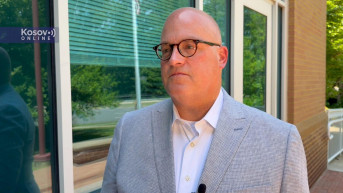
Former U.S. ambassador and veteran diplomat Jonathan Moore told Kosovo Online that Kosovo today enjoys no greater political stability than it did a few months or a year ago, and that it is in everyone’s interest to establish functional institutions. Another election cycle, he believes, would change nothing.
Moore also said that both the Self-Determination Movement (Vetëvendosje) and the opposition parties must make a far more serious effort to deliver results for Kosovo and work together. He noted that there are capable people in politics, citing Pristina Mayor Përparim Rama as an example. The American diplomat also pointed out that officials in the current administration in Washington have made it very clear that some form of reconciliation and dialogue between Belgrade and Pristina is essential, stressing that this message is directed at both sides.
How does Washington view the final results of Kosovo’s June 7 elections? Do they provide a sufficient basis for political stability, or do they point to another period of difficult coalition negotiations?
I regret that Kosovo has no greater political stability after these elections than it had before them. The country now finds itself in a virtually permanent pre-election campaign. Citizens do not see results. The governing coalition has achieved nothing. Unfortunately, the opposition parties are also failing to cooperate with one another. The low voter turnout is clear evidence of that—less than 40 percent of citizens cast their ballots. So, no, Kosovo today is no more politically stable than it was a few months or a year ago.
If it proves impossible to form a stable governing coalition, would the United States prefer to support a broad but potentially fragile coalition government, or does it believe that new elections would be a better solution for Kosovo’s long-term political stability?
Many people say—and I agree with them—that another election cycle would change nothing. The political scene is dominated by established politicians. Some are better than others. I have followed political developments in Kosovo since the early 1990s. I learned from Fehmi Agani, Edita Tahiri, and Ibrahim Rugova. There are capable people in politics. I would point, for example, to the Mayor of Pristina. Rama is a very intelligent man, but he is only the mayor of one city, even if it is the capital.
Both the Self-Determination Movement and the opposition parties must make a much more serious effort to achieve results for Kosovo, cooperate with one another, and stop saying, “I have to be Prime Minister,” or “He cannot be Prime Minister,” or “We cannot include the Serbian List.” If you want to exercise real political power and have received enough votes to have the opportunity to be part of the government, then you have to become more serious.
How important is the swift establishment of new institutions in Kosovo for the United States? Does Washington intend to encourage political leaders to reach a compromise and avoid another prolonged institutional deadlock?
It is clear that it is in everyone’s interest, including the citizens of Kosovo, to break this political deadlock and establish functional institutions—institutions that respect the rule of law and deliver results, as well as Kosovo Security Force that will be more accountable and better funded. If Kosovo ever wants to become part of NATO, it must put its foreign policy, national security policy, and, of course, its defence budget in order. None of these areas will see progress until a functional government is formed.
Once a new government is established, what will be Washington’s immediate priorities regarding Kosovo? Will the focus be on reviving the dialogue with Belgrade, strengthening the rule of law, combating corruption, or restoring trust in U.S.–Kosovo relations?
The United States has been very clear. The people currently serving in the administration—I am no longer part of the government—have made it very clear that some form of reconciliation and dialogue between Belgrade and Pristina is essential. That message is directed at both sides.
In Belgrade, the governing authorities are clearly established, and presidential elections are scheduled for next year. Who knows what will happen in Kosovo? Who will be the next president? Will there be enough votes in parliament to elect a new president? And if there are not, we may once again see a fourth, fifth or sixth election cycle within a very short period.
I would not say that Washington devotes too much attention to that. There are far greater crises in the world. At the end of the day, it is up to Kosovo’s politicians to convince the people of Kosovo, earn their support at the ballot box, and do their job.


comments