
A perfect law in an imperfect society: Can discrimination in Kosovo be eradicated?
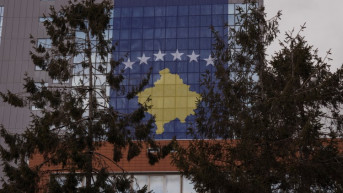
Well-drafted laws on paper become perfect if implemented in practice; otherwise, they mean nothing. This, according to experts speaking to Kosovo Online, will also be the case with the Law on Protection Against Discrimination, announced by Kosovo Prime Minister Albin Kurti. According to Kurti, the law will be drafted in accordance with the human rights standards of the Council of Europe.
Written by Milena Miladinovic
Participating in the Western Balkans Summit Against Racial Discrimination, "Strength in Diversity," on November 26 in Pristina, Kurti stated that the Kosovo government has launched initiatives to ease life for minority communities in Kosovo, including improving their employment opportunities and access to public administration.
"For an open and inclusive society that leaves no one behind, we have embraced diversity above all. Not just through words and summits, but also through actions and the promotion of the strength in diversity, we commit ourselves daily to being closer to each other, for everyone, together," said Kurti.
However, just days after this message of inclusivity, another example of discrimination in Kosovo emerged. During a house search, the Jahirovic family from North Mitrovica reported experiencing racist and sexist comments from Kosovo Police officers.
"They told me they’d turn me into a sausage, that they hadn’t slept for two days and were ready to do anything, that I was a bad person, a Gypsy, and that I didn’t belong in the north. They asked me who my friends were and why I associated with Serbs," Gzim Jahirovic told Kosovo Online.
His wife also faced discriminatory behavior, with officers reportedly making some of the worst insults imaginable.
"They began attacking her and saying all sorts of things—how they would strip and rape her, and do much worse. They said they’d change her name and surname and that it was a big mistake for her to marry me. That’s what the police told her," added Jahirovic.
Deficiencies in the Current Anti-Discrimination Law
Kosovo has had a Law on Protection Against Discrimination since 2015. It establishes a general framework to prevent and combat discrimination based on nationality, community affiliation, race, ethnicity, color, gender, gender identity, sexual orientation, language, religion, political affiliation, social or personal status, age, marital status, pregnancy, disability, and other factors, aiming to uphold the principle of equal treatment.
Violations of this law are subject to fines, with the collected funds going into Kosovo’s budget.
However, the Ombudsman’s Office highlighted certain deficiencies in the existing law, particularly in defining mechanisms for imposing penalties for violations.
"Kosovo already has an Anti-Discrimination Law in force, but it has certain shortcomings, especially in defining mechanisms for imposing penalties. The law is currently under revision, with efforts to make responsibilities for issuing penalties more concrete and clearly divided," stated the Ombudsman’s Office.
The Ombudsman emphasized that Kosovo's society can use laws to promote inclusion and integrate individuals without discrimination. Kosovo is a multiethnic society governed democratically, as stipulated in its Constitution.
"Yes, absolutely. The Constitution of the Republic of Kosovo envisions Kosovo as a multiethnic society composed of Albanians and other communities, governed democratically. Furthermore, the Constitution contains provisions regarding vital interest laws, which require the majority votes of all Assembly members present and the majority votes of members representing non-majority communities," the Ombudsman’s Office stated.
The Law on Paper
Legal expert Milan Antonijevic stressed the importance of implementing the existing anti-discrimination law, noting that discrimination can be identified in almost every area in Kosovo.
Antonijevic pointed out that Kosovo’s law has sufficient provisions to protect minority rights but that they exist only "on paper."
He mentioned that the EU conducted an analysis in 2023 of the existing law and its implementation, which has led to initiatives for revisions.
"Kosovo already has a law addressing this area—discrimination. There are new standards adopted by the Council of Europe that can be incorporated into the new law. Additionally, the EU conducted an analysis in 2023, specifically focusing on the law’s implementation, and I believe this analysis should guide future revisions.
Whether a new law is needed, I’m not entirely sure, as the previous one had sufficient quality elements to protect minority rights and fight racism on paper. The greater problem within Kosovo lies in enforcing these laws. This is evident daily, and I believe efforts should focus on that," Antonijevic told Kosovo Online.
Antonijevic explained that the Anti-Discrimination Law, in principle, covers all areas of a citizen's life.
In Kosovo, he noted, there is no area where discrimination cannot be identified—whether in health care, social services, pensions, personal documentation, or property rights.
"If property disputes for the Albanian population are resolved faster than for the Serbian population, that is precisely discrimination. In all areas of life imaginable in Kosovo, you can determine the presence or absence of direct or indirect discrimination.
There are standards that address procedures, the punishment of institutions, changes in practices, and even mandates to amend discriminatory laws. These are all areas where this law can act. Since its adoption in 2004, the law could have produced effects, but only now are we addressing minor changes. However, it is far more important to implement these measures than just write them," Antonijevic concluded.
Deeply Rooted Discrimination
The Director of the NGO "Communication for Social Development" (CSD), Ivan Nikolic, emphasized that Kosovo’s announcement of a new Anti-Discrimination Law aligned with European standards means little because the issue of discrimination is deeply rooted in society and cannot be easily resolved.
Speaking to Kosovo Online, Nikolic pointed out that many perfectly written laws in Kosovo remain unenforced.
"What is very interesting, though unfortunately also a sad reality for much of the Balkans—particularly Kosovo—is that there are many laws that are exceptionally well-written, almost copied from those in the EU, but they are not implemented," Nikolic said.
According to him, Kosovo has numerous such examples, and the announced Anti-Discrimination Law will likely also have no practical impact.
"The fact that Kosovo will pass an Anti-Discrimination Law and define everything perfectly in it means absolutely nothing on the ground. One example is the Law on the Use of Languages and many others. I want to believe that something can change, but skepticism prevails," Nikolic added.
He noted that discrimination against the Serbian community is visible, but discrimination is also widespread across all sectors.
"Examples of discrimination in Kosovo are extremely common. From the perspective of members of the Serbian community, we see discrimination against us, but that’s not the only case. There is widespread interethnic discrimination, gender discrimination, women are discriminated against, as are people in the business sector and institutions—discrimination is present everywhere," Nikolic emphasized.
Discrimination, according to Nikolic, is a major problem deeply embedded in Kosovo’s society.
"I wonder what they aim to achieve by changing the Anti-Discrimination Law. I am highly skeptical that this can be resolved quickly. It is a serious issue deeply woven into the fabric of Kosovo's society, and I am not very optimistic," Nikolic concluded.



0 comments