
The new UN Secretary General and the fate of Serbia’s territorial integrity
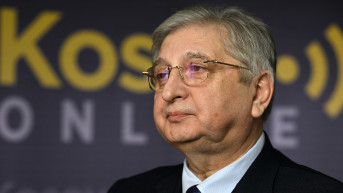
Written by Zeljko Sajn for Kosovo Online
The interview given by Kirill Logvinov, Director of the Department for International Organizations of the Ministry of Foreign Affairs of the Russian Federation, is not merely a procedural explanation of the election of a new Secretary General of the United Nations. Between the lines, his message goes much further: the selection of a new head of the Secretariat could have direct consequences for the legal position of states that rely on decisions of the Security Council — including Serbia.
When Logvinov emphasizes that Moscow will monitor the process “with the utmost seriousness” and assess “the degree of alignment of the candidates’ approaches with the UN Charter,” this is more than diplomatic phrasing. It signals that Russia, as a permanent member of the Security Council, will use all institutional mechanisms at its disposal — including the right of veto — should it conclude that a candidate departs from the principles of sovereign equality and territorial integrity.
The link between Russia and Serbia within the UN framework is not rhetorical but legal. The status of Kosovo and Metohija remains defined by Security Council Resolution 1244, which affirms Serbia’s sovereignty and territorial integrity. As long as the Security Council remains the central decision-making body on matters of international peace and security, that document retains full legal force. Any relativization of the hierarchy of UN organs or political interpretation of the Charter could weaken that framework.
Logvinov places particular emphasis on Article 100 of the UN Charter, which obliges the Secretary General to maintain impartiality and independence from the influence of individual governments. In doing so, he indirectly raises the issue of past practice and warns that the office of the Secretary General must not become a political platform but must remain administrative in character and normatively grounded.
The election of a new UN Secretary General comes at a time when the global order is undergoing change. The growing influence of the Global South, as well as the rising prominence of groupings such as BRICS and the Shanghai Cooperation Organization, has intensified calls for UN reform. Yet substantive reform is not merely a question of expanding the Security Council or ensuring geographical representation. The essential question is whether the UN Charter will once again become the literal foundation of international law or remain subject to selective interpretation.
Under the principle of regional rotation, the next Secretary General is to come from Latin America. According to Logvinov, the shortlist includes Michelle Bachelet, supported by Chile, Brazil, and Mexico, and Rafael Grossi, Argentina’s candidate — four states that have not recognized Kosovo and consistently invoke the principle of territorial integrity.
This fact in itself does not prejudge the future conduct of the next Secretary General, but it does point to the political context from which the candidates emerge. If the new Secretary General consistently upholds the Charter and the hierarchy of UN organs, Resolution 1244 will remain a firm pillar of Serbia’s position under international law. If, however, the logic of political interpretation prevails, the institutional strength of that document could be pushed into the background.
For this reason, the forthcoming choice is not a technical matter. It is part of a broader struggle over the character of the international order. And between the lines of Logvinov’s interview, one can discern a clear message: in that struggle, the Security Council and the veto power remain key instruments for the protection of international law — and, indirectly, of Serbia’s territorial integrity.
comments