
Analysts: Osmani intensifies communication on social media, exerts pressure on Kurti
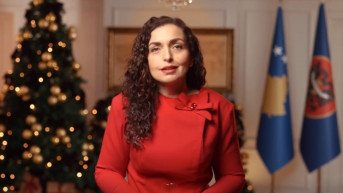
Kosovo President Vjosa Osmani has stepped up her communication on social media, presenting the achievements of her term amid growing public speculation about a possible second mandate. Analysts assess that this approach also has a political background—primarily pressure on caretaker Prime Minister Albin Kurti, Kosova Press reports.
Political analyst Artan Muhaxhiri said that the incumbent president’s position is difficult due to changes in the political context compared to 2021, when she was first elected.
For that reason, he believes everything will depend on the leader of the Self-Determination Movement, which won a convincing victory in the elections held on 28 December.
“Osmani is in a very difficult position because the entire political context has changed compared to 2021, when she was elected for the first time, and she now depends on numerous factors that are not in her hands. Everything will depend on Kurti, because his 51 percent gives him that possibility, and until the very last moment even President Osmani herself will not know clearly whether Kurti will nominate her again or not,” Muhaxhiri told Kosova Press.
According to him, Osmani was fully aligned with Kurti at the domestic level, but on the international stage she achieved certain successes that distinguished her from Kurti, as she was more acceptable and cooperative for international actors—the United States and influential EU countries.
“Some achievements are to her credit, but I still think it is clear how much real political influence she had,” Muhaxhiri said.
He added that the goal of this “presidential pre-campaign,” in addition to pressuring Kurti, is also to create justification in case she is not nominated again, so that she remains remembered as a successful leader.
“She is trying to exert media pressure on Kurti, but also, if she is ultimately not nominated again, to have a kind of justification—that the reason was not her work or failure, but other circumstances dictated by Kurti. And of course, she wants her mandate to be remembered as successful from her perspective; however, the most realistic assessment is given by citizens, and that does not primarily depend on the president’s media campaign,” Muhaxhiri added.
On the other hand, analyst Dorajet Imeri assessed that Osmani’s communication with the public is expected, but not decisive for the election of the president.
“This is expected, in her effort to create a general perception that her election is right and necessary. The law does not envisage a campaign period for presidential candidates. Nevertheless, that does not prevent her from communicating with the public, but it cannot change the behavior of parties, because they do not necessarily depend on public opinion at a given moment—at least not when it comes to the president—although it may later come at a cost in terms of votes,” Imeri told Kosova Press.
He notes that part of the results Osmani presents are not solely hers, but that does not mean she did not perform her duties well within her professional engagements.
“The question that arises here is why Osmani is not talking to the Democratic League of Kosovo (LDK), and I think it would be better if she invited that party’s leadership to present her views and offer for a new mandate, in terms of communication with the parties that need to vote for her,” Imeri said.
For several days now, Osmani has been publishing videos from official meetings during her five-year term, including her address to the United Nations Security Council, footage from a visit to the United States Military Academy at West Point, an appearance in the European Parliament, and a visit by U.S. President Donald Trump to NATO headquarters.
Analysts from Belgrade and Pristina also described the situation surrounding the election of a new president, in an analysis by Kosovo Online, as a “game of cat and mouse,” assessing that both the Self-Determination Movement and the opposition are bluffing. While some believe Kurti will not jeopardize his electoral victory by supporting Vjosa Osmani for a second term, others argue that he owes her political loyalty precisely because of that victory.
Osmani was elected president on 4 April 2021, and under Kosovo’s Constitution, the election of a new president must be completed no later than 30 days before the expiration of the incumbent’s term. This means that if a new president is not elected by 5 March, Kosovo will go to early elections within 45 days.


0 comments