
Koka: Rama’s relations with all Kosovo prime ministers have been delicate and tense
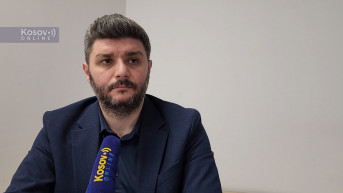
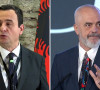
Bledian Koka, editor-in-chief of Syri TV in Tirana, told Kosovo Online that the relationship between Albin Kurti and Edi Rama is characterized by a “lack of chemistry,” which is reflected in the absence of congratulations from Kurti to Rama, who last week began his fourth term as Prime Minister of Albania. Koka, however, noted that Rama’s relations with all Kosovo prime ministers, without exception, have always been very delicate and tense.
Koka says it is no secret that relations between Kurti and Rama have cooled.
“Congratulations and recognition of results are also in a way a product of the ‘chemistry’ between leaders. Mr. Kurti’s lack of congratulations to Mr. Rama is exactly that. It seems to me that Mr. Rama did not congratulate Mr. Kurti on his electoral victory (in Kosovo) either, which has still not produced a stable government, even though elections were held several months ago. That shows the ‘lack of chemistry’ between Rama and Kurti,” Koka said.
He pointed out that Kosovo Assembly Speaker Dimal Basha congratulated Niko Peleshi on becoming head of the Albanian Parliament and that Kosovo’s foreign minister also sent congratulations to Albania’s new foreign minister.
“There is some kind of communication handicap here, whether institutional or personal, between the leaders of Albania and Kosovo. The causes and reasons may be many, but in any case the coldness and tensions are clearly visible,” Koka said without doubt.
He stressed that Rama’s relations with all Kosovo prime ministers, without exception, have always been delicate and tense, even though there are no major ideological differences between them.
“That was the case with Mr. Haradinaj as well. Let’s recall that after their conflict at the start of the Berlin Process, the matter went so far that Prime Minister Rama filed a defamation lawsuit in the Basic Court in Pristina, which was the first case in history where an Albanian prime minister sued a Kosovo prime minister. Similarly, relations were very problematic and cold with former Prime Minister Isa Mustafa. Even when Mr. Thaci was president, his positions often differed from Mr. Rama’s. Today, however, they share strong unity or cooperation, with Rama supporting Thaci in the proceedings at the Special Court in The Hague,” Koka noted.
Looking at Rama’s relations with Kosovo prime ministers, Koka sees a kind of “excessive paternalism.”
“I think that is why none of Kosovo’s prime ministers have gotten along well with him. Even with the prime minister who signed the agreement with Mr. Vucic at President Trump’s table in 2020, if I’m not mistaken, there was the same tension and disagreement. The problem, as I see it, lies in Mr. Rama’s excessive paternalism in making decisions about Kosovo, decisions that actually belong to Kosovo’s leaders. The conflict reached its peak when Mr. Rama decided to build an ‘economic brotherhood’ not with the prime minister of Kosovo, but with the president of Serbia, which was heavily criticized both in our country and in Kosovo,” Koka emphasized.
He also pointed out that Kurti’s congratulations to Rama were absent after the final results of Albania’s parliamentary elections held on May 11, though he noted that many foreign leaders and institutions also withheld congratulations, allegedly due to the way the elections were conducted.
He added that what stood out most at first was the lack of a reaction from the US State Department, although the US Embassy in Tirana later recognized the electoral process and congratulated the Albanian people.
“But the truth is that no official congratulations were sent to the winner of these elections, who, according to Albanian state institutions, is the current prime minister Edi Rama. Many critics have claimed that this marks a change compared to the previous elections in 2021, when the US ambassador was Yuri Kim. The ambassador, and later the US State Department, confirmed the results just two or three days after the process was completed. Now it seems there is a kind of international hesitation to recognize the May 11 electoral process as a legitimate one in line with what should be free and fair elections, which is expected from a country like Albania that aspires to join the EU,” Koka concluded.


0 comments