
Krasniqi: The absence of constitutional clarification on the election of a Deputy Speaker from the Serbian community will deepen political uncertainty
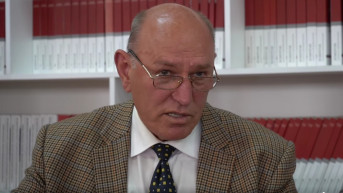
The issue of electing a Deputy Speaker of the Assembly from the ranks of the Serbian community without the support of the majority of MPs from that community represents an important problem of constitutional interpretation, university professor Kolë Krasniqi told Kosovo Online. He added that it is not expected that the Constitutional Court will render a decision on this matter before the start of the process of constituting institutions following the December elections.
The Serbian List filed its appeal with the Constitutional Court regarding the election of a Deputy Speaker of Parliament from the Serbian community in the previous parliamentary term as early as 16 October. Krasniqi notes that the Constitutional Court is not bound by mandatory constitutional deadlines for issuing decisions and that, in its practice, it is particularly cautious when resolving issues of high political sensitivity.
“In such cases, the Court often exercises its decision-making authority after political processes have already begun, in order to avoid the perception of direct interference in political life. Based on an analysis of political developments, the most likely scenario remains that the Assembly of Kosovo will be constituted without waiting for a final decision of the Constitutional Court,” Krasniqi believes.
He points out that, from a normative perspective, the Constitution of Kosovo guarantees the representation of non-majority communities in the leadership structures of the Assembly of Kosovo, but does not contain an explicit provision requiring that candidates for these positions be proposed or supported by a majority of MPs from the respective community.
“In that sense, a strict interpretation of constitutional provisions can hardly lead to a decision that the election of a Deputy Speaker of the Assembly from the Serbian community must necessarily be carried out on the basis of a proposal and support from the majority of MPs of that community. However, if constitutional interpretation is not limited solely to a formal reading of the provisions, but is also guided by European standards for the protection of minority rights, then one may reach the conclusion that constitutional representation of non-majority communities should reflect the genuine political will of the community, and not merely the individual ethnic identity of the elected candidate,” our interlocutor explains.
If there is no decision by the Constitutional Court by the time the Assembly begins to be constituted, Krasniqi believes there is a risk that the situation from the previous parliamentary term will be repeated.
In the absence of a Constitutional Court ruling, he says, the Assembly of Kosovo may continue with the same procedural practice for electing a Deputy Speaker from the Serbian community. In such a scenario, the Serbian List will likely once again challenge the legitimacy of the process by submitting new appeals to the Constitutional Court.
“Such a situation may produce undesirable consequences, including political blockades, institutional tensions, and further delays in the functioning of the Assembly and other state institutions. Accordingly, in the absence of final constitutional clarification, legal and political uncertainty not only persists, but is further deepened, violating the principle of institutional stability and legal certainty as fundamental elements of Kosovo’s legal, constitutional, and democratic order,” Krasniqi warns.
He assesses that, from a rational and institutional perspective, it is in the interest of the Self-Determination Movement for the Court to adopt a decision on the Serbian List’s appeal as soon as possible.
“A swift and final decision would avoid procedural delays, facilitate the process of constituting institutions, and create the conditions for the rapid formation of a government by the Self-Determination Movement,” Krasniqi concludes.


0 comments