
Pavlovic: Serbia cannot sign a peace agreement with Kosovo, there is no similar example in history
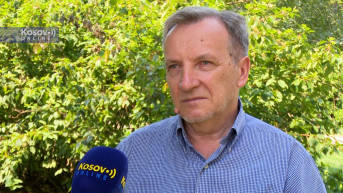
Kosovo's Minister of Defense Ejup Maqedonci's statement that Kosovo and Serbia need to reach a peace agreement, or a non-aggression agreement, is interpreted by historian Momcilo Pavlovic more as a provocation than a serious proposal that would contribute to pacifying the area and reducing tensions. He emphasizes that, legally, Serbia cannot sign such an agreement with Kosovo.
“There is no such example in history, no similar peace agreement, at least as far as I know – for a central state to sign such an agreement with its separatist province or separatist administration. Serbia considers Kosovo an integral part of its national territory; this is about territory, not people, and as long as Serbia does not agree or is not forced to relinquish part of its territory, it cannot legally sign any agreements,” Pavlovic tells Kosovo Online.
As he explains, peace agreements are rarely signed between two parties and are typically concluded after major conflicts involving many actors and numerous guarantors of the norms included in such agreements.
“What is being mentioned here is a bilateral non-aggression agreement or a peace agreement in which Serbia would commit not to attack – whom? International forces are present in Kosovo. Kosovo is heavily arming itself, preparing for war; do they really think that with NATO's help, they will defend Kosovo if Serbia at some point decides to ‘reoccupy’ its own territory? This is not about whether Serbia will or will not attack Kosovo; it is about respecting Serbia's territorial integrity, as is currently being discussed regarding Ukraine and other countries. How we will resolve this internally and what thin ties will connect the province of Kosovo with Serbia is a completely different issue that is being resolved through dialogue and will be resolved at some point. Both Serbs and Albanians, even if they wanted to, cannot separate in the manner currently being discussed and as the politics, especially of the Pristina authorities, are being conducted. They have to live together. Of course, history does not stand still, and sometimes international circumstances can bring Kosovo or Serbia into a situation where the problem resolves itself,” Pavlovic states.
Considering that many peace agreements throughout history have included the issue of war reparations, Pavlovic indicates that this would be one of the expected consequences in this case if such a document were signed.
“After the First World War, the large Treaty of Versailles was signed, where the main participating countries agreed on certain peace clauses. For example, in the agreement with Germany, which was identified as the main instigator of the First World War, not Serbia, not Gavrilo Princip, it was precisely stated on 450 and more pages what Germany's obligations were towards France and other countries. As a victor, Serbia concluded specific agreements with Bulgaria at that conference in Versailles, and collected war reparations from them, even in livestock, sheep, and everything that the Bulgarians had plundered, particularly in southern Serbia,” our interlocutor emphasizes.
He adds that something similar happened after the Second World War, when Bulgaria was also obliged to compensate Yugoslavia for war damages. However, Yugoslav and Bulgarian communists, Tito and Dimitrov, reached an agreement in Bled in 1947 whereby Yugoslavia generously renounced the reparations that Bulgaria owed to the Federal People's Republic of Yugoslavia.
“As you can see, these are international agreements and international conflicts. But Serbia did not wage war with Kosovo, with the people. The KLA was and remains a terrorist organization that was later transformed by various means, both public and secret, into the Kosovo armed forces, even though the Kumanovo Agreement absolutely does not state that Kosovo should have armed forces, as otherwise, why would NATO be in Kosovo? Serbia can make annexes to the Kumanovo Agreement with NATO in terms of elementary respect for sovereignty, while Kosovo has essential and real autonomy in the way they want,” Pavlovic says.
He reminds that Serbia is a signatory of the Kumanovo Military Technical Agreement, which was a technical agreement on troop withdrawal that, he points out, had terrible consequences for the Serbian people, as about 200,000 refugees left Kosovo after that agreement, not before.
“In this sense, the technical Kumanovo Agreement and Resolution 1244, which is still in force, are the international legal frameworks that Serbia respects and operates within. It would be beneficial if the separatist administration in Kosovo also applied this. Serbia's attitude towards the territory is unchangeable at this moment, but it can be changed towards the people. Let Kosovo, let the Albanians govern according to their own laws, elect their own bodies, president, king, whatever, but the state framework must be respected, and this will bind this and all future governments. Otherwise, it is an act of treason, which, of course, carries criminal responsibility,” Pavlovic evaluates.
As an option that could pacify the entire Balkans, our interlocutor suggests signing a document somewhat different from the one advocated by Maqedonci.
“For example, if all international actors were interested in this, Serbia could sign an act of similar content with all its neighbors in which Serbia would guarantee the integrity of the former Yugoslav republics and Balkan states, but also that these other states guarantee Serbia's sovereignty and integrity over its entire territory. Here, we are talking about national territory, not about the people living in those territories. Bosnia and Herzegovina is the best example. If one and a half million Albanians live in Kosovo, and as Western propaganda claims, they show that they do not want to live with Serbs, while at the same time in Bosnia and Herzegovina, there are an equal number of Serbs who similarly do not want to live in a federation with Bosniaks or others, are these two desires not the same? What is the difference? There was war conflict both there and here. Crimes were committed both there and here. The will of one nation is respected in that small area, but not in the other. But, this is already a matter of an international conference and another level of discussion that could pacify the entire Balkans,” Pavlovic concludes.



0 comments