
Shea: The new Kosovo government should grant the Serbian community a certain degree of local self-government
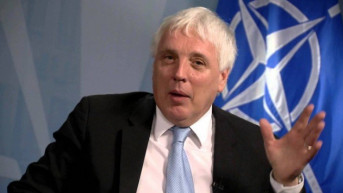
Former NATO official Jamie Shea stated that the new Government of Kosovo should grant the Serbian community a certain degree of local self-government within the framework of Kosovo’s Constitution and stop treating it as a “fifth column.” Former EU Special Envoy for Kosovo Wolfgang Petritsch added that Kosovo must genuinely engage with minorities, particularly the Serbian community in the north.
In an interview with Radio Free Europe, Shea said that the new government in Pristina must restore the trust of the United States and its European partners, who, in turn, should intensify efforts to secure full international recognition of Kosovo and ensure its membership in international organizations.
“Clear strategies and more effective international public diplomacy are needed to advocate for membership in NATO and the EU,” Shea said.
Domestically, according to him, the new Kosovo government should provide the Serbian community with a certain degree of local self-government within the framework of Kosovo’s Constitution, by ceasing to treat it as a “fifth column.”
“Attraction works better than coercion,” Shea concluded.
Speaking on the occasion of the 18th anniversary of Kosovo’s declaration of independence, Petritsch said he appreciates the socio-economic achievements but believes they remain far from the level required to guarantee long-term stability.
According to him, the real challenge is to create conditions in which the younger generation sees its future within Kosovo rather than outside it.
“Many Kosovars are still compelled to seek their well-being abroad,” Petritsch said.
He added that after a prolonged period of democratic uncertainty, Kosovo must establish a functional and effective government.
“This would transform Kosovo into a ‘mature’ European state,” he stated.
Petritsch expects the new Kosovo government to adopt an ambitious economic strategy aligned with the European Union’s agenda.
One of his strongest warnings, as reported by RFE, concerns what he describes as the “end of the transatlantic era.”
According to him, this has direct implications for Kosovo’s relationship with the United States, which he described as the country’s “liberator and long-term protector.”
“At a time when Kurdish freedom fighters were abandoned by the United States in Iraq, or when Palestinians are further from their statehood than ever, we must recall that the United States and Europe went to war to ensure Kosovo’s survival — and its eventual independence,” Petritsch said.
This, he added, contains both a lesson and an obligation for Kosovo: to become a respected member of the community of European democratic states.

comments