
A year ago, the Serbs left Kosovo institutions, 12 months of crisis with no signs of change
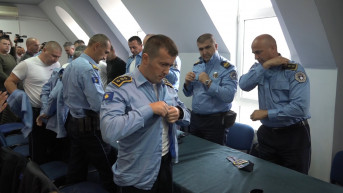
Exactly one year ago, the Serbs left all Kosovo institutions. At a meeting of political and institutional representatives of the Serbs in Kosovo on November 5, 2022, the decision was made to leave - the assembly, the government, four municipalities in the north, judicial bodies, police, and administration.
The decision, as stated at the time, would remain in effect until Pristina started respecting agreements and rights, withdrew the license plate decision, and established the Community of Serb-majority Municipalities in accordance with the First Brussels Agreement and all other agreements reached in the dialogue on this issue.
The departure of the Serbs from institutions was preceded by Pristina's decision to suspend Nenad Djuric, who was the director of the Regional Police Directorate North because he refused to issue warnings to his compatriots with 'KM' license plates on their vehicles.
Under the pretext of ensuring security in northern Kosovo, the Kosovo Government sent several hundred police officers from the south to the north accompanied by armored vehicles in mid-December of last year, and arrests, harassment, and life with long guns in front of the Serbs became a daily reality.
From November 5, 2022, to the present day, the Office for Kosovo and Metohija has recorded 195 ethnically motivated incidents in Kosovo, with one of the most shocking being the shooting of Serbian boy and young man Stefan Stojanovic and Milos Stojanovic in Gotovusa while carrying the Serbian Christmas tree on January 6.
Pristina called for extraordinary local elections in North Mitrovica, Leposavic, Zvecan, and Zubin Potok on April 23, which the Serbs boycotted. Only about 3.5% of voters turned out to the polls - out of a total of 45,950 registered voters, only 1,567 exercised their right to vote, of which only 13 were Serbs. Four Albanians now lead the municipalities in the north, where the Serbs make up over 95% of the population.
Kosovo Police forcibly entered the municipalities of Zubin Potok, Zvecan, and Leposavic on May 26th, along with ROSU members, deploying tear gas and shock grenades against citizens offering peaceful resistance, resulting in the injury of ten Serbs. Three days later, during unrest in Zvecan, over 50 Serbs were injured, including Dragisa Galjak, who was shot twice from behind. Thirty KFOR members were also injured. On that day, the Serbs gathered with demands for the Kosovo Police to withdraw from the north and municipal buildings and for the removal of the illegitimately elected mayors, which has yet to be fulfilled.
On June 14th, the Kosovo Government prohibited the entry of Serbian-origin goods into Kosovo, leading to empty shelves in pharmacies and stores, with only emergency surgeries performed at the Clinical Hospital Center "Kosovska Mitrovica" due to severely depleted hospital supplies.
The situation escalated on September 24th, resulting in a clash between a group of Serbs and the Kosovo Police in Banjska, where three Serbs were killed, and one Kosovo Police officer lost his life.
Despite international calls for Pristina to de-escalate the situation, this has not occurred yet. The European Union's demands include the withdrawal of special police units from municipal premises in the north, mayors vacating buildings and working from alternative locations, and the organization of extraordinary local elections for four municipalities in the north. Belgrade was tasked with ensuring the participation of Serbs in these elections.
The largest Serbian political party in Kosovo, the Serb List, announced in mid-last month that it was prepared to participate in the elections in the north and urged Pristina to announce them as soon as possible. Their message is that "the ball is now in Pristina's court".

comments