
Santic: Aging population pressures the economy, Serbia needs active and healthy aging
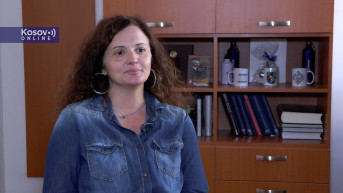
Professor Danica Santic from the Faculty of Geography at the University of Belgrade pointed out that the average age of the population is increasing not only in Serbia and the region, but also across Europe, highlighting that such a trend puts additional pressure on pension funds and the economies of countries. She emphasized that healthy and active aging are some of the demographic measures that have yielded results in European countries, but noted that the countries of the region still lack systematic solutions to apply European examples of best practices.
Santic stated that the aging of the population in the region is also driven by the emigration of young and working-age people, and that measures should be implemented to attract new residents to fill job vacancies and sustain the economy.
"The average age in Serbia, according to the new 2022 census, is increasing, which is something expected and a global trend, especially in developed countries, as we have always wanted to live longer and healthier, and now we are achieving that in the modern era," Santic told Kosovo Online.
However, she pointed out that the aging process has become so rapid that states are simply unprepared for it.
She emphasized that the average age in the EU, as well as in Serbia, is around 43 years.
"When the data shows that the average age in Serbia is 43 years, we naturally reflect on it because when we compare it with other parts of the world, where the average is 20 or 30 years, we start to question the direction we are heading and whether we have a response to demographic aging, or the increase in the number of people over 65," Santic explained.
Compared to the previous census conducted in Serbia in 2011, Professor Santic noted that the average age has increased by two years.
She explains that while this increase might not seem significant at first glance, when considering the share of elderly individuals, it now represents 23% of the total population in Central Serbia and Vojvodina, where the census was conducted.
On the other hand, she adds, the proportion of individuals aged 0 to 14 is only 14%, which means that Serbia is becoming a country of the elderly.
"This, I repeat, is a European trend. We have always referred to Europe as the 'old lady,' and now she truly is becoming the 'old lady.' We are moving in the direction of countries that have already reached certain levels of aging. What should have been done earlier, but it’s still not too late, is to create some documents that address the increasing number of elderly people in Serbia," said Santic.
She observes that the consequences of an aging population primarily affect the economic outlook, creating pressure on the pension system.
However, she acknowledges that population aging is, in a way, a demographic category.
"Considering that the pension system as we know it was created in the 1960s in America, at that time, life expectancy was much shorter than it is today. The retirement age was based on this life expectancy, which was around 66-67 years, and the pension system functioned accordingly," the professor explained.
However, as life expectancy in some countries has extended to 80 or even 90 years, as is the case in Japan, without any corresponding changes, it became clear in the modern era that even the world’s wealthiest economies could not withstand such pressure on the pension system.
In this context, Serbia faces a major challenge: the retirement age may no longer align with what the law dictates.
"We are now trying to shift the retirement age by three months, six months, and every year there’s a slight adjustment. This is characteristic of European countries. When we hear about major protests in Greece, they often occur among workers when a pension reform is announced. Countries have started to respond to this. The public doesn’t look favorably on these changes, as we are used to retiring at 65, but with the increasing number of elderly people and growing pressure, a reform is necessary, or else the current pension system will definitely need to be replaced," said Santic.
She warned that emigration significantly contributes to population aging, especially considering the age at which people emigrate.
People typically leave the country in their thirties, when they are of working and childbearing age.
She added that in the past, people emigrated in their twenties, but this has shifted due to the educational timeline in Serbia, so now people emigrate around the age of 30.
"When young, reproductive-age individuals leave a territory, it’s clear that the remaining population consists of older individuals who are less mobile, and children who are still in school. If we look at the current birth rate, it’s the lowest compared to the 20th century and is not enough to fill the gaps in the labor market, nor will it be sufficient in the next 15 years. This raises the question of how our pension system, labor market, and economy will function if we don’t implement urgent measures that yield results," she warned.
She noted that results in the demographic sphere can only be seen after 15 or 20 years, regardless of how effective the measures are or how much is invested in them.
When it comes to economic measures, Santic observed that they could yield quicker results, but the most significant improvement in the demographic situation and its consequences would come from the return or immigration of people.
"Last year, we had 55,000 foreign workers who received residence and work permits in Serbia. I see that this year, the report shows that by October, there were 16,000. This is a decline in the number of workers, but I’m not sure the number will remain at 16,000. We truly need workers because our people are emigrating, we are getting older, and the labor market needs to be improved somehow, mainly through immigration of people who want to come. According to statistics, the majority of people willing to come are from China, Russia, Turkey, Nepal, India, Bangladesh, and Sri Lanka. These are workers who support Serbia's economy, as we invited them, and without them, some jobs would remain unfilled, which would harm the budget, and there would be no one to pay taxes," Santic explained.
Speaking about measures that could potentially mitigate the consequences of population aging, the professor stressed that Serbia should look to examples of good practices, such as those in the United Kingdom.
The United Kingdom, she explained, started working on creating healthy and active aging 20 years ago.
“Simply, when people retire, we shouldn’t forget about them. We should offer them opportunities to continue actively contributing to society according to their abilities. The UK was the first to adopt this, followed by other Western European countries, and it’s slowly reaching our part of the world,” Santic said.
She also referred to demographic measures in Croatia, describing them as highly effective.
In Croatia, she pointed out, people are allowed to continue working part-time after retirement, which helps them earn additional income and supplement their pension.
She noted that it is very common in Europe for elderly people to work in museums, cultural institutions, or for four hours a day. This, she said, not only makes them feel better but also allows them to continue contributing to society and the budget.
Santic emphasized that one of the demographic measures yielding positive results is the so-called healthy aging, where the state is expected to work on improving the healthcare system.
“We should aim to provide these people with quality healthcare services, allowing them to spend as many years as possible in good health,” she stressed.
However, Santic noted that despite examples of good practices, countries in the region, including Albania and Serbia, have not yet implemented the specific measures that have taken root and produced results in Europe.
Referring to the latest census results in Montenegro, she mentioned that the average age of the population there is 39 years, which is a very good result compared to Europe.
Albania, according to her, also has a young population. The key problem for Albanians, however, is the emigration of the population and their departure abroad.
“The level of emigration of young people from Albania is indeed high. When your young population emigrates, even though the census may show large numbers, the reality is that the aging process there is extremely intense,” Santic explained.
She noted that results in the demographic sphere can only be seen after 15 or 20 years, regardless of how effective the measures are or how much is invested in them.
When it comes to economic measures, Santic observed that they could yield quicker results, but the most significant improvement in the demographic situation and its consequences would come from the return or immigration of people.
"Last year, we had 55,000 foreign workers who received residence and work permits in Serbia. I see that this year, the report shows that by October, there were 16,000. This is a decline in the number of workers, but I’m not sure the number will remain at 16,000. We truly need workers because our people are emigrating, we are getting older, and the labor market needs to be improved somehow, mainly through immigration of people who want to come. According to statistics, the majority of people willing to come are from China, Russia, Turkey, Nepal, India, Bangladesh, and Sri Lanka. These are workers who support Serbia's economy, as we invited them, and without them, some jobs would remain unfilled, which would harm the budget, and there would be no one to pay taxes," Santic explained.
Speaking about measures that could potentially mitigate the consequences of population aging, the professor stressed that Serbia should look to examples of good practices, such as those in the United Kingdom.
The United Kingdom, she explained, started working on creating healthy and active aging 20 years ago.
“Simply, when people retire, we shouldn’t forget about them. We should offer them opportunities to continue actively contributing to society according to their abilities. The UK was the first to adopt this, followed by other Western European countries, and it’s slowly reaching our part of the world,” Santic said.
She also referred to demographic measures in Croatia, describing them as highly effective.
In Croatia, she pointed out, people are allowed to continue working part-time after retirement, which helps them earn additional income and supplement their pension.
She noted that it is very common in Europe for elderly people to work in museums, cultural institutions, or for four hours a day. This, she said, not only makes them feel better but also allows them to continue contributing to society and the budget.
Santic emphasized that one of the demographic measures yielding positive results is the so-called healthy aging, where the state is expected to work on improving the healthcare system.
“We should aim to provide these people with quality healthcare services, allowing them to spend as many years as possible in good health,” she stressed.
However, Santic noted that despite examples of good practices, countries in the region, including Albania and Serbia, have not yet implemented the specific measures that have taken root and produced results in Europe.
Referring to the latest census results in Montenegro, she mentioned that the average age of the population there is 39 years, which is a very good result compared to Europe.
Albania, according to her, also has a young population. The key problem for Albanians, however, is the emigration of the population and their departure abroad.
“The level of emigration of young people from Albania is indeed high. When your young population emigrates, even though the census may show large numbers, the reality is that the aging process there is extremely intense,” Santic explained.
She expressed her belief that the countries in the region will attempt to address these challenges in a similar way.
"We need the elderly; they are not a burden in buses or in lines, as we often think. They can truly be very valuable members of this society, and we should rely on them," Santic concluded.



comments