
Geopolitical circumstances and Kosovo - the West is in hurry, and what suits Serbia?
There is no end in sight to the war in Ukraine, which means that the pressure on Serbia regarding the resolution of the Kosovo issue will be increasing. The President of Serbia, Aleksandar Vucic, indicated recently that the change in geopolitical circumstances had contributed to the harshest approach of Western countries towards Serbia with the Franco-German proposal, that the circumstances were not in Belgrade's favor and that the world was facing the most difficult situation since the Second World War.
A few days later, the statement of the Russian ambassador to Serbia, Aleksandr Botsan-Kharchenko, that the final status of Kosovo would be defined "in other geopolitical conditions" after the end of the "conflict with the West in Ukraine", opened the question - what kind of geopolitical conditions would suit Serbia.
Diplomat Vladislav Jovanovic says for Kosovo Online that one reality, at this moment, is that Serbia is exposed to very strong, ultimate pressure regarding Kosovo, to end the issue by the end of the year and in a way that suits the Western powers, as well as to legalize their aggression against Serbia because those two parts form one whole.
He indicates, however, that the other reality is that the wishes of the West will not be achieved and that the resolution of that issue in a special way should be postponed for a later date, for the next year or two, when the international circumstances do not have to be as they are now.
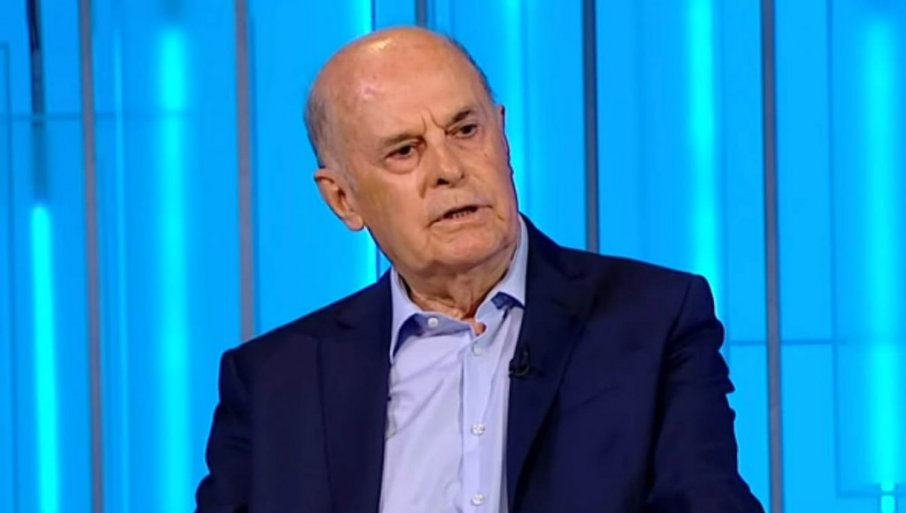
"Current circumstances favor the Western powers, because they have taken the initiative to gain a decisive advantage over the other two sides, Russia and China, but the balance of power in a year or two cannot be predicted in advance. At the moment, it is more favorable for the Western powers, but it is not certain that it will be for some time, because everything is boiling and no one can predict what the final picture of the world will be in a few years," Jovanovic said.
In this sense, he also sees the statement of the ambassador of Russia, who, he says, is philosophically and politically right, but that the other thing is that the reality created by the West does not go that way, increasing the pressure on Serbia to make the concessions that are expected of it – to join them in the war against Russia.
He adds that it is a statement of "obviousness", but it could not have been avoided, Jovanovic stressed.
Pointing out, however, that Serbia has limited possibilities, but has arguments and trump cards that the West does not have - Serbia is the mother country and, if it does not want to recognize the independence of Kosovo, nor to enable it to become a member of the UN - that cannot be possible.
He recalls the examples of Bangladesh and Pakistan, Sudan and South Sudan, and Ethiopia and Eritrea, when the breakaway territories could not join the UN until the mother countries, Pakistan, Sudan, and Ethiopia, agreed to it.
"This is what is insurmountable for the West, which insists that Serbia be the one to give up its territory, in order to avoid the retaliatory measures they announce in advance. But the problem is there, in the fact that neither the Security Council nor the UN can decide anything finally without the consent of Serbia. It is a kind of veto right," Jovanovic said.
When asked what kind of geopolitical circumstances suited Serbia, what kind for Kosovo, and what kind of international representatives, he answers that it certainly does not suit Serbia to meet the conditions of the requested capitulation.
"President Vucic also said that we would not do that. We want to talk, but you should not expect to recognize Kosovo and allow it to enter the UN. The question is how the West will position itself further, whether it will be more flexible or not, or it will come to the conclusion of how unreasonable it is to ask Serbia to give up part of its territory," Jovanovic notes.
It is a matter that is "up in the air" - will the West come to a more reasonable conclusion that would expand its space and grounds for strengthening relations with Serbia, Jovanovic says, who is convinced that one day he will have to come to such thinking.
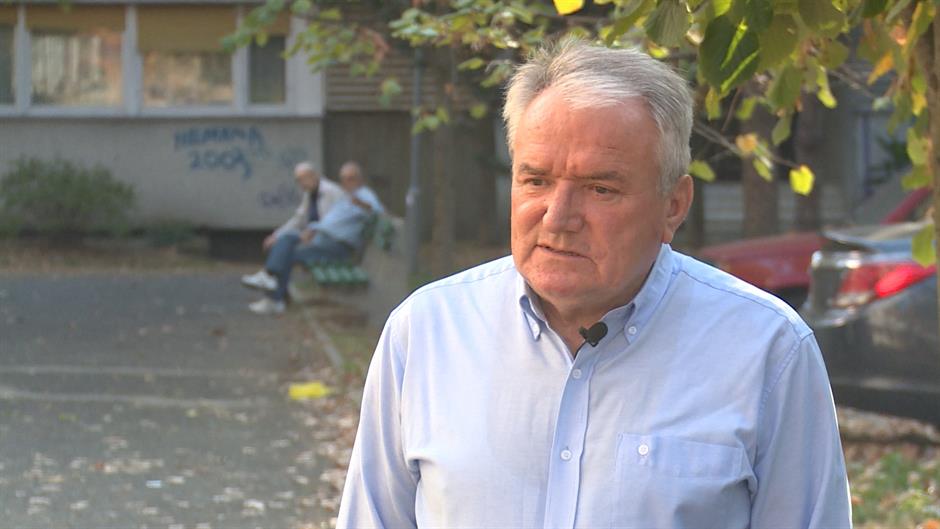
Diplomat Srecko Djukic points out that we all know the geopolitical conditions in which the Kosovo issue is being resolved today, specifying that it is not definitively resolved, but a perspective is being opened for its resolution, due to the absence of two main elements - the recognition of Kosovo and Pristina's membership in the UN.
"We know today's geopolitical situation, we know the balance of power in the world, and I think we know roughly in which direction the world is moving, that it will be the world of the EU, European and Euro-Atlantic integrations, and who opts for membership, also NATO," Djukic said.
On the other hand, he assesses that the Russian ambassador is proposing a completely unknown world and context for solving the Kosovo issue.
"In one statement he said - until Russia's conflict with the West ended, and in another until Russia's war in Ukraine ended... but he did not say when that would be, whether in a few months or years, how long it would last that conflict. The conflict between the East and the West, that is, the USSR and the West, lasted for almost 50 years," Djukic recalls.
As he says, one can guess in which direction the world is moving, that is, what it will look like after the Ukrainian war, but he also adds that it is not the manner for an ambassador to evaluate what is good for a country and what is not and that this is additional pressure on Serbia. from the East, from Moscow.
Djukic also mentioned that Russia had excluded itself from the process of solving the Kosovo issue and had for years advocated the position that it would support the solution proposed by Serbia, while Serbia was in negotiations with the West, that is, primarily the countries of Quint and Pristina.
Asked what kind of geopolitical circumstances suited Serbia, what kind for Kosovo, and what kind for international representatives, Djukic says that Belgrade, that is, Serbia cannot influence geopolitical relations, but only to suffer the consequences of those relations, changes, and influences, while Kosovo especially cannot influence, because it is not an international entity, nor recognized as a state.
When it comes to the international community, if by that we mean the EU and NATO countries, along with Japan and Australia, these are certainly the countries that dominate world politics and economy, and although we cannot predict what will happen in 20, 30 or 50 years, that "Western coalition" will not collapse suddenly as some expect, Djukic adds.
"Serbia cannot choose, but this situation suits us because we made a decision and said that the priority was the European Union. A partnership with the EU suits us and it stems from the geopolitical context, that is, where Serbia is located - in the center of Europe, or at least on its doorstep. It would be unnatural for us to turn to some distant expanses, with all due respect for the need to have good relations with Russia, China, and India... Our neighbors are the most important," Djukic said.


comments