
Drugs in the region: Narcotics becoming more accessible, users increasingly younger
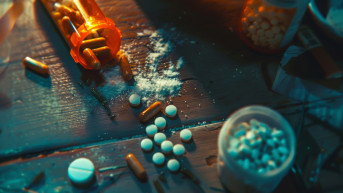
Numerous boundaries in drug use across the Western Balkans have shifted in recent years — age-related, geographical, and social. According to the latest studies, psychoactive substances have spread from urban centers into rural communities, while the age at which teenagers first experiment with drugs has continued to decline. Experts from Belgrade, Pristina, Skopje, and Tirana told Kosovo Online that the leading concern is the lack of adequate programmes for the early detection of new drugs and stressed that far greater efforts must be devoted to prevention.
Written by: Katarina Saicic
The latest 2026 report by the European Union Drugs Agency (EUDA) found that approximately 24 million European adults aged 15–64 used cannabis during the previous year, representing around 8.4 percent of the population.
Approximately 850,000 people use opioids (heroin and similar drugs), accounting for about 0.3 percent of the EU adult population. An estimated 500,000 people injected drugs intravenously during the previous year.
Key trends across Europe indicate increasing use of synthetic drugs, growing cocaine consumption, and a rising phenomenon of combining various drugs with alcohol. At the same time, heroin use is declining.
Experts interviewed by Kosovo Online note that these trends are equally evident throughout the Western Balkans. Although the region was not included in this year's EUDA study, data released by the agency two years ago showed that as many as 42 percent of young people in the region use marijuana, while 22 percent use cocaine, primarily for “recreational purposes”.
Only three percent of respondents reported seeking assistance to control or stop using these drugs.
“Powder cocaine and crack cocaine were the substances most frequently consumed alongside at least one other substance, including tobacco and alcohol,” the study states.
Experts speaking to Kosovo Online warn that new trends show a decline in the number of opioid users, while the number of marijuana, cocaine, and methamphetamine users is increasing. In addition, drugs have become far more accessible and are no longer confined to central urban districts, but are increasingly present in rural areas. Procurement via the internet and social media has become more common, although traditional street dealers remain active.
Marijuana Most Widespread in Kosovo
Safet Blakaj, founder of the addiction counselling and treatment centre Labyrinth, told Kosovo Online that drug use in Kosovo is increasing and that marijuana remains the most widespread narcotic, followed by cocaine, while the number of heroin addicts is declining.
Blakaj presented data indicating not only changes in the types of drugs being used in Kosovo but also their expanding geographical reach.
“Heroin use has declined significantly over the past eight years. During the last five years, cocaine use has increased, along with marijuana, which has spread throughout Kosovo, including rural areas. We are particularly concerned about cocaine use. The situation could easily spiral beyond the control of institutions,” Blakaj said.
He added that the situation is most challenging in Pristina, not only because cocaine use is highest there, but also because of the presence of other drugs.
“Drugs arrive in larger cities and then spread to other areas. In Pristina, there are also drugs similar to cocaine, such as methamphetamines and amphetamines. Amphetamine use is particularly worrying. It is highly dangerous, creates dependence quickly, and users often become extremely aggressive,” the expert explained.
He stressed the importance of ensuring high-quality treatment.
“Treatment in Kosovo is provided through public institutions such as the Psychiatric Clinic in Pristina, the Labyrinth Centre, and various private facilities. While quality treatment is essential, we face serious shortcomings in prevention programmes. There is no nationwide programme targeting young people, including not only those in schools but also those outside the educational system,” Blakaj noted.
Lower Prices Mean More Drugs on the Black Market
According to Blakaj, drug users are becoming increasingly younger.
“When it comes to the youngest users, the problem is not yet widespread because such cases remain sporadic. We have seen cases involving children aged nine, eleven, or twelve, but these are isolated incidents. Most users are between 14 and 16 years old, with some aged 17,” he said.
He added that his centre has monitored drug prices in Kosovo since 2000 and that falling prices generally indicate increased availability.
“Until recently, a gram of cocaine cost €80. Over the past two years, the price has fallen, which suggests a greater supply. Heroin was very cheap ten years ago. We are pleased that heroin use among young people is now extremely rare. There are several types of marijuana available on the black market. Marijuana from Albania is cheaper but does not sell well. Marijuana imported from Europe has arrived and costs three times more, yet everyone wants it. One joint costs around €10. The European product is three times more expensive and of significantly higher quality. It contains a much higher concentration of THC — roughly double that found in locally produced cannabis,” Blakaj explained.
He emphasized that Kosovo has slightly more than 40,000 drug addicts, although a distinction must be made between drug users and problematic drug users.
Declining Age of First Drug Use
Dr. Aleksandar Vujosevic, psychiatrist at the Special Hospital for Addiction Diseases in Belgrade, told Kosovo Online that many boundaries related to drug use have shifted, making drugs accessible regardless of whether individuals live in urban or rural areas, while young people are experimenting with psychoactive substances at increasingly younger ages.
“Drugs, or psychoactive substances, are becoming accessible to everyone. The urban-rural divide, as well as distinctions between city districts where drugs were traditionally more prevalent, no longer exist. In Belgrade, drug use used to be concentrated in central municipalities, but that is now a thing of the past. Social changes and the broader social climate have made drugs accessible to virtually anyone who seeks them,” Vujosevic said.
According to him, the age threshold continues to fall gradually year after year.
“Today, it is no longer unusual to encounter fourteen-year-olds who have already experimented with psychoactive substances. By the end of secondary school, so-called club drugs or psychostimulants such as speed and amphetamines become more common. Our institution treats all forms of addiction and works with patients from the age of sixteen onwards. We should not overlook alcohol, which is usually the first substance young people try. It is difficult to speak of addiction among very young people; we are more often discussing experimentation and first experiences with psychoactive substances. The earlier someone enters the world of drugs or any addiction, the greater the likelihood of developing an addictive personality,” he explained.
As boundaries continue to shift, methods of drug distribution have also evolved, with increasing use of social media and the internet.
“Everyone adapts to the times, including drug dealers. There are websites on the internet, including the so-called darknet and similar platforms, through which drugs can be purchased in various ways. Traditional dealers remain active in large numbers, but these new methods make psychoactive substances even more accessible and easier to obtain. There is another aspect as well. New drugs continue to emerge that have not yet been classified as psychoactive substances and may not even be prohibited. Fortunately, an early warning system has been established, and any substance suspected of belonging to the category of psychoactive substances is placed under monitoring and its distribution becomes subject to sanctions,” Vujosevic said.
Approximately 300,000 Drug Users in Serbia
When it comes to Serbia, there is no precise figure for the number of drug users, but estimates suggest approximately 300,000 people use psychoactive substances in a problematic manner.
“The number of people who have tried psychoactive substances and the number who are genuinely addicted differ significantly. Many people have experimented without becoming dependent. The estimate of around 300,000 refers to those who use psychoactive substances in a problematic way. For many years, opioids such as heroin represented the primary social problem. Serbia has between 30,000 and 40,000 opioid addicts. The decline in heroin use is clear and has been evident for years. That is positive, but it is less encouraging that the use of other psychoactive substances — particularly psychostimulants — is increasing. This includes cocaine, ecstasy, amphetamines, as well as so-called new drugs, which are substances designed to mimic the effects of existing drugs while being cheaper and more readily available,” Vujosevic explained.
Regarding the broader regional situation, he noted that there are few significant differences among countries, as global trends eventually reach the Western Balkans.
“The situation is similar in Serbia, Montenegro, Bosnia and Herzegovina, and Croatia. Trends that first emerged in Western Europe have also reached us. For example, the decline in heroin use appeared here several years later. We lag behind by a few years in both positive and negative developments, but eventually the trends converge. Today, the world — and Europe in particular — has effectively become a global village,” he said.
According to Vujosevic, prevention remains the most important tool for reducing drug use.
North Macedonia Lacks an Early Drug Detection System
Experts from the Skopje-based organisation HOPS – Healthy Options Project Skopje, Bogdan Kolev and Hristina Todorovska, believe that North Macedonia's main problem is the absence of an early warning system for psychoactive substances.
Kolev stated that the situation regarding drug use in North Macedonia does not differ dramatically from that in other Western Balkan countries.
“It remains a serious and long-term challenge for governments, organisations, and all stakeholders working in this field. As an organisation with nearly 30 years of direct work with people who use drugs, we often observe a significant gap between what is written in laws and strategies and what actually happens on the ground. Although a national drug strategy and action plans exist, implementation remains limited and does not always produce the desired results. Many measures and activities remain merely on paper, lacking sufficient funding, personnel, and monitoring mechanisms,” Kolev told Kosovo Online.
He expressed particular concern that North Macedonia has yet to establish an early warning system for new psychoactive substances or services capable of analysing drug composition.
“Such a system would help identify risks in a timely manner and better protect public health. At a time when new psychoactive and unpredictable substances are constantly emerging, this represents a serious deficiency not only in North Macedonia but throughout the Western Balkans. To my knowledge, no country in the region currently has such a detection system,” he said.
His colleague Hristina Todorovska emphasized that efforts should focus on organised crime groups involved in illegal drug trafficking.
“Before discussing new drugs, we should first address traditional stimulants, which are becoming increasingly available throughout the Western Balkans. As for new substances, we simply do not know whether they are present because we lack drug-checking programmes. Without such programmes, we cannot determine whether a new substance has arrived or is being produced locally,” Todorovska said.
She stressed that the fight against drugs should not target people who use substances, but rather organised criminal networks that profit from illicit trafficking.
Cocaine Use in Albania Reaches 41 Percent
Ritvana Hajdari, a public policy analyst at the Tirana-based Centre for Civic Resistance, stated that cocaine use prevalence in Albania stands at 41 percent, while the figure for the Western Balkans is nearly half that level, at 21 percent. She stressed that it is particularly worrying that young people in Albania begin experimenting with drugs at an early age.
“The use of psychoactive substances in Albania begins very early in adolescence and continues to rise. According to the report Health Behaviour in School-aged Children, seven percent of fifteen-year-olds have tried cannabis at least once, while five percent reported using it within the previous twenty days.
These statistics clearly demonstrate that drug use among young people begins exceptionally early,” Hajdari told Kosovo Online.
She added that European drug research indicates an exceptionally high prevalence of cocaine use in Albania at 41 percent, surpassing both the Western Balkans average of 21 percent and the European Union average of 29 percent.
Prevention and Rehabilitation Are Essential
Hajdari recommended that public policies should focus on preventing drug abuse and rehabilitating young people, while schools should establish more effective support systems.
“Psychosocial services should be more active and more accessible to young people because this problem involves several interconnected levels. It begins within the family; if the family is unable to cope with it, responsibility shifts to schools and subsequently to the relevant public institutions. Alongside effective school support structures, we also need properly functioning community centres. These centres should be more accessible and responsive to the needs of young people,” Hajdari concluded.



comments