
Connecting with ASEAN countries brings significant political support to Serbia

By signing the Treaty on Amity and Cooperation with the Countries of Southeast Asia (ASEAN), which was done by the head of diplomacy Ivica Dacic on behalf of Belgrade yesterday at the summit in Jakarta, Serbia can receive significant political support in addition to economic support when it comes to the process of normalizing relations with Pristina, the interlocutors of Kosovo Online, who are well aware of the conditions in the Southeast Asian region, indicate.
This thesis is also supported by the fact that out of 10 ASEAN members, six do not recognize Kosovo and that one of the basic political postulates around which these countries are gathered is respect for international principles and the advocacy that all conflicts be resolved through dialogue and compromise.
Members of the Association of Southeast Asian Nations are Indonesia, the Philippines, Cambodia, Laos, Vietnam, and Myanmar, which do not recognize Kosovo, as well as Malaysia, Singapore, Thailand, and Brunei Darussalam. All major powers have joined the ASEAN Cooperation Treaty, including the US, Russia, and the EU. India, Japan, Pakistan, France, Canada, Turkey, and Great Britain are also on that list.
Dacic said from Jakarta that the principles that Serbia had adhered to all these years were also the principles of ASEAN, namely mutual respect for independence, sovereignty, equality, territorial integrity and national identity of all peoples, non-interference in the internal affairs of other countries, overcoming all differences through peaceful means.
"Out of ten countries, six did not recognize Kosovo, and I think that some did because we were not present enough in the region. We are talking about countries that have 600 million inhabitants and several thousand billion dollars of GDP together. We have about 700 million dollars in trade and goods exchange with ASEAN, we expect that this year and the next, it could be more than one billion dollars," Dacic said.
Dragana Mitrovic, a Professor at the Faculty of Political Sciences in Belgrade, said that the agreement signed with the ASEAN organization could have multiple benefits for Serbia, both economically and politically.
She pointed out that one of the main advantages regarding the bilateral and political relations with the countries of Southeast Asia was that, with this agreement, Serbia had gotten the opportunity to present its arguments regarding Kosovo to geographically distant countries, that were not well acquainted with the situation in the Balkans, and to lobby for its interests, referring, above all, to the UN Charter.
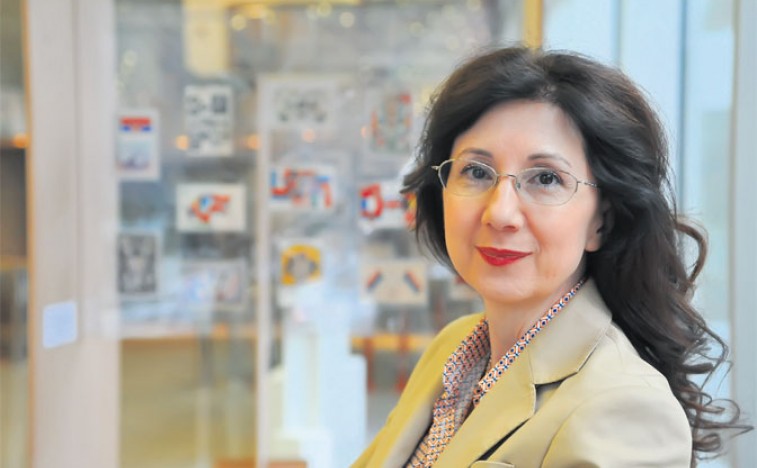
She says that it is extremely important that some of the Muslim countries, members of ASEAN, respect the sovereignty of Serbia and do not recognize the self-proclaimed independence of Kosovo. We need to work, she says, to make Serbia's voice heard among the other ASEAN members and gain support for the positions on the issue of Kosovo.
"There are countries in ASEAN that are among the fastest growing economies, including some of the largest Muslim countries, such as Indonesia, which respect the sovereignty of our country. I think that the six ASEAN member states did not recognize the self-proclaimed independence of Kosovo and we should work with others as much as possible to hear our voice, our arguments, and support for our positions and for the preservation of our territorial integrity. One of the principles on which ASEAN operates is the reliance on the UN Charter as a source of international law and this is always something that is on our side and an argument to which the member countries cannot remain deaf, those that have recognized Kosovo," Mitrovic pointed out.
She believes that Serbia proves that it is capable, willing, and able to develop diplomatic relations with distant countries and thus strengthens its position on the international stage within the UN, but also on the global stage.
Insisting on the UN Charter as a source of international law, presenting the Serbian position on the issue of Kosovo within ASEAN provides new opportunities, Mitrovic notes.
"It is certain that many of these countries are not sufficiently informed and familiar with the true state of affairs and now it is largely up to us to make them hear it. On the other hand, reliance on the UN Charter is an argument that they cannot ignore. I expect that this signed cooperation agreement will give us space and some political support to say that we are going diplomatically towards these countries," Mitrovic concluded.
She also stressed that the opportunities that Serbia had in the field of economic development and progress should not be ignored, because, as she estimated, an agreement on cooperation with countries, many of which were growing economies, known for technological progress and large markets, had been concluded.
"I see this agreement signed with ASEAN as opening up new opportunities for strengthening primarily economic and political relations with a group of Southeast Asian countries, many of which are really large producers, and large markets and exporters, some of them are growing economies with the highest growth rates, some are extremely technologically advanced countries such as Singapore, so they also have advanced technology. Their format of cooperation, which has lasted for decades and includes numerous partners from outside ASEAN, has proven to be an excellent framework for strengthening bilateral cooperation as well," Mitrovic said.
The opportunities for economic, trade, and investment cooperation in the field of advanced technologies and joint performances in third markets are great, the Professor says, adding that much now depends on Serbia and its engagement.
"The advantages are great, but it all depends on how much we will engage, whether we will open embassies in some of these countries because, in most of them, we do not have any, how much we will really try to fulfill the obligations from the signed contract in concrete forms, shapes, and contents," Mitrovic said.
As Dr. Sanja Arezina, an expert in international relations, points out for Kosovo Online, connecting with ASEAN is very important for Serbia, primarily because it helped the Southeast Asian region to bridge deep political divisions and remain focused on economic growth.

"The essence is the peaceful settlement of disputes between countries for the sake of continued economic cooperation. Finding a compromise, so that the countries learn to cooperate with each other, and put aside all disputes, and cooperate on those issues that are of common interest. Almost all the countries of this region apply this kind of protection policy, aligning, on the one hand, with the USA, and on the other, with China. That is, they are trying to have good security cooperation with Washington, while at the same time maintaining good economic cooperation with Beijing," she states.
She points out that ASEAN members, as well as Serbia, share the universal principles of peaceful coexistence and friendly cooperation.
"This is good for Serbia because it adheres to those principles and we do not have any major deviations in terms of our foreign policy position. On the other hand, cooperation with ASEAN also brings better dialogue with member states and inclusion in various networks and platforms of this organization. For Serbia cooperation in the field of education, science, and technology is also of great interest," Arezina says.
When it comes to the political support of ASEAN regarding Kosovo, considering that more than half of the members of this organization do not recognize Pristina, Arezina points out that all those countries are generally committed to peace, stability, international law, and multilateralism.
"There is equality here with the foreign policy strategy of Serbia, which is continuously working to strengthen its position, first of all in the UN, but also in other international organizations and forums, so that we can positively solve the issue of national interest. However, we cannot ignore the fact that normalization of relations between Belgrade and Pristina, that is, dialogue, is still being solved with the mediation of the EU, where most countries recognize the unanimously declared independence of Kosovo, and only five member states do not," Arezina points out.
Journalist and foreign policy commentator Borislav Korkodelovic told Kosovo Online that friendship between Serbia and ASEAN member countries could contribute to solving the Kosovo problem, because as he pointed out, many countries of this organization, such as Indonesia, had internal problems themselves, and were very interested in preserving the principles sovereignty and territorial integrity.

Also, he points out that the work model, in terms of consensus and consultation between ASEAN countries, can also be applied when it comes to Kosovo.
"When ASEAN was founded in 1967, it was thought that it would not last long due to internal conflicts, disagreements, and even external pressures, but to this day it is constantly progressing, economically first of all. The policy of ASEAN is in a way inherited from Indonesian traditional diplomacy, which is - the policy of non-alignment. ASEAN advocates that all problems, whether domestic within the organization or with the outside world, are resolved with the help of consultations and reaching consensus. We in the region and the EU could emulate that," Korkodelovic said.
He points out that the support of ASEAN when it comes to Serbia, can be extremely important, and their voice should be heard, noting that it includes influential countries of the Muslim, Christian, and Buddhist world. As such, they have the credibility to talk with other countries about Kosovo and to insist on the policy of consultation and consensus that ensured peace for them.
"During the breakup of Yugoslavia, the countries of Southeast Asia advocated in the international arena to more decisively defend their sovereignty and territorial integrity out of the friendship they had towards the former SFRY, and also because they have their own problems. Indonesia has around 600 tribes and different ethnic groups and you can imagine what it would look like if they revolted and demanded the violation of territorial integrity," Korkodelovic said.
He concludes that Serbia's rapprochement with ASEAN is very significant in the context of the Kosovo issue, recalling that Southeast Asian countries often play the role of mediators between conflicting parties.
"Indonesia has a tradition of mediating; it tried to mediate between Kyiv and Moscow," our interlocutor says.
Korkodelovic also points out that ASEAN is becoming more and more dominant as an economic factor at the global level and that it would be significant for Serbia to connect with that market. According to his words, the forecasts are that by 2050, ASEAN will become one of the most important economies in the world, after China, the USA, India, and the EU.
"The significance of the signing of the Treaty of Amity and Cooperation with ASEAN, which has been awaited for a long time, is that it is one of the most important regional organizations in the world, which has an increasing influence in international relations, both as an organization and individually, especially the most prominent and populous country like Indonesia. ASEAN is becoming more and more important as an economic factor, and with its total social product of around four billion dollars, it is the fifth or sixth economic entity," Korkodelovic concludes.



0 comments