
Every third worker wants to leave, and every second company facing closure, is Kosovo heading towards a crisis due to visa liberalization?
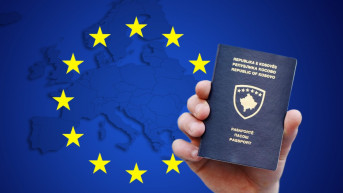
In 2015, Kosovo experienced a significant population migration when 35,000 Albanians left the country in just 45 days in search of a better life abroad. After the European Parliament approved the decision to liberalize visas for Kosovo citizens starting January 2024, there are concerns about an even more massive exodus that could lead to the closure of many companies. Kosovo Online interlocutors agree that visa liberalization for Kosovo citizens is the "best thing that happened to them", but they do not rule out the possibility that its effects could have serious consequences for the economy.
As of January 1, 2024, citizens of Kosovo will be able to travel to the Schengen area without visas for short stays. The countries included in the visa liberalization decision are Austria, Belgium, Bulgaria, Croatia, Cyprus, the Czech Republic, Denmark, Estonia, Finland, France, Germany, Greece, Hungary, Italy, Latvia, Lithuania, Luxembourg, Malta, the Netherlands, Poland, Portugal, Romania, Slovakia, Slovenia, Sweden, Switzerland, Norway, Liechtenstein, and Iceland. Holders of Kosovo passports will not be able to travel to Spain, a country that does not recognize Kosovo's independence or its passports.
Traveling without a visa means that citizens can freely visit Schengen countries as tourists, visit family and friends, seek medical treatment, participate in various cultural and sports events, or attend business meetings. However, they will not be allowed to work. According to the data from the Riinvest Institute, after January 1, it is expected that more than 32% of the workforce in Kosovo will emigrate to European countries.
Estimates suggest that 32.72% of workers will emigrate during the next year. According to data from business surveys, 17.59% of companies reported that their employees have already informed them about this. To curb this trend, 79% of companies increased their salaries on average by 22.23%. The construction sector in Kosovo is the most affected in terms of workers leaving, according to the Institute, and due to visa liberalization, half of the companies could close due to a production decline and bankruptcy.
Milica Andric Rakic, the Program Manager of the non-governmental organization New Social Initiative from Kosovo, also warns of these consequences. She told Kosovo Online that she believed the announced visa abolition for Kosovo citizens from January 2024 would strike a significant blow to the labor market because some companies had already warned that 50% of their workers had announced their intention to leave in January.
"Many professional associations in Kosovo warn that an outflow of the workforce, both qualified and unqualified, can be expected. A certain outflow is certainly expected. Perhaps it is not currently clear to what extent, but it will undoubtedly be a significant blow to the labor market in the first half of the year. Whether and how it will stabilize is a question. Kosovo has already started the practice of bringing in workers from India, Bangladesh, Turkey, etc., so I assume that the workforce will be sought in those other countries", she said.
Our interlocutor believes that the effects of visa liberalization will also impact the Serbian community in Kosovo.
"We may not have the outflow of the workforce to the same extent as the Albanian community, but we will certainly feel the effects of visa liberalization. I hope that the effects will be felt mostly in terms of travel and tourist visas without the misuse of the visa-free regime. Again, from the southern part, we might have more of these migrations abroad; here, if people leave, they go to Serbia", Andric Rakic says.
Economic expert Safet Gerxhaliu also believes that lifting the visa regime for Kosovo citizens will lead to the migration of a large part of the population from Kosovo. He explains to Kosovo Online that people predominantly go to Switzerland, Austria, and Germany, but lately, there has been great interest in the United States, Australia, and Canada.
Gerxhaliu emphasizes that citizens do not leave solely because of the poor economic situation.
"The problem is that no one can guarantee political stability. In a state where there is no political stability and in a region where political stability is either unstable or not secure, there will certainly be fear, there will certainly be a crisis, and there will certainly be the presence of 'how tomorrow', 'where tomorrow', and 'how will we do it tomorrow'", he said.
Gerxhaliu adds that European countries are a real attraction for some citizens, but individuals even decide to change continents.
"Not only the poor ones are leaving Kosovo. Entire families are fleeing, and those who have good salaries are leaving... We have the most diaspora in Switzerland, Germany, and Austria, but lately, there has been great interest from citizens of Kosovo in the United States, Australia, and Canada. This is the biggest defeat that Kosovo is experiencing", Gerxhaliu emphasized.
Journalist Nenad Radicevic, a long-time correspondent for Serbian media in Germany, says that after visa liberalization for Kosovo citizens, Germany does not expect a large influx of Albanians.
"Visa liberalization does not mean automatic permission for permanent or temporary residence in European Union countries but the possibility of staying there without a visa for only 90 days within six months. In Germany, no significant influx is expected since Germany regulated this in 2015. At that time, during the refugee crisis and the time of a large influx of asylum seekers from the Western Balkans, Germany introduced regulations allowing citizens of the Western Balkans to, through an abbreviated procedure and without knowledge of the German language, obtain a visa for temporary residence in Germany if they find a job", Radicevic explained for Kosovo Online.
Radicevic says that this allowed Germany to also enable an unskilled workforce, which often came, thinking they would be able to obtain asylum, to come legally to Germany if they wanted to work. On the other hand, the same regulation shortened the procedure for assessing whether someone could obtain asylum, aiming to prevent illegal migrations.
"This allowed them to quickly deport people applying for asylum, whom Germans mostly consider irregular. So, this regulation that makes it easier to get a job in Germany would, at least according to Germans, prevent illegal migrations", Radicevic says.
Journalist and writer Idro Seferi stated for Kosovo Online that the EU had been using the issue of visa liberalization as a punishment against the policies of governments in Pristina for years, and the announced abolition of visas was "rectifying years of injustice against the citizens of Kosovo".
"Visa liberalization is absolutely the best news that has happened to the citizens living in Kosovo in the last ten years, primarily because it is a humanitarian issue. Of course, it has been a political issue so far. The EU has sent a very bad message until now because it used visa liberalization for the citizens of Kosovo as a punishment against the policies of various governments that have been in Kosovo until now", Seferi explains.
However, despite the benefits, Seferi points out that due to the introduction of visa liberalization and easier procedures, there may also be increased migration from Kosovo.
"Of course, it will be a great challenge to see how the situation will develop afterward, whether there will be some larger migration or not. People are leaving anyway. They find jobs", Seferi notes for Kosovo Online, and assesses that the citizens of Kosovo will first "rush" to visit relatives abroad.
"Here, from a personal example. My brother has been living in Germany for 25 years. My parents could only visit him once in his life. They were not there when his children were born, when they celebrated birthdays, never for important events because the procedure was such that they could not schedule an appointment. I think this will make life easier for many who have the need to travel, and it will also make it easier for people who want to study and improve in their professions, so I hope everyone will come back", Seferi concluded.




0 comments