
Have Kurti’s messages brought (dis)quiet among the Serbs?
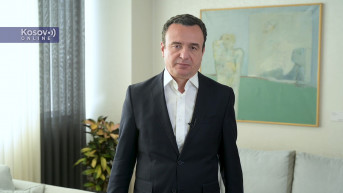
If his intention was to extend a hand to the Serbs in Kosovo, he was not convincing. Most of the points Albin Kurti put forward in his video message in Serbian could only mislead those not well acquainted with the situation on the ground, while his remarks about “integrating” healthcare and education into a single system must be taken seriously, observers told Kosovo Online. Instead of populism, they add, it would have been ideal if he had presented a plan for the mass return of Serbs to Kosovo.
Written by: Dusica Radeka Djordjevic
It is not the first time. Three years ago, just after completing his first year as Prime Minister of Kosovo, Kurti addressed the Serbs in a video message in Serbian.
At that time, he said the government was committed to improving the rights and well-being of all citizens of Kosovo regardless of religious or ethnic affiliation, and that in a democratic society and a state governed by the rule of law, people “must be free to express their views publicly.”
Since then, however, many Serbs who expressed their views have experienced the reality of that statement by ending up in handcuffs.
In his new video message, recorded ahead of the local elections scheduled for 12 October, Kurti—now serving in a caretaker capacity—noted among other things that he wished for stronger cooperation with the Serbian community, claiming he is the prime minister of all Kosovo’s citizens, that he serves all citizens, that he is not against any ethnic group, and that there is no interethnic animosity in Kosovo as some claim.
He also made clear that “the dualism of the healthcare and education systems is not sustainable.”
“Integration and unification are necessary. I do not wish to do this against you or without you. During our next mandate, together with all of you, including future mayors, we will work to align healthcare and education into a single system,” Kurti said.
Although he does not believe there will be violent closures of educational and healthcare institutions, as was the case with others in the past year and a half, Aleksandar Sljuka, associate at the NGO New Social Initiative, argues that this part of Kurti’s statement should be taken very seriously.
He points to recent announcements by Kosovo authorities introducing mandatory residence permits for those staying longer than three days, noting that this will indirectly affect the University, as many students come from Serbian towns and have no official residence in Kosovo.
“For them, this could pose a problem since Kosovo institutions, in the context of residence registration, may demand proof of enrollment from an institution accredited in the Kosovo system—which is, of course, impossible, because both the University and healthcare institutions operate under the system of the Republic of Serbia, not under Kosovo’s system,” Sljuka explained.
The same, he added, will apply to professors coming from Belgrade and other towns in Serbia who, apart from teaching at faculties—especially in the Medical School—are also employed on a temporary or contractual basis at the Clinical Hospital Center in North Mitrovica or in Gracanica.
“This is already an indirect blow if they cannot register locally, as the very process of residence registration is being made significantly more difficult. It shows that measures have already been taken to obstruct the functioning of Serbia’s healthcare and education systems in Kosovo. I believe these insidious, indirect pressures will continue, aimed at disabling the work of these vital systems for Serbs in Kosovo, and also for other communities who benefit from their services,” Sljuka concluded.
According to him, when looking at Kurti’s entire message to the Serbs, it was populist in nature, aimed at portraying himself as a decision-maker willing to cooperate with all, essentially to justify himself before the international community.
Sljuka is convinced that relevant international actors are well aware of the negative decisions taken by Kurti’s government—many of which they have repeatedly condemned—and that such a message cannot deceive them.
“This address may, and I see it has, misled some who are not familiar with the situation, and Kurti is likely using it to target precisely those circles and actors unaware of all the problematic decisions made and implemented in the past two, three, four years, which negatively affected the Serbian community. As for the Serbian community itself, he has not succeeded in deceiving anyone. They are fully aware that, as a result of his and the Kosovo authorities’ decisions, Serbian goods have largely disappeared from store shelves, and that people must travel to Raska or other towns in Serbia to collect their salaries and pensions, as they cannot do so locally. In the eyes of the Serbian community, Kurti cannot hide behind such declarative, populist messages,” he said.
He further noted that Kurti’s statement can be interpreted as a marketing trick intended to present himself as a leader ready for compromise, cooperation, and dialogue—despite the fact that, in the four years he has been in power, there has never been any genuine dialogue, consultation, or communication with the Serbian community, even though he had announced this as one of his government’s priorities.
According to constitutional law professor from Pristina, Mazlum Baraliu, Kurti’s government did attempt at the beginning of its mandate to establish internal dialogue with the Serbian community, “but failed due to pressure from Belgrade.”
Baraliu interprets Kurti’s messages as “an expression of goodwill and a statement of intent that, if he is prime minister again, he will do his utmost to respect and support all citizens equally.”
“The Constitution and laws of this country guarantee the rights of all communities, including the Serbian community. With this message, Kurti sought to confirm the government’s commitment to investment, as well as to internal dialogue with the Serbian community. The government attempted this initially, but failed due to Belgrade’s pressure exerted through Srpska Lista as a political organization,” Baraliu said.
Speaking to Kosovo Online, Baraliu also viewed Kurti’s message in the context of the upcoming elections, as a potential response to the international and European community and public opinion, through which he wishes to “show and prove” that both he and his government are committed to safeguarding the rights and freedoms of all communities in Kosovo. He does not believe Kurti was trying to attract Serbian voters, since, as he put it, “he knows there is major propaganda from Belgrade and external sources of information against this government, both in the West and the East.”
“That is not right, because I think we should support everything done in the name of the rule of law and for the benefit of all citizens,” the professor said.
In contrast, historian Momcilo Pavlovic believes Kurti’s message to the Serbs in Kosovo was not reassuring. In his interpretation, it means that Serbs are no longer even considered a minority, but rather just another ethnic community, and that they must integrate into Kosovo’s laws, refrain from relying on support from Serbia, and avoid electing representatives who defend Serbian interests.
The crucial point Kurti failed to make, according to Pavlovic, is “freedom for the Serbs—freedom from fear.”
He recalled secret lists, arrests of Serbs for wearing badges or T-shirts with inscriptions in Serbian or English, unlawful detentions lasting months, and baseless court rulings.
Serbs, Pavlovic stressed, should expect the continuation of this persistent, provocative policy.
“They should also expect continued efforts—supported by Western countries, especially those stationed in Kosovo—to fully consolidate and cement Kosovo’s statehood, but without the Serbs, or with Serbs reduced to an insignificant percentage with no role,” Pavlovic warned.
Regarding Kurti’s mention of 138 houses built and 13 renovated, Pavlovic responded that under Kurti’s tenure Serbian property in Kosovo and Metohija has been comprehensively usurped.
“It would have been ideal if Kurti had used his message in Serbian to send words of reconciliation and to outline a plan for the unconditional mass return of Serbs to their homes. Only then, assuming the creation of proper economic conditions for life, could these Serbs return. Those expelled in 1999 and later are now mostly elderly. For the younger generations, return will be much more difficult,” Pavlovic noted.
He further pointed out that Kurti boasted of Kosovo’s GDP growth rate of 6 percent, among the highest in Europe, but failed to mention that this entity survives on American and German “infusions” in the form of substantial donations.
Kurti, he added, speaks of dual or parallel institutions, but does not acknowledge “that Kosovo itself is a parallel state structure, a parastate.”
Historically, Pavlovic emphasized, it was the communists who first gave Kosovo territorial status, defined its borders, and granted it first regional, then provincial autonomy.
“Serbs and Albanians, not only under communism but even earlier—despite sporadic incidents, as everywhere—lived side by side. There were problems, but life went on. Now we come to the issue that two of the three pillars of Serbian existence or identity in Kosovo—namely the Church, education and language, and healthcare—are to be integrated into Kosovo’s institutions or laws,” he said.
According to him, it is unrealistic for Serbs in Kosovo to receive their education in another language, particularly at lower levels. He recalled that under Ibrahim Rugova, Albanians had created an entirely parallel education system, from primary school to university, conducting classes in basements, garages, madrasas, and mosques.
“It was only Milosevic, with Rome’s help, who managed to regulate that issue to some degree. Without Serbian consent, this will be yet another imposed norm. The West will issue perfunctory statements of regret, but reality will be quite different. It must be a process and a voluntary decision by the Serbian people—whether they wish to study under programs devised who knows where, and then, for example, learn in history that Serbia committed aggression in Kosovo, that KLA members were freedom fighters, that their representatives are heroes, and be compelled to mark certain dates and visit monuments,” Pavlovic observed.
He stressed that education in one’s own language is a legacy dating back to the 19th century, which Serbs enjoyed even under the Ottoman Empire, including the Prizren Seminary, schools in Pristina, Skopje, and Tetovo—then under Ottoman rule.
“All in all, this was not a calming message. It was a message aimed at his electorate and at some Serbs who, understandably, over time and out of practical necessity, find it expedient to cooperate with Albin Kurti’s regime,” Pavlovic concluded.

0 comments