
Drecun: Serbs in Kosovo and Metohija have no protection without an active KFOR role

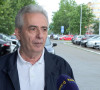
Milovan Drecun, Chairman of the Serbian Parliament's Committee on Defense and Internal Affairs, said that the demolition of buildings at Lake Gazivode, the issue of the bridge over the Ibar, the security of the Visoki Decani Monastery, and other actions by Pristina are all part of broader pressure on the Serbian community in Kosovo.
“All these cases, the bridge over the Ibar, the protection of the Visoki Decani Monastery, the beating of Nenad Raskovic, and now the demolition of these buildings, are simply a continuation of the institutional and physical terror that the provisional institutions of self-government are carrying out against the Serbian people,” Drecun told RTS.
He believes that Serbs have been reduced to second-class citizens and that the law is applied selectively to them.
“When we talk about institutional terror, I primarily mean that Serbs have been reduced to second-class citizens, that they cannot exercise even their basic human rights before the provisional institutions of self-government or under the laws currently in force in Kosovo and Metohija,” Drecun stressed.
According to him, the demolitions at Gazivode and at Lake Radonjic demonstrate the difference in the way Serbian and Albanian property owners are treated.
“Just compare the demolitions on the shores of Lake Radonjic and those at Gazivode. The owners at Lake Radonjic are Albanians. All the procedures prescribed by law were followed there,” Drecun said.
He added that, at Gazivode, the demolitions are allegedly being carried out without all the procedures being completed that would allow Serbs to use legal remedies.
“What you have here now is an unlawful demolition, unlawful in the sense that all judicial instances were not exhausted to allow Serbs to appeal,” Drecun said.
Speaking about the broader position of Serbs in Kosovo, he pointed out that a significant number of Serbs have left their homes over the past five years.
Speaking about the bridge over the Ibar, Drecun stressed that it is important for it to remain under KFOR control and closed to traffic.
He recalled previous clashes and attempts at mass incursions across the bridge, saying that fear among Serbs remains.
“There could always be an attempt at a mass incursion aimed at driving Serbs out of the northern part of Kosovska Mitrovica or forcing them into what they are now trying to impose, the unification of the two municipalities,” Drecun said.
He noted that other bridges already provide for the functioning of traffic and therefore sees no need to open another crossing over the Ibar.
“Why is it necessary, alongside those bridges, to now have another bridge that runs practically along the central street through northern Mitrovica? Well, create some, uh, ecological zone, some ecological oasis. Let there only be greenery there, let pedestrians and others cross there,” Drecun asked.
Asked whether NATO can stop the process of opening the bridge, Drecun replied that it “can and must.”
He explained that he considers the decision to gradually transfer some of KFOR's responsibilities to the so-called Kosovo Police problematic.
“That assessment is based on two alleged facts. First, that the security situation in Kosovo and Metohija is stable. How can it be stable if you have daily terror against Serbs, particularly in northern Kosovo, and Serbs are leaving?” Drecun stressed.
According to him, an additional problem is the assessment that Kosovo's security institutions are more capable of taking over some of these tasks.
“I believe this is part of a long-term plan agreed with Pristina to reconfigure KFOR's mandate, which derives from Resolution 1244, without the authorization of the Security Council, and to gradually transfer some of KFOR's responsibilities to the so-called Kosovo security institutions,” Drecun emphasized.
He recalled that, under Resolution 1244, KFOR's primary task is to provide a secure environment for everyone living in Kosovo.
“You know what KFOR's mandate is? To provide a secure environment for people living in Kosovo and Metohija. Whose secure environment is being threatened? Albanians? No, it is the Serbs whose security is threatened, and they must primarily pay attention to their security,” Drecun said.
He cited the beating of Raskovic as an example and criticized the position that this is merely a matter of law enforcement.
“KFOR says: ‘It is not our responsibility, it is law enforcement.’ But this is not law enforcement. This is terror that Pristina is deliberately carrying out against Serbs. When you look at everything else as well, you see that KFOR, particularly in recent years, has actually ceased to be a mechanism for creating a secure environment for people living in Kosovo and Metohija, primarily the Serbian people, because they are the ones whose security is threatened. Instead, it has become a military mechanism for protecting the so-called state of Kosovo, and that is the biggest problem,” Drecun said.
He concluded that Serbs do not have adequate protection without active KFOR involvement.
“In principle, without KFOR acting actively and exclusively in accordance with Resolution 1244, Serbs essentially have no protection because they are discriminated against by the institutions,” Drecun said.
Asked who would guarantee the security of Serbs if KFOR continues to reduce its presence, Drecun said that KFOR is effectively the only force mandated to guarantee security.
“KFOR is actually the only force that is supposed to guarantee security,” he stressed.
He pointed to a contradiction in the way KFOR defines its role.
“When it comes to terror against Serbs in the north, KFOR says, ‘We are only the third link in that chain.’ The first is the Kosovo Police, which is actually threatening and terrorizing Serbs,” Drecun said.
According to him, KFOR must consistently implement its mandate.
“When you define it this way, sometimes we are the first force, sometimes the third, that leaves room for manipulation, and then you can decide for yourself whether you will protect Serbs at any given time or not,” Drecun stressed.
He said this is why Serbian President Aleksandar Vucic is sending a letter to NATO Secretary General Mark Rutte, and expressed his belief that the matter depends primarily on them.
At the same time, he expressed concern about the long-term reduction of KFOR's responsibilities.
“But what worries me is the long-term process of reducing KFOR's responsibilities. KFOR will not leave Kosovo, but it will reduce its responsibilities and transfer them to these institutions,” Drecun said.
He identified the permanent deployment of members of the Kosovo Security Force in the north as a particularly risky possibility.
“In the second phase, I am afraid that members of the Kosovo Security Force will be allowed to be permanently stationed in the north, and that would completely round out what Kurti calls their borders,” Drecun stressed.


0 comments