
New Kosovo Law on Tourism: A barrier to pilgrimage trips?
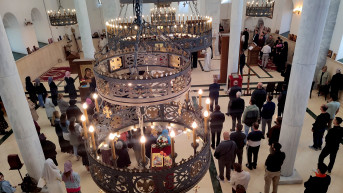
Provisions of the new Law on Tourism, which stipulates that organized groups arriving with a tour guide who does not hold a Kosovo license must be accompanied during their stay by a local guide licensed in Kosovo, will cause problems for pilgrimage trips from central Serbia, Serbian tourism professionals warn, while those in Pristina maintain that the issue has been politicized.
Written by: Katarina Saicic
The new Law on Tourism entered into force on August 1.
According to the interpretation of the relevant ministry in Pristina, the law neither regulates nor restricts religious rites and pilgrimages, but applies when organized groups use commercial tour-guiding services.
However, priests, monks, and other representatives of religious communities accompanying the faithful in a spiritual capacity are not required to hold a tour guide license as long as they are performing a religious role rather than providing conventional tourist presentations.
If, however, an organized group arrives with a guide who does not hold a local license, or if professional tourist and historical interpretation of heritage is provided during the visit, the engagement of a locally licensed guide becomes mandatory, with penalties envisaged for non-compliance.
Possible problems
The Raska-Prizren Diocese expressed concern and dissatisfaction, stressing that pilgrimages by the faithful must not, in essence, be equated with commercial tourist tours and that monasteries are living holy sites rather than tourist attractions. The Diocese recommended that pilgrimage groups be accompanied by clergy so that their journey is classified as a religious rather than a tourist tour.
The law has caused considerable uncertainty and concern among tour guides who organize pilgrimage trips, some of whom regard the measures as yet another form of harassment of the Serbian community. Some tours have consequently been canceled, while those who did venture to Kosovo on August 1 encountered difficulties.
Pilgrimage tour guide Vesna Raonic said that on this occasion she had been fortunate only because her tour had begun, as scheduled, on July 31, one day before the new Law on Tourism took effect.
"I crossed Jarinje with a group of pilgrims on July 31, and at that time I did not need a guide with a Kosovo license. The authorities also did not ask me for one on August 1 or the following day while we were visiting churches and monasteries, even though there was no priest in my group," Raonic said in a written statement to Kosovo Online.
However, she said that an acquaintance who was leading a group to Kosovo for the celebration of the Feast of St. Elijah was unable to cross at Merdare even with a confirmation that he had registered a religious gathering. This happened just four hours after midnight on August 1, when the new rules came into effect.
"The Kosovo licenses held by Serbian guides from Gnjilane were not valid until they obtained the new license. The man waited for more than four hours for an Albanian guide to arrive from Pristina, escort them 15 meters for a fee of 50 euros, after which everyone went their separate ways. As I understand it, the fee for the services of a guide with a Kosovo license is 50 euros if the guide accompanies the group only while crossing the administrative crossing. Accompaniment while touring Pristina costs 150 euros, while a full day with a Kosovo-licensed guide costs 250 euros. My impression is that there is no clear procedure and that we are left at their discretion, or simply facing uncertainty," Raonic said.
21 licenses issued so far
One of the licensed tour guides, Muhamer Hasani, said several days ago that 21 guides had been licensed and that there was no time limit for submitting licensing applications.
Hasani considers the move positive because, as he put it, Kosovo's history will be presented without exaggeration or disparagement.
He said that the narrative about Kosovo had until now often depended on the personal views and beliefs of what he described as "illegal guides," including guides from the region, Western Europe, and China.
"There have been cases in Kosovo where the war was not presented as a war, but as an internal or civil conflict. There have also been claims that Kosovo's population is 70 percent Albanian and 30 percent Serbian. There have even been cases where the city's district heating plant was presented as an Illyrian monument damaged after the war. There have also been cases where the KLA was presented as a terrorist organization. Such things occurred almost every day, and these are only examples that we had the opportunity to hear about. Imagine how many other narratives there were that we never learned about," Hasani said.
He also believes that the issue of engaging tour guides has been politicized.
"The law stipulates that all organized groups coming to Kosovo for tourist visits must have a local tour guide. The same rule applies in Serbia, as well as in many other countries. This issue has, however, been politicized because when a tour guide from Kosovo enters, for example, the Gracanica Monastery or a mosque, the visitors are then taken over by the guide at that particular site, whether it is a museum, church, or mosque. I would not like to go any further into that subject," Hasani said.
Emphasis on religious visits
Mirko Stanic, Vice President of the Association of Tourist Guides of Serbia, explained that, for the time being, the only solution is for groups traveling on pilgrimages to Kosovo to be accompanied by members of the clergy so that their trip is classified as a religious visit rather than tourism.
Stanic believes that the recommendation of the Raska-Prizren Diocese that pilgrims should be accompanied by a priest or monk, so that their visits to monasteries are treated as a religious activity rather than a tourist activity, is a good solution until a permanent arrangement can be found.
"For now, this is the only appropriate measure that could allow such trips to proceed normally, with the aim of ensuring that they are not referred to as pilgrimage tourist trips but as religious trips, thereby removing the word 'tourist' from the terminology. For all these reasons, it is advisable always to have a member of the clergy accompanying the group, which would facilitate the entire procedure. In that case, Kosovo inspectors or controllers could not repeatedly prevent a member of the clergy from performing his duties when traveling with the faithful," Stanic told Kosovo Online.
He added that the provisions of the new Law on Tourism in Kosovo would certainly affect the organization of pilgrimage trips by agencies from central Serbia and the region.
"In any event, they will have an impact in the sense that, ultimately, in order to avoid potential complications in that territory, it will be necessary to engage individuals whom they designate as their guides. I am speaking on behalf of the Association of Tourist Guides of Serbia, and we know that, regardless of the fact that we officially regard it as our territory, they are introducing rules there against which we can do nothing on the ground. Nobody wants to put travelers, guests, or our colleagues in a situation where someone might be arrested somewhere or a trip interrupted for that reason.
Unfortunately, we cannot resolve all these issues from here at this time, but we can advise travel agencies and organizers, as well as our colleagues, before they set out," Stanic said.
Asked about the objective of the measure, Stanic said he believed one of the reasons was that the authorities in Kosovo wanted to provide work for their own guides.
"The objective is multifaceted. Unemployment in Kosovo and Metohija is 68 percent. They have 21 licensed guides; until recently, they had 12. One of the reasons is certainly that they want to provide work for these people. I recently spoke in Italian with one of the licensed guides from Kosovo, and his knowledge of Italian was at a very modest level, which is insufficient for professional tour-guiding work of a serious standard," Stanic concluded.

comments