
Kosovo as a temporary project: Why are there mixed signals from Kurti's government about unification with Albania?
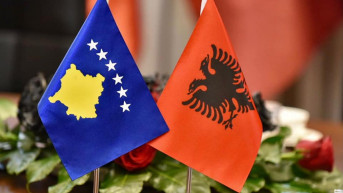
The statement by Kosovo Minister Luburn Aliu that Kosovo is a temporary project without an identity until it is united with Albania caused numerous controversies both in the Kosovo political elite and in the region. For some, it is a decades-long aspiration, for others it is a pre-election trick, but almost everyone agrees that such rhetoric could destabilize the entire Balkans.
The two most important figures in the Self-Determination Movement of Prime Minister of Kosovo Albin Kurti, Glauk Konjufc and Liburn Aliu, in a short period of time gave contradictory views on the union with Albania.
While Aliu called Kosovo a temporary project until unification with Albania, expressing doubt that it is possible to create a Kosovo nation, Konjufca said that "the unification of two states in the 21st century is paradoxical." Even Kurti himself softened his position on the union with Albania, saying that at the moment the Constitution of Kosovo does not allow such a thing and that the Government of Kosovo is focused on the protection of the country, territorial integrity and sovereignty.
Historian Stefan Radojkovic from the Institute for Political Studies tells Kosovo Online that he agrees with Minister Aliu's statement that Kosovo is a temporary project without an identity, but he does not think Pristina's goal is unification with Tirana.
"The thesis on Kosovo as a temporary project represents the political program of Kurti's Self-Determination. They gained support from the majority of the Albanian population on that platform. It is interesting that they are saying this publicly, it is not something that is not known, but it is a sign that they feel comfortable and privileged in the current constellation and structure of international relations which definitely favors them, at least as far as the Balkan peninsula is concerned," explains Radojkovic.
When asked how he comments on the fact that there were opponents in the Government of Kosovo to such a position, he says that no one really opposes it, but many officials are afraid to publicly express their position, lest it destroy their foreign policy support.
On the other hand, Radojkovic believes that Kosovo is a temporary project and that Pristina is trying to create something that is not a sustainable attempt at state infrastructure.
"Kosovo is an economically unsustainable, institutionally poorly organized political entity. Albanians see it as a temporary administrative framework for something that should be further built. Will it be a "great Albania!" is not so important, but what is important for us is to understand how they view this entire ethnic space. For them, it is a unique cultural-ethnic space. I mean Albania, the western part of Macedonia, the largest part of Kosovo and Metohija and certain parts of Montenegro. They see it as a unique ethnic cultural space where all these borders are temporary," our interlocutor stated.
As he adds, the Kosovo flag is invented, it has no basis in the tradition of the Serbian people, nor in the tradition of the Albanian people, nor in the traditions of other peoples in that area.
"It is a forced solution imposed because Kosovo is still officially an international protectorate. There you have KFOR units, you also formally have UNMIK mission. It had to stand out somewhere, at least formally, as a truly state that will eventually create a nation. In fact, often ethnic groups create nations, then states, and here everything started in the reverse order. There they tried to create some kind of so-called Kosovo civil society, which absolutely does not exist. Below you have the Albanian society, the Serbian society, the Gorani who they see as citizens of Serbia, we also have the Turkish population... It is an artificial construction that is currently the fruit of an international constellation of forces and will probably cease to exist as such with the change in international circumstances," emphasized Radojkovic.
In this regard, he denies that the ultimate goal of Kosovo is unification with Albania, but the reasons for this are purely pragmatic.
"Political elites in Tirana and Pristina are pragmatic and selfish in their pragmatism. They all strive to be "first in the village, not second in the city". In this sense, there will be no unification, but maybe there will be some kind of erasure of borders like countries of the European Union. Formally, there are no borders between the full members of the EU that are part of the Schengen area. It is enough that there is an intensive exchange of people and goods between Pristina and Tirana. Of course, this rhetoric is always desirable because it responds to the emotional needs of the Albanian people in Kosovo," says Radojkovic.
Professor Luka Jovanovic from the Faculty of Philosophy of the University of Pristina with temporary headquarters in Kosovska Mitrovica explains for Kosovo Online that Minister Aliu's statement also threatens the sovereignty of other Balkan states.
"It's not a new plan, and it's not a new idea or a new goal. It's actually an idea that's been going on for 150 years among the Albanians themselves, specifically the Albanians in Kosovo and Metohija. What we had to hear from the minister in question is actually another in a series confirmation of the implementation of the Great Albanian policy, which, as we can see, has been in the making for a century and a half. What he said in the context of the so-called Kosovo itself is that Kosovo should only represent one step towards "Greater Albania". Of course, sovereignty is at risk there, of other countries, not only the Republic of Serbia, but also the sovereignty of Montenegro, North Macedonia and Greece," Jovanovic believes.
He explains that Minister Aliu's statement itself is problematic and should be viewed in a historical context and with the aim of uniting the people who live outside the borders of their home country.
"Many ministers also understood that such a single act would result in the loss of functions and many levers of power that Prishtina has. We must not forget, nor have any illusions about the fact that Albanians are absolutely united. They are not, the rest were extremely divided as well, as linguistically and culturally, as well as politically. We could especially see in the last few years and months the diversity in the Pristina-Tirana relationship, where Pristina often did not allow Tirana to position itself as the boss, which Tirana wants to be. Actually, the problem is how to manage Kosovo, that is, in that greater Albanian project, as the future province of Albania and what will happen to the officials from Pristina, that is actually the main problem. I say again, such problems are not new among the Albanians themselves, they have always had diversity on the Pristina-Tirana route, and I think that problems will also exist in the future and that it will be difficult to overcome them, especially because of one basic question - who will be the first," says Jovanovic.
Historian Aleksandar Gudzic also says for Kosovo Online that Albanians in the Balkans have always wanted unification and warns that it is a dangerous idea that would destabilize the Balkans. As he points out, Greece, Macedonia and Serbia will not calmly look at the creation of one great Albania and the demolition of internationally recognized borders.
"Currently, the German model from the 60s of the existence of several Albanian states is in force. Namely, in the 1960s, West Germany brought a plan for the political reorganization of the Balkans, where there would be more of those Albanian states. It is difficult to say whether at some point the unification of Kosovo with Albania will happen. The only thing we can know for sure is that, if this happens, it will lead to the destabilization of the Balkans," Gudzic concluded.
On the other hand, analyst Shkelzen Maliqi says for Kosovo Online that Minister Aliu's statement is a propaganda trick to show dissatisfied voters that Self-Determination is still working to unify Albanians.
Maliqi does not believe that unification with Albania is the goal of the current government, but the old position of Self-determination, which has always been for the unification of Kosovo and Albania.
"This is the old position of Kurti and Self-Determination, that Kosovo was independent in the wrong way, that it should not have declared independence at all. When they came to power, they accepted all the symbols, and Aliu's statement is a propaganda trick to show those who are dissatisfied with this compromise along the lines that Self-determination continues to work on the unification of Albanians," said Maliqi.
He pointed out that the opposition parties used Aliu's statement to remind what Self-Determination is aiming for, while the opposition within the ruling party said it was working on "consolidating Kosovo's independence".



0 comments