
The new initiative for Kosovo's membership in the Council of Europe: An impossible mission without the CSM?
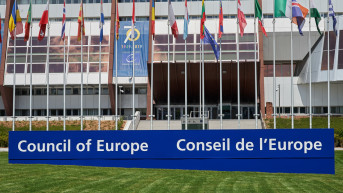
This year Kosovo missed the opportunity to become part of the Council of Europe (CoE), an organization focused on human rights, democracy, and the rule of law. However, during the autumn session of the Parliamentary Assembly of the Council of Europe (PACE), members of the Kosovo Assembly launched a new initiative to place Kosovo’s membership on the agenda for the Committee of Ministers' meeting in May next year. According to experts consulted by Kosovo Online, without progress toward the formation of the Community of Serb Municipalities (CSM), Kosovo cannot realistically expect to gain access to this organization.
Written by: Milena Miladinovic
Two conditions were set for Kosovo to become part of the Council of Europe. The first was the return of property to the Visoki Decani Monastery. This condition has been fulfilled. On March 13 this year, the Kosovo government gave the green light to the Cadastral Agency to transfer the property to the Visoki Decani Monastery.
However, according to the German envoy for the Western Balkans, Manuel Sarrazin, the decision came too late.
“Momentum is crucial in politics. The decision about the Decani Monastery came too late. That’s life. This is not the stance of Germany, but my personal view is that if Kosovo had done this six months earlier, the situation in the CoE would have been different,” Sarrazin said during his recent visit to Pristina.
The second condition is to send the draft statute of the Community of Serb Municipalities to the Constitutional Court for review.
This condition has not yet been met, although promises were made, or at least partial commitments.
Kosovo’s Foreign Affairs and Diaspora Minister Donika Gërvalla, just days before the Committee of Ministers' meeting, sent a letter to the chair of the Parliamentary Assembly of the Council of Europe, Theodoros Rousopoulos, stating that Kosovo planned to submit the draft statute of the Community of Serb Municipalities, prepared by the “Friedrich Ebert” Foundation (which does not grant the Community any powers and reduces it to the level of an NGO), to the Constitutional Court by the end of May.
“Since April 17, the Kosovo government has taken significant steps to fully implement the Basic Agreement of February 2, 2023, and its Annex of March 18, 2023, including the formation of the Community of Municipalities with a Serb Majority (Article 7 and Article 10 of the Basic Agreement). In line with this, we have already started consultations with representatives of the Serb community to identify the most important needs of municipal services. In this regard, the Kosovo government plans to submit the draft statute of the Community of Municipalities with a Serb Majority, inspired by the Friedrich Ebert Foundation, to the Constitutional Court for review by the end of May 2024,” Gërvalla stated in the letter.
Gërvalla’s promise was not enough for Kosovo to become a member of the Council of Europe at that time.
The next opportunity for Kosovo will be in May of next year, if the topic makes it onto the agenda of the Committee of Ministers' meeting. Members of the Kosovo Assembly participated in the autumn session of PACE and initiated a new effort.
DPK MP Ariana Musliu-Shoshi requested at PACE that the issue of Kosovo's membership be placed on the agenda for May 2025.
On behalf of the Kosovo delegation, she asked Secretary General Alan Berset to include Kosovo’s membership on the agenda of the next ministerial meeting, scheduled for May next year.
"Thank you for the opportunity to speak. On behalf of Kosovo's delegation, I would like to congratulate you on your appointment. Your dedication to the functioning of democracy, the rule of law, and respect for human rights removes any doubt in this process regarding Kosovo’s well-deserved right to be part of this organization. We are committed and welcome your support and cooperation to be included on the agenda of the next ministerial meeting in May 2025," Musliu-Shoshi stated.
Experts consulted by Kosovo Online believe that Kosovo’s membership issue in the CoE is essentially frozen. They argue that without steps toward the formation of the CSM, Kosovo cannot remain a part of this international organization. However, they consider Germany's support in this matter to be crucial.
Kosovo Government Responsible for Failure
Analyst Artan Muhaxhiri points out that the fact that Kosovo has not yet become a member of the Council of Europe is the responsibility of the Kosovo government and Prime Minister Albin Kurti, as they played political games at a crucial moment for Kosovo.
"The Kosovo government had an excellent opportunity for Kosovo's membership in the Council of Europe, but due to their naivety, the process was unsuccessful. It was a mediocre political game—they attempted to submit the draft statute of the Community, prepared by the 'Friedrich Ebert' Foundation, at the last moment. However, this was not the official draft that had been submitted to them by Lajcak," Muhaxhiri said.
As he emphasized, it is not possible for Kosovo to become a part of the Council of Europe without submitting the draft statute of the Community of Serb Municipalities (CSM) to the Constitutional Court for review.
"It is shameful that such an opportunity was missed because many factors need to align for membership in such an important institution to be obtained. I believe that the next time the process will be the same—Kosovo will be asked to submit the draft statute of the Community to the Constitutional Court. Without that step, there will be no success. It will be a waste of energy if the Kosovo government seeks membership without fulfilling its obligations from the dialogue. So, while this sounds good to voters in Kosovo, in practical terms, it is impossible for Kosovo to gain Council of Europe membership without meeting the criteria set by the decision-makers," Muhaxhiri added.
The responsibility for this failure rests with the Kosovo government and Prime Minister Albin Kurti, Muhaxhiri emphasized.
"The responsibility lies entirely with the Kosovo government, as they had the opportunity. They were only asked to submit the draft statute to the Constitutional Court, not to start forming the Community. They didn’t even do that; they tried to play political games with the international community and lost. I think it was a very foolish decision to play such political games at such a critical moment," Muhaxhiri concluded.
Nothing Has Changed
Lawyer Milan Antonijevic stated that Kosovo’s membership in the Council of Europe is currently frozen because there has been no progress in fulfilling obligations in Pristina, something that member states of the Council of Europe are also noticing.
From a legal perspective, Antonijevic emphasized that nothing has changed regarding Kosovo’s membership in the Council of Europe. However, he expects a strong campaign from Pristina.
"From a legal and procedural standpoint, nothing has changed compared to the previous period. I don’t see any process being unblocked, nor do we see Pristina firmly at the negotiating table. All those economic issues and the obstacles to trade between Serbia and Kosovo are still in place. We are also seeing some new technicalities intended to hinder or slow down the process of economic cooperation. I don’t see what has physically changed, and I believe that Council of Europe member states will think similarly. Still, I expect a strong campaign to enter this process. We’ll see how our diplomacy will respond," he said.
As Antonijevic emphasized, Germany has shown goodwill by contributing to the processes it supports, including Kosovo's membership in the Council of Europe.
"Germany is trying to find a response to Pristina's lack of constructiveness in the dialogue. On one hand, they are discussing potential consequences, which could resemble sanctions, such as exclusion from CEFTA. On the other hand, they are also showing goodwill to unblock the processes that Germany has always supported, and that includes Kosovo's membership in the Council of Europe," Antonijevic added.
According to him, this process is currently frozen.
"I don’t see what could happen at this moment to unfreeze it and speed it up," Antonijevic stressed.
He also highlighted that Serbia's diplomatic efforts have been fruitful.
"Serbia has made some progress in diplomatic activities, not only with the members of the Council of Europe but also with UN members. We’ve also had a visit from the new U.S. envoy for our region, Gabriel Escobar, and I believe that in the period leading up to the U.S. elections, we might unblock some issues and achieve new concessions from Pristina. They have their obligations, and all these diplomatic efforts could bring certain results in the coming period," Antonijevic concluded.
"Package Deal"?
Former Serbian Ambassador to the OSCE, Branka Latinovic, believes that there are no new developments regarding Pristina’s initiative to have Kosovo’s membership in the Council of Europe placed on the agenda of the next Committee of Ministers' meeting, as the demands set for Kosovo have not changed. However, she suggests that there may be discussions about a "package deal" in diplomatic circles.
Latinovic recalls that Kosovo has two conditions for membership in the Council of Europe. The first is the return of land to the Visoki Decani Monastery, which the Kosovo government has fulfilled. The second, she adds, relates to the formation of the Community of Serb Municipalities.
"I don't believe anything substantial has changed regarding the conditions set for the Pristina authorities related to making the appropriate decision at the Committee of Ministers. We know there were two conditions: the return of property to the Visoki Decani Monastery, which was carried out and was the main impetus for the Parliamentary Assembly to make the decisions it did. The second relates to the adoption of the Statute of the Community of Serb Municipalities, which is clearly a sine qua non for regulating Kosovo's status in the Council of Europe," Latinovic said.
Given that there has been no progress on these conditions, specifically regarding the formation of the Community of Serb Municipalities (CSM), Latinovic believes there is little chance that Kosovo's membership will be placed on the agenda of the Committee of Ministers.
"Since nothing has changed and we have no indication that anything is happening, I don't see any potential for this issue to be placed on the agenda of the next Committee of Ministers' meeting," Latinovic added.
However, considering how Pristina "enabled" the flow of Serbian goods at Germany’s request, Latinovic wouldn't be surprised if Kosovo's path to the Council of Europe were eased.
"I wouldn't be surprised if they are working on something that in diplomacy is called a 'package deal,' outlining what additional steps Pristina needs to take in exchange for this issue being placed on the agenda. But, even if it is placed on the agenda, it doesn't mean it will be automatically resolved," Latinovic noted.
According to her, Germany has taken on a political role in the normalization of relations between Kosovo and Serbia, as well as in Kosovo’s bid for Council of Europe membership.
"It is clear that Germany has once again taken the political initiative and has significant influence over the authorities in Pristina. There seems to be a division between the U.S. and Germany, with the U.S. focusing more on security aspects and Germany assuming the political dimension. This is partly due to Germany and France taking responsibility for the Franco-German proposal, which served as the basis for the drafting and adoption of the new Brussels Agreement, as well as for the issue of resuming the flow of goods from Serbia. The statements we have heard from Germany are strong indicators of a loosening of the criteria that Pristina needs to meet for this issue to be placed on the agenda of the next Committee of Ministers' meeting, or in the near future," Latinovic concluded.


0 comments