
Belgrade-Pristina dialogue: A priority for Kosovo or an obligation under international pressure?
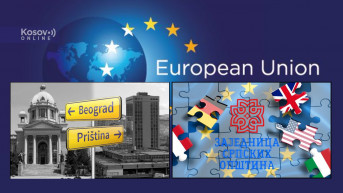
Political turmoil in Kosovo and several election cycles over the past two years came to an end in early October with the election of President Justina Shiroka Pula and the stabilization of Prime Minister Albin Kurti’s government. The news that Agron Bajrami had been reappointed head of Kosovo’s negotiating team for the technical dialogue with Belgrade has also raised the question of whether the dialogue will be among the priorities of the now fully constituted institutions in Pristina. Dialogue experts from Pristina, North Mitrovica and Belgrade told Kosovo Online that they expected greater EU pressure on Kosovo, while pointing out that the dialogue had never been a priority for Kurti.
Written by: Ivana Sanjevic
The Belgrade-Pristina dialogue is a long-running political process aimed at normalizing relations through agreements and practical cooperation. Agreements are reached, but their implementation remains a challenge. The establishment of the Community of Serb Municipalities (CSM) is one of the most important and contentious issues in the process, as Pristina has failed to fulfill that obligation since the 2013 First Brussels Agreement.
International representatives, primarily the EU as facilitator of the dialogue and KFOR as a guarantor of the agreements, stress that a political path is the only way to achieve lasting security in Kosovo. Official Belgrade emphasizes that the talks are not and cannot be a process aimed at mutual recognition, but rather at resolving practical issues and addressing the position of citizens, while Pristina maintains that mutual recognition is the only basis for dialogue.
To Brussels without Belgrade
Former diplomat Albert Prenkaj said that Kosovo’s institutional crisis, followed now by the electoral process in Serbia, had brought negotiations on the normalization of relations to a standstill.
“We are witnessing a suspension of the dialogue with Serbia. However, in all communication Kosovo has with the international community, particularly with official Brussels, including High Representative for Foreign Affairs and Security Policy Kaja Kallas and European Commission President Ursula von der Leyen, the demand is that Kosovo fulfill the international obligations it assumed in 2023 during the negotiations in Brussels and Ohrid,” Prenkaj recalled.
He does not regard Bajrami’s appointment as a downgrading of Kosovo’s level of representation, because “an ambassador represents all state institutions and is capable of communicating with European officials and the Serbian side,” Kosovo Press reported.
“Bajrami already has diplomatic experience in Brussels and has established a network of contacts there, and the government believes that our ambassador can act as chief negotiator on issues that will continue to be discussed,” Prenkaj concluded.
Professor of European integration Dritero Arifi believes that the dialogue with Serbia should not continue without a change in the European Union’s approach. According to him, Kosovo must implement the agreements to which it has committed itself, but must also change its approach to the process and communicate directly with the EU.
He noted that technical issues had largely been resolved and that the focus should now be on implementing the agreements already reached, Kosovo Press reported.
“There is no problem with appointing someone like Agron Bajrami for the technical dialogue. As for the political aspect, Prime Minister Albin Kurti either does not understand or refuses to understand the reality of the situation. For me, dialogue with Serbia no longer makes sense. It should not even take place until certain matters are clarified,” Arifi stressed, adding that dialogue with the EU should continue.
He reiterated that Kosovo had to be clear, determined, open and honest with the EU.
“We will implement all the agreements to which we have committed ourselves—but with the European Union. The approach and narrative must change, particularly following the decision of the Specialist Court. We have concluded the technical issues, or at least I believe we have; at the very least, the measures taken in the north are a fait accompli. All that remains is for us to implement the agreement,” Arifi stressed.
Dialogue has never been a priority for Kurti
Aleksandar Sljuka, an associate of the NGO New Social Initiative, is not convinced that there is any willingness in Pristina to continue the dialogue with Belgrade, pointing out that the EU has not exerted decisive pressure on Kosovo to make concessions or abandon actions detrimental to the Serbian community.
“Over the past period, we have seen that the focus of the dialogue was not on those issues, because EU facilitator Peter Sorensen insisted on humanitarian matters, including the issue of missing persons. If we are talking about the broader dialogue, in the sense of bringing the two sides together to discuss substantive issues such as the Community of Serb Municipalities and its implementation, I do not see that happening in the coming period,” Sljuka told Kosovo Online.
Sljuka added that the institutional crisis had not prevented Pristina from taking certain steps, such as closing almost all institutions supported by Belgrade, with the exception of those in education and healthcare.
“We should not have overly high expectations in the coming period,” Sljuka predicted.
Milos Pavkovic, Strategy Director at the Belgrade-based European Policy Centre, told Kosovo Online that dialogue with Belgrade had never been a priority for Kosovo Prime Minister Albin Kurti and would not become one now.Pavkovic nevertheless expects pressure from the EU, and particularly from the Quint countries, for Pristina to begin addressing its obligations now that its institutions have full mandates.
“I expect pressure from the EU and the Quint countries to intensify so that work now begins on the obligations arising from the dialogue and the normalization agreement. Whether that will have an impact on Albin Kurti’s government remains to be seen, but the room for maneuver to avoid obligations will definitely be reduced,” Pavkovic assessed.
Pavkovic is not convinced that the institutions in Pristina will be prepared to reach agreements or make concessions to the Serbian community in order to secure the support of non-majority communities for amendments to the Kosovo Constitution.
“I am not sure that Kurti will prioritize the dialogue, particularly the Community of Serb Municipalities, which has always been a point of contention and something around which he built his political platform by opposing it. My assessment is that he will focus on reforms, the Reform Agenda and alignment with the EU, while leaving the dialogue issue aside or implementing some less significant technical measures,” he said.
Pavkovic reiterated that the CSM was a major issue on which both Belgrade and Brussels would insist, but said he was convinced that Kurti was still not ready to compromise on the matter.
He also pointed to ideas circulating in Pristina that Kosovo’s European path should be decoupled from the dialogue with Belgrade, but described them as “wishful thinking,” because Serbia would then seek a similar approach and such a move would, in essence, do nothing to contribute to normalization of relations.
“The EU’s position on this issue is firm, and I do not believe there will be any change. Any proposals from Pristina to alter the structure are an attempt and a maneuver to avoid obligations. Brussels has recognized that, and proposals of that kind will not be accepted,” Pavkovic said.



comments