
North Macedonia: Extraordinary elections or consensus of the Government and the opposition - citizens dissatisfied with political instability
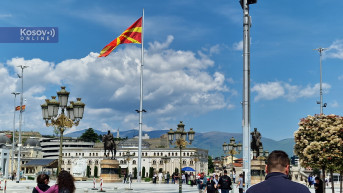
North Macedonia has been in a political crisis for several months, awaiting a vote on constitutional amendments, and extraordinary parliamentary elections in that country due to disagreements between the Government and the opposition over the issue are, according to many, an increasingly probable option. The special correspondent of "Politka" from Skopje, Zeljko Sain, says that Macedonia is definitely at an electoral crossroads, and not only when it comes to the parliamentary elections, and that it is time for the parties in that country to have a political dialogue. Bojan Kordalov, a Communication Specialist from Skopje, estimates that both the Government and the opposition should be concerned by the fact that citizens, after numerous political crises in the last three decades, feel that political parties are losing sight of their needs, questions, concerns and problems due to the struggle for power.
The constitutional amendments proposed by the Government envisage the addition of the Preamble and Articles 49 and 78 of the Constitution, where the parts of the people in North Macedonia are enumerated. As proposed, in the text, "Citizens of the Republic of North Macedonia, the Macedonians, a part of the Albanians, the Turkish people, the Vlachs, the Serbs, the Roma people, the Bosniaks, and others", a comma is placed after the word Bosniak people and the following is added: the Bulgarians, the Croatians, the Montenegrins, the Slovenians, the Jews and the Egyptians".
The amendments had been prepared in the Inter-Community Relations Committee, as stated, in order to preserve the parity of representatives in the Assembly of all communities defined in the Preamble of the Constitution.
The adoption of the amendment is also related to the continuation of the European integration of North Macedonia, because otherwise Bulgaria, as a member of the EU, could stop that process.
For the adoption of constitutional amendments, a two-thirds majority in the Assembly is required, for which the support of the largest opposition party VMRO-DPMNE is also necessary, which, however, is against their adoption and their leader Hristijan Mickoski repeats the position that VMRO-DPMNE is "against the constitutional amendments under dictation". In addition, that party demands the calling of extraordinary parliamentary elections.
One of the demands of the opposition at the meeting of the leadership of the presidents of the ruling Social Democratic Union of Macedonia and VMRO-DPMNE was the formation of a government in which the Albanian party DUI would not participate. Last month, DUI ministers offered their resignations to Prime Minister Dimitar Kovacevski, which they stated would take effect immediately after the adoption of the constitutional amendments, as well as that VMRO-DPMNE could immediately become a part of the Government in which DUI would not participate and that the new coalition organized extraordinary parliamentary elections.
Bojan Kordalov, a Communication Specialist from Skopje, recalls that in the past three decades, since the country became independent, the citizens of North Macedonia rarely participated in the regular parliamentary elections and that they are used to constant political tensions.
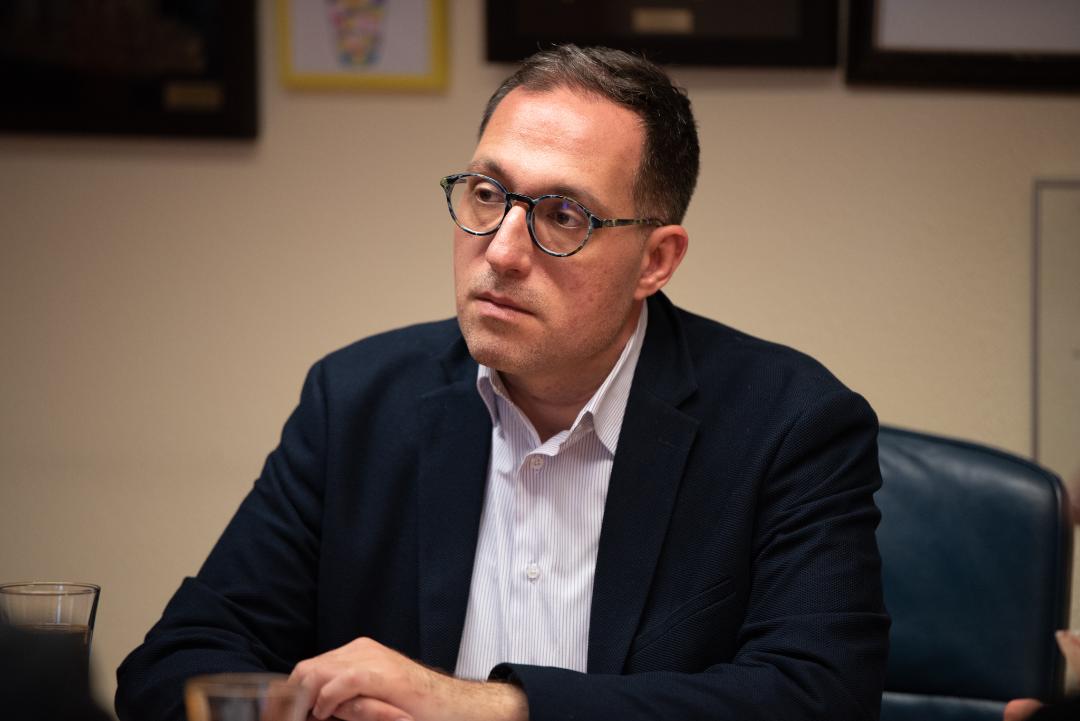
"And constant expectations of some 'decisive' electoral decisions that will 'finally determine the desired direction in which the state will move', and promises to the citizens that this will 'bring peace, justice, higher salaries and pensions, eradication of corruption, membership in the EU,' dispute resolution, etc.”.
But the impression of most citizens is that instead, the only thing that increases after each election is the number of unfulfilled promises, that is, disappointment after each election cycle. And this is not someone's opinion or assertion, but statistics that clearly show that the number of interested voters decreases with each subsequent election cycle, and we have long had a type of election that will be unsuccessful if it does not go simultaneously in combination with another electoral confrontation," Kordalov says.
According to Kordalov, the messages that the citizens send every election day should have long ago pointed out to the politicians that their behavior and attitudes do not meet expectations and that they are increasingly moving away from those who give them power - that is, the people.
"But instead of every politician looking for a way to get closer to the citizens, they decide to stand closer and more obedient to their party leaders, realizing that this is the best and easiest way for them to be a part of the “cake of functions”," Kordalov adds.
He points out that he is not sure how likely extraordinary elections are, especially since the regular mandate of the current Government lasts less than a year.
"But it is important to emphasize that it is democratically healthy to expect opposition parties to support and work on holding special elections, just as the ruling parties are fully expected to hear more about the need for political continuity, structural and long-term reform, etc.," Kordalov says.
Kordalov emphasizes that what should worry everyone, including the Government and the opposition, is the feeling among citizens "that in this kind of naked political struggle to stay or come to power, the needs of citizens and their questions, concerns, and problems are being lost."
"In other words, after more than 30 years of pluralism and dozens of different election and referendum reckonings, it is more important for the citizens who understands, that is, which party or coalition can and wants to realistically deal with everyday challenges such as rising prices, price increases every step, salary and pension inflation, the benefits of EU membership for every person, rather than who will be in power," Kordalov concludes.
"Politika" special correspondent from Skopje Zeljko Sain believes that North Macedonia is definitely at the crossroads of elections.
"But not only in terms of parliamentary politics and the implementation of new constitutional changes, but also in front of the historical path that politicians of all parties, and above all, the two largest Macedonian political parties, the Social Democratic Union of Macedonia and VMRO-DPMNE, are tracing. What kind of future North Macedonia and its people will have depends on them," Sain told Kosovo Online.
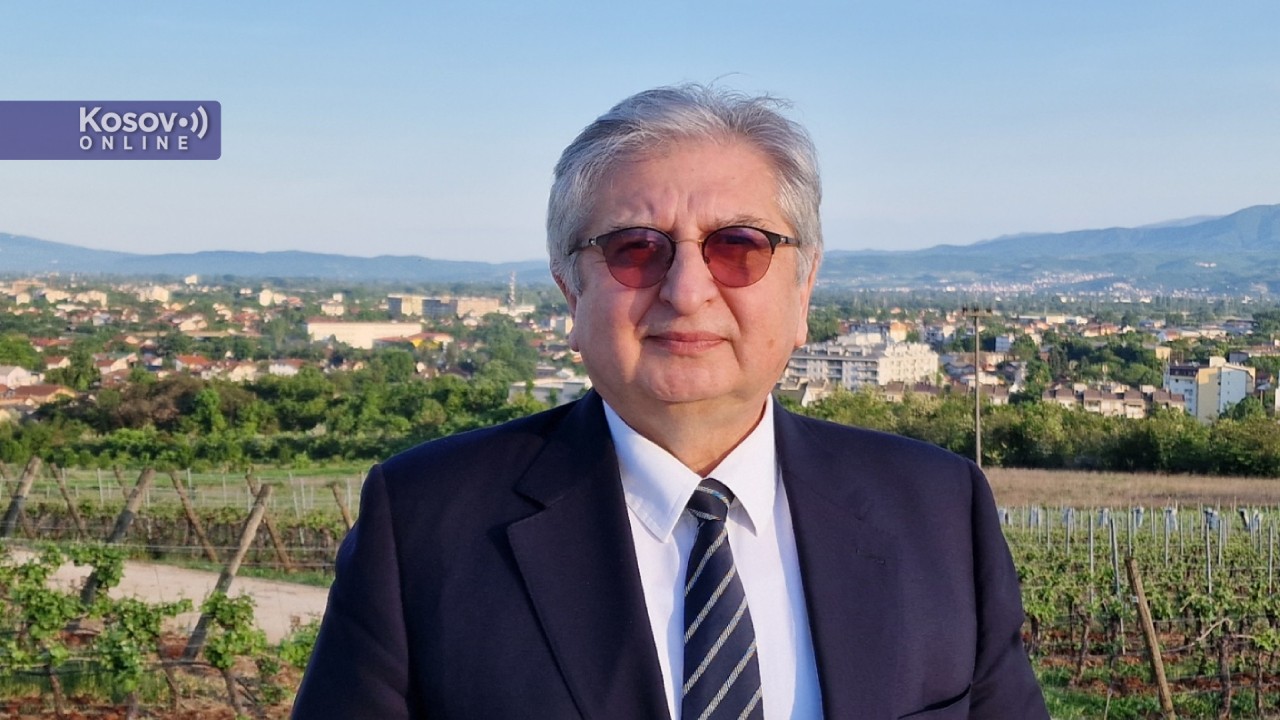
Sain connects the situation in North Macedonia with the great powers and the battle for global interests after the Cold War.
"However, North Macedonia, as a small country, must obey the hypocritical policy of the EU, on whose false promises it has already tripped over, or the US policy, which tries to enslave the EU, and, as a NATO member, follow the strategic goals of the North Atlantic Alliance," Sain says.
He adds that, in order for North Macedonia to establish itself on the international level, it is very important to have a dialogue between the Macedonian parties, and then with the Albanian political entity, which, according to him, is the decisive political factor.
"Otherwise, even the 'Open Balkan' will not be able to control the security situation in the Western Balkans. No matter how bitter the change of the Constitution is for North Macedonia, this step defends its identity, sovereignty, and determines it for European integration perspectives," Sain concluded.
0 comments