
One crossing, many barriers: Does the scanner at Merdare solve the problem of Serbian goods entering Kosovo?
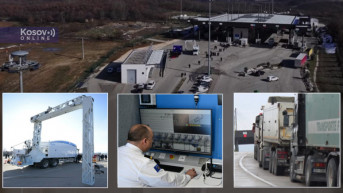
Despite the installation of a modern cargo scanner at the Merdare crossing—intended to reduce truck inspection times to around ten minutes—trade between Serbia and Kosovo continues to face serious constraints. Business operators, drivers, and economic analysts told Kosovo Online that the core problem is not technology, but the fact that imports from Serbia are permitted at only one crossing, coupled with questionable political will.
Written by: M. Miladinovic – P. Rosic
In mid-2023, the Government of Kosovo banned imports of goods from Serbia, later amending the measure in October the following year. Imports from Serbia were then allowed exclusively via the Merdare crossing, while other crossings were promised to be “opened” once scanners were secured.
“To have controls at all border crossings, we need to obtain those scanners, which, first, we are purchasing ourselves, and second, we expect assistance from both the United States and the European Union. Until the scanners arrive, we will allow goods to enter only at Merdare, but under control, because security measures as such remain in force,” Prime Minister Albin Kurti said at the time.
Two days later, the German Embassy in Kosovo announced it was in contact with authorities in Pristina regarding the procurement of scanners to control goods arriving from Serbia. From then until now, kilometer-long truck queues have become a common sight at Merdare, with drivers reporting waits of two to three days at Kosovo entry terminals.
Germany Promised, the U.S. Delivered
In November last year, the German Embassy stated that two scanners would be installed at Merdare no earlier than 2026, without commenting on the reasons for the delay. However, instead of Germany, the United States last week provided a mobile scanner valued at €3 million. The handover ceremony took place on 22 January at the Merdare checkpoint.
“I believe this will accelerate and revitalize the flow of goods, while at the same time ensuring integrity in the inspection process and overall security,” said acting Finance Minister Hekuran Murati at the ceremony.
Scanner Already in Use
On the same day, the Director General of Kosovo Customs, Agron Lugaljiju, told a meeting at the American Chamber of Commerce in Kosovo that scanners at other crossings would become operational during the year.
In a response to Kosovo Online, Kosovo Customs spokesperson Adriatik Stavileci confirmed that the scanner at Merdare has already been put into operation and is currently being used in line with existing procedures and risk assessments. He added that Customs has successfully completed staff training and scanner testing, creating all necessary conditions for its safe, efficient, and professional use in daily operations.
“Although part of the infrastructure expansion is still in its final phase, the scanner is already being used in practice. We expect that the full application of this technology will further enhance efficiency in identifying and managing risks, as well as facilitating trade, which is one of Kosovo Customs’ key priorities. In this regard, it is important to note that, according to CEFTA mechanism measurements, the Republic of Kosovo records the best results in customs clearance times, clearly confirming Kosovo Customs’ commitment to best practices and the most appropriate tools in serving the economy and international trade,” Stavileci emphasized.
The Problem of a Single Crossing
This development has given hope to truck drivers transporting goods from Serbia to Kosovo, who expect congestion to ease. However, they told Kosovo Online that the best solution would be to allow imports at all crossings.
“I think that if the scanner works and imports of Serbian goods are allowed at all crossings, the congestion will decrease,” said one driver encountered at Merdare.
Others remain cautious. One of his colleagues noted that, despite the new equipment, everything will depend on how the Kosovo side operates.
“There should be less congestion, but in the end it all depends on how they work,” he said.
For Sasa Sekulic, President of the Association of Serbian Businesspeople from Gracanica, the activation of the scanner is also positive news, as it will reduce inspection time per truck to around ten minutes. He expects queues at Merdare to diminish, but stresses that the core problem remains: imports from Serbia are still allowed at only one crossing.
“We expect congestion to ease, but as long as Merdare remains the sole crossing for imports from central Serbia, the question is how much they will actually decrease. The inspection time per truck will be ten minutes. The only real benefit is that there will no longer be customs inspections at the terminal. The paperwork process with freight forwarders will be shorter,” he said.
Sekulic added that scanner-based inspections will increase the flow of Serbian goods, while expressing hope that other crossings will also be equipped.
“We expect two more crossings—Jarinje and Bela Zemlja—to receive scanners, so that the flow of goods can be faster and both entry and paperwork, as well as unloading, can be completed within the same day,” he said.
Trade on the Rise
Bojan Stanic, Assistant Director of the Strategic Analysis, Services and Internationalization Sector at the Serbian Chamber of Commerce, said that despite all restrictions, trade between Serbia and Kosovo increased by around one third in 2025 compared to the same period in 2024.
“When you look at the trade data with the territory of Kosovo and Metohija in 2025, from January to November, trade increased by about one third compared to the same period in 2024. Our exports there rose by 36 percent, while imports from Kosovo and Metohija increased by around 10 percent,” Stanic told Kosovo Online.
He added that total trade in those 11 months amounted to €375 million, with Serbia recording a €280 million surplus.
“This demonstrates the strong competitiveness of the Serbian economy in Kosovo and Metohija. Despite all these restrictions, non-tariff barriers, and the fact that there is only one functional administrative crossing for cargo transport, significant growth has still occurred. It would have been even greater without these ongoing restrictions,” Stanic said.
Commenting on the capacity of the Merdare crossing, he noted that it is currently utilized at around 50 percent.
“Certain donations were made to improve the infrastructure at this administrative crossing, and despite that, we still have kilometer-long queues there, even though there is room to ease the burden,” Stanic said.
He pointed out that alternatives exist.
“For example, goods from southwestern Serbia could pass through crossings in western Kosovo and Metohija, but they are now forced to take detours to reach Merdare, which increases costs and causes delays. What should take a few hours sometimes takes an entire day or even several days. In that sense, there is clearly an attempt to prevent what is inevitable—namely, that Serbia significantly strengthens its position in the Kosovo and Metohija market,” Stanic emphasized.
The Question of Will Remains
Stanic said that following the U.S. donation of a scanner for Merdare, an increase in throughput is technically expected, but “the question of will remains.”
“On the other hand, there are ways to reduce staff working hours at these crossings. For example, on Sundays it is not possible to undergo customs clearance, meaning that anyone who fails to pass by Saturday evening must wait until Monday—more than a full day. If there were pressure from the EU to increase the functionality of this administrative crossing and to open others to truck traffic, that would certainly boost trade and, consequently, exports of Serbian goods to Kosovo,” he explained.
He expressed hope that additional crossings would open in 2026.
“We expect and hope so, especially given our cooperation with businesspeople from Kosovo and Metohija within the Chamber Investment Forum. This situation also harms their companies, considering that they procure goods from Serbia that are more price-competitive and more suitable for them,” Stanic said.
He added that Serbia’s main exports to Kosovo include grains, aluminum and aluminum products, various foodstuffs, and animal feed.
“All of this comes from Serbia and, in price terms, helps keep their production costs lower than if they were sourcing from Albania, North Macedonia, or other markets,” Stanic noted.



0 comments