
Suspension of U.S. immigrant visas: A political message to the Western Balkans?
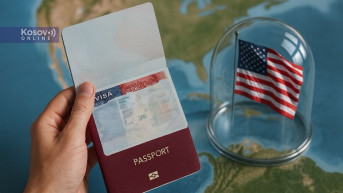
The decision by the United States to suspend, as of 21 January and for an indefinite period, the processing of immigrant visas for nationals of 75 countries—among them all Western Balkan countries except Serbia—has prompted numerous reactions across the region. Interlocutors of Kosovo Online from the United States, Skopje, Pristina, and Belgrade largely agree that the measure does not constitute a direct political message to the Western Balkans, given that it applies globally, but they stress that it will nevertheless have certain negative consequences. Voices from Tirana note that the regulation demonstrates that Washington no longer maintains a privileged policy toward NATO member states such as Albania.
Written by: Katarina Saicic
The decision of the U.S. Department of State was adopted as part of a stricter application of the “public charge” provision, which allows for the refusal of visas to individuals assessed as likely to rely on social assistance in the United States.
The measure does not apply to citizens of the listed countries who wish to visit the United States for tourism, business, academic, or similar purposes; rather, it targets those seeking to work in the U.S. and potentially rely on social welfare benefits.
The Embassy of Pristina in Washington stated that Washington’s decision to temporarily suspend the issuance of immigrant visas does not affect those who already hold a valid immigrant visa.
“The decision applies solely to the issuance of immigrant visas and does not apply to non-immigrant visas, such as those for tourists, athletes, skilled workers, and their families. It does not affect individuals who already hold a valid immigrant visa,” the Pristina embassy in the U.S. said.
Nevertheless, some Kosovo politicians reacted sharply. Former Kosovo Ambassador to North Macedonia Gjergj Dedaj described the decision as a clear indication of failure and degradation in foreign policy.
A Form of Sanction
U.S.-based political activist Valentin Lumaj believes the measure will have serious consequences and represents a form of punishment toward Albania and Kosovo.
Commentators in the United States also note that the measure has not been explained with sufficient clarity, yet is expected to have tangible effects.
Amanda Thorp, Senior Non-Resident Fellow at the Atlantic Council’s Europe Center in Washington, assessed that all countries—including those in the Western Balkans—whose immigrant visas have been suspended will be affected by the U.S. Department of State’s decision. She expressed hope that the measure would not discourage young people from considering relocation to the United States.
Speaking to Kosovo Online, Thorp noted that the decision has not been clearly explained, given its implications for a broad range of countries, some of which are close partners of the United States.
“First of all, this is an extremely broad range of countries—75 states is a very large number. The list includes countries ranging from Cape Verde, one of our most reliable partners in Africa, to Iran, and even the Bahamas, a destination frequented by many Americans. It is unclear why Western Balkan countries were also included,” said Thorp, whose research focuses on the Western Balkans and U.S. congressional engagement.
According to her, there is no clear rationale beyond a general narrative that immigrants allegedly drain U.S. resources, which she considers inaccurate.
“I believe all countries on this list will be affected, but I do not see any specific Western Balkan country being singled out or particularly exposed. It is also unclear how long these measures will last, what their immediate consequences will be, and what their long-term effects on immigration and efforts to curb it will be,” she said.
Despite the measure, she stressed that the United States remains a strategic partner for the Western Balkans.
“I believe Washington can still be a strategic partner—perhaps with an inconsistent narrative, but still reliable when it comes to national security. If you examine various documents and messages coming out of Washington, you will often find them misaligned or even contradictory,” Thorp noted.
She expressed hope that young people would not be discouraged by the measure introduced under President Donald Trump and that they would continue to aspire to immigrate to the United States.
“I think the United States is currently going through a very difficult period. Democracy is under pressure and facing serious challenges. Nevertheless, I hope that young people, young immigrants, and young people from the Balkans will continue to want to come to America,” Thorp concluded.
Aimed at Curbing Economic Migration
Marko Savkovic of the ISAC Fund told Kosovo Online that the U.S. decision is yet another in a series of political messages directed at the world at large, but emphasized that it is not directly targeted at anyone in the region.
Savkovic noted that the measure, which entered into force the previous day, nevertheless poses a challenge for relations between the U.S. and Pristina.
“It has been demonstrated that citizens originating from Kosovo are at higher risk of using resources offered by the United States, in terms of social assistance and benefits. This does not apply only to Kosovo; other countries and societies from the Western Balkans are also included—75 countries in total, which is a large number. This is part of Trump’s agenda that no one should exploit the United States, its generosity, or its goodwill,” Savkovic said.
He added that the message being sent is that a different administration is now in place, one that will not allow its resources to be misused.
“I think many people will be affected, but the question is whether highly educated individuals will be impacted. The intention is to target or curb economic migrants, who are perceived as already too numerous—an important element of Trump’s agenda. I do not see this as a specific message to Pristina; it is a broad policy decision with implications for many countries. It is not directed against anyone in the Western Balkans in particular. It reflects U.S. domestic policy and the priorities of those currently in power,” Savkovic emphasized.
Kosovo Diaspora Primarily Oriented Toward Europe
Similar views are heard in Pristina. Political analyst Artan Muhaxhiri assessed that the U.S. decision will not have a major impact on Kosovo, given that the Kosovo diaspora is predominantly oriented toward European countries.
Muhaxhiri explained to Kosovo Online that the measure is primarily statistical and symbolic, reflecting President Trump’s broader stance on combating immigration.
“I do not believe it carries a political message. The countries concerned were selected based on high levels of family reunification during immigration and GDP levels. Kosovo appeared in both categories. Kosovo is a very small country, and I do not believe it can significantly influence the U.S. immigration system compared to countries with populations of 50 or 100 million. This is a PR tool for Trump to convince his own voters that he is globally combating immigration,” Muhaxhiri said.
Asked about the extent to which the decision affected leaders of the countries concerned, he noted that political leaders and the media clearly distinguished the measure as applying exclusively to immigration, not tourist visas.
“People can still travel, study, or visit the United States. Immigration is a different matter, but the numbers are very small. I do not believe this decision will have a major impact on Kosovo. Kosovo’s migration is largely linked to Europe—particularly Germany, Switzerland, and Scandinavian countries—while the U.S. ranks much lower as a destination. Initially, the decision surprised many, but once explained, it did not significantly affect the political or public sphere,” Muhaxhiri concluded.
One in Three Immigrants from North Macedonia Used Social Assistance
Analyst and Director of the Macedonian Center for International Cooperation Aleksandar Krzalovski stated that the U.S. measure applies globally, while also explaining why Western Balkan countries appeared on the list.
“Percentages of social assistance usage were published. For example, Kosovo stood at 41 percent, Albania at 45 percent, or vice versa. North Macedonia was listed at 33 percent—meaning that every third Macedonian citizen who applied for an immigrant visa to the U.S. also received social assistance. The aim of this measure is to discourage arrivals to the U.S. for the purpose of burdening the social system. That is why Serbia is not on the list, while countries with more than 25 percent of beneficiaries of social assistance were included,” Krzalovski told Kosovo Online.
He noted that the list primarily includes African countries, but also states from Latin America and generally those with weaker economic conditions.
“The goal is to prevent abuse of the system and to attract people who wish to come and contribute to the U.S. economy, rather than burden it. The fact that our countries fall into this category may also be linked to a mentality of attempting to obtain all available benefits. It is clear that conditions will be tightened. In the coming period, only those who genuinely wish to work in the U.S. will receive such visas,” he emphasized.
No Privileged Status
Political analyst and editor at the Tirana daily Tema, Ilir Pata, told Kosovo Online that the U.S. no longer maintains a privileged policy toward NATO countries, as even they have been affected by the suspension of immigrant visas.
“Something new is happening globally. The U.S. no longer has a privileged policy toward countries like ours, once described as satellites or allies due to NATO membership. This includes Albania, North Macedonia, and Montenegro—NATO members now among those affected by this presidential decision. Much will depend on how the issue unfolds in Congress or U.S. courts. The essence is that Trump’s America no longer maintains the same relationship with NATO allies; the relationship is now shaped by immigration policy. As far as U.S. history is concerned, this is not entirely new,” Pata said.
He added that Albania has a large number of immigrants working in the U.S. while maintaining strong ties to their country of origin.
“Their connection to the U.S. is primarily employment-based, as they are economic migrants, but their hearts and minds remain in Albania. We all have friends and relatives there. This has always been unacceptable to America,” Pata noted.
In his view, the entire concept is largely psychological and political.
“Citizens of Albania, North Macedonia, or Montenegro are a drop in the ocean of the United States, but this is a political decision—one I do not believe was made by Donald Trump alone. While he is the president and has his team, this is a decision of the State Department, which seeks to convey its messages to the Balkans through it: ‘we are ushering in a new era,’” Pata concluded.




0 comments