
Two weeks since the incident near Zubin Potok: Is Pristina's investigation leading to the truth?
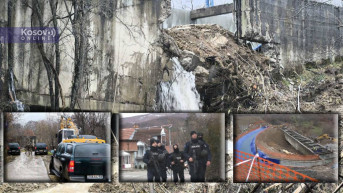
Sixteen days have passed since the explosion in the Ibar-Lepenac canal, but instead of answers, more questions are emerging. Security experts interviewed by Kosovo Online warn that, based on the information released so far, the investigation is not heading in the right direction.
Written by Arsenije Vuckovic
On the evening of November 29, in the village of Varage near Zubin Potok, an explosion damaged the Ibar-Lepenac canal. Prime Minister Albin Kurti immediately blamed official Belgrade for the incident and called for the urgent deployment of Kosovo Security Forces to the northern part of Kosovo.
That request was denied. KFOR Commander Enrico Barduani explained that there was no need for such a measure.
The outcome, however, was the deployment of approximately 2,000 police officers, mainly from other parts of Kosovo, across four municipalities in the north, followed by a series of "spectacular" police actions that resulted in the arrests of ten Serbs.
Less spectacularly, most of them were later released.
At the same time, Pristina has consistently insisted that Serbia and "Russian influence" are responsible for the incident. This narrative only subsided after a sharp reaction from U.S. Ambassador Jeffrey Hovenier.
"The U.S. government has advised the Government of Kosovo that, before accusing anyone, it should first gather credible investigative results and then identify the responsible party. Only then will it have everyone’s support," Hovenier stated.
Sixteen days later, only two of the arrested individuals remain in custody, allegedly because police found a large cache of weapons, ammunition, and military equipment, including insignias of various Serbian and Russian military units, as well as the disbanded KLA.
"If it weren’t tragic and dangerous, it would be laughable," commented Serbian Foreign Minister Marko Djuric.
Questionable Investigation Practices
President of Serbia Aleksandar Vucic questioned why Kosovo police contaminated the crime scene, making forensic investigation impossible.
"Why did they seize the crime scene before KFOR and EULEX arrived? Whom were they protecting? If it was Belgrade, we ask them to explain how exactly Belgrade was involved," Vucic asked.
Ganimete Musliu, an MP from the Democratic Party of Kosovo, accused Pristina's government of turning the investigation into propaganda.
"Such attacks happen worldwide. However, unlike Kosovo, the rest of the world studies the source of the threat rather than turning incidents into propaganda," Musliu said.
Lutfi Haziri, Deputy Chair of the Democratic League of Kosovo, went further, accusing Kurti’s government of damaging Kosovo’s credibility with the international community by failing to convince them of Serbia's responsibility.
Who Benefits, Who Suffers?
The sabotage, described as a classic act of terrorism or propaganda, could have had serious consequences. Security researcher Nikola Vujinovic emphasized the importance of identifying who benefits and who suffers from such incidents.
"My opinion is that Mr. Kurti and his Self-Determination Movement stand to gain the most from this situation. They are likely striving to secure a parliamentary majority in the next Kosovo assembly," Vujinovic said.
He argued that the Serbian community has been the biggest victim of this incident.
"This harms the Serbian community the most, both politically and socially, making it illogical to think that Serbs would have committed such an act," Vujinovic concluded.
He also pointed out the lack of results from the investigation.
"We have no investigative results so far, and we don’t even know if an investigation is genuinely underway. President Vucic has demanded answers about why Kosovo’s security forces contaminated the crime scene. On the other hand, Kosovo’s President Vjosa Osmani held meetings with security representatives, but no details were shared. We’ve heard various statements from political analysts, ambassadors, and Albin Kurti himself, all emphasizing the need for an investigation. Yet, no concrete results or evidence have been presented, and I doubt we’ll see any," Vujinovic noted.
Western Diplomacy’s Take
Asked about the reserved statements from Western diplomats, particularly U.S. Ambassador Jeffrey Hovenier, who advised waiting for the investigation’s outcome, Vujinovic interpreted this as a sign of diminishing support for Pristina.
"Western allies are willing to support Kurti as long as it’s meaningful, but their actions show that this support is waning," Vujinovic said.
A Flawed Investigation
Dragan Pasic, a former military prosecutor and now a lawyer, emphasized that without international involvement, no credible investigation is likely.
"I don’t expect any results unless international institutions like UNMIK, EULEX, or independent commissions formed by Quint states intervene. Pristina will likely maintain its narrative of terrorism orchestrated by Belgrade, despite a lack of evidence. Identifying the perpetrators is crucial, but I don’t believe Kosovo’s interim institutions are willing or capable of doing so," Pasic said.
He criticized the initial two weeks of the investigation, stating it is not progressing in the right direction.
"This seems more like retaliation. People were arrested for unrelated reasons, and linking them to this incident is unfounded. These individuals were unjustly detained and deprived of their liberty," Pasic argued.
He further noted that neither Pristina nor Belgrade has moved beyond their initial statements, and no evidence links the arrested individuals to the incident.
Politics Over Justice
Srđan Barac, an associate at the Center for Social Stability, claimed the case has shifted from the judicial to the political arena.
"We see no evidence, only insinuations. This is more a matter of political games or the exploitation of real events to serve a political agenda. It’s likely meant to create unrest and fear, fueling Albin Kurti’s political machine amidst his lack of concrete results," Barac said.
Barac emphasized that the international community, particularly the U.S., has not fallen into the trap of accepting Pristina's claims without evidence.
"The most significant international player is the U.S., as it effectively decides what happens in this region. Ambassador Hovenier’s statement that there isn’t enough evidence to determine who caused the attack is a clear transatlantic message to Kurti to abandon his politics of chaos and tension," Barac concluded.
0 comments