
The U.S. and Kosovo in 2026: What does Washington expect from the new government?
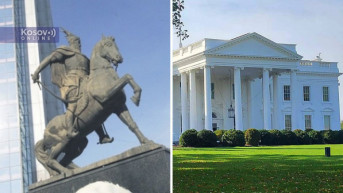
Toward the end of last year, observers of international affairs tended to argue that relations between the United States and Kosovo had fallen to their lowest point. The new year began with a message from the U.S. State Department expressing hope to strengthen the partnership with Kosovo’s future government, including the continuation of the strategic dialogue—while also noting what this would entail. Kosovo Online’s interlocutors interpret the statement from Washington differently. For some, it is a courteous message; for others, a signal that Kosovo will be given a second chance, conditioned on concrete results.
By: Dusica Radeka Djordjevic
After it became clear, following the parliamentary elections on December 28, that the new government in Kosovo—like the previous one—would be led by Self-Determination, the State Department announced that it hoped to strengthen the partnership with the next government, including the continuation of the strategic dialogue.
“However, achieving this will require actions that advance our shared agenda for regional peace, stability, and mutual economic prosperity,” Washington specified.
Kosovo’s largest ally, the United States, on September 12 last year indefinitely suspended the planned strategic dialogue with Kosovo. The reason given at the time was concern over actions by the caretaker government that had increased tensions and instability, limiting the United States’ ability to work productively with Kosovo on shared priorities.
“Unfortunately, recent actions and statements by Acting Prime Minister Kurti pose challenges to the progress achieved over many years,” U.S. officials explained.
In the meantime, Kosovo’s caretaker Prime Minister Albin Kurti announced that Kosovo had begun accepting migrants designated for deportation from the United States, boasted that Kosovo enjoys bipartisan support in the U.S. Congress, and in early January stated that Kosovo supports the U.S.-led anti-narcotics operation in Venezuela under President Donald Trump.
What more will be required to reset relations between Washington and Pristina, and what did the State Department convey between the lines in its latest statement to Kurti?
Petar Ivic, an Community of the Pupin Initiative, assesses that the message is unequivocal.
“It is very clear what can be expected—this is an attempt to reset relations after Kurti nonetheless won the Kosovo elections. This represents an outstretched hand for a second chance, but it is conditioned on very concrete results, and the question is whether the administration in Pristina will seize that opportunity,” Ivic told Kosovo Online.
According to him, U.S. interests in the region are multifaceted, and Kosovo’s conduct during 2025 was anything but aligned with most of them.
“These interests range from pushing out what they perceive as malign Chinese and Russian influence, to economic diversification, peace, stability, the European path, and economic development. What Kosovo delivered in 2025 was anything but most of those interests. They hope this opportunity will be used to fulfill those interests, but through unilateral and destructive actions—especially toward the Serbian minority population—fulfilling those interests is nowhere in sight,” Ivic assessed.
According to Arian Zeka, President of the American Chamber of Commerce in Kosovo, uncoordinated decisions and policy delays have led to internal tensions and negatively affected relations with strategic allies. Only a committed and serious government, he believes, can advance the strategic dialogue.
“A Lack of Seriousness”
“If we take into account the brief message sent by the U.S. Embassy in Pristina after the conclusion of the latest electoral process and their expressed readiness to cooperate with the new government, then I believe that continuing discussions on lifting the suspension of the strategic dialogue and improving relations between the two countries is a realistic possibility,” Zeka said.
However, he added that everything depends on the seriousness with which this issue is approached. That seriousness has been sorely lacking in recent years, and the quality of relations between Kosovo and the United States has, in his words, deteriorated.
According to Marko Savkovic of the ISAC Fund, Washington’s message about readiness to strengthen the partnership with Kosovo’s future government is of a courteous and general nature and relates to stabilizing conditions in the region: do nothing that will provoke others or further undermine the already fragile regional security architecture.
“A Transactional Administration”
Asked what the United States means by a shared agenda for regional peace and stability, Savkovic told Kosovo Online that this refers to several issues, beginning with participation in various formats promoted and supported by the U.S., from the Atlantic Charter to NATO-related programs, which are important for developing what Kosovo refers to as its army.
“The U.S. has a very active role in building their capacities and in armament—perhaps not as active as some other countries at the moment, but a great deal is still expected in Kosovo from that relationship. One thing is the procurement of anti-armor weapons; another is the acquisition of Black Hawk transport helicopters, announced by Defense Minister Macedonci, which would represent a significant resource for that armed formation in terms of mobility,” he added.
He also noted that Washington has always expected Pristina to fulfill the obligations it assumed in the dialogue with Belgrade, primarily in the context of the Community of Serb-Majority Municipalities:
“It may not be mentioned as often, but it remains an obligation, and it is expected that Kosovo will finally take steps toward its establishment.”
Regarding the future of the Belgrade–Pristina dialogue, he said the U.S. role has always been important, but noted that the administration in Washington is now different.
“This is an administration for which you cannot really tell whether European security interests are close to its heart—and, by extension, the status of Kosovo and the situation in Kosovo. It is a transactional administration, and we do not know what the authorities in Pristina can offer to appease Washington or make it more receptive to their ideas; we can only speculate,” Savkovic assessed.
Professor of European law Avni Mazreku believes that a “Kurti 3” government will seek to find common positions with the United States that require joint action and coordination.
“The trajectory of political positions on open issues, when coming from the American context, is viewed differently than European and broader trends. I think both sides will find common ground where their positions are synchronized and will function as one,” Mazreku told Kosovo Online.
He also assesses that interpretations suggesting a withdrawal of the U.S. role from Europe are not based on facts.
“The United States remains important, particularly regarding issues related to the Baltic states, new NATO members, the Baltic Sea, the Black Sea, the Bosphorus Strait connected to access to the Mediterranean, and the Adriatic Sea linked to another major European route—the Balkans. Therefore, I do not think we can afford to adopt positions contrary to American ones,” Mazreku said.
Economic Interests
The State Department’s message also highlights mutual economic prosperity. Speaking about U.S. economic interests in Kosovo, Ivic says these primarily concern energy and investment.
“Recently there has also been talk of rare minerals, which we see are very important to Trump globally. However, those reserves are still largely unexplored. But this is not mainly about economic interests; it is more about geopolitical ones, because economic interests spill over into the geopolitical sphere. It is more about regional stability, removing Russian and Chinese influence, and direct military presence, such as the Bondsteel base,” Ivic said.
Savkovic echoes this reasoning, noting that U.S. economic interests in Kosovo cannot be separated from security considerations.
“It is about control of transit routes—at least that was the case for a long time, although many questions are now opening up. For a long time, the simple fact of being present somewhere meant wanting to physically control a given space. There was the Bondsteel base, investments in road infrastructure, and announcements we had in the context of the Washington Agreement. There is certainly also an opportunity to utilize critical raw materials, given the assumption that they exist in Kosovo to some extent, although this has not been sufficiently explored,” he noted.
Zeka emphasizes what American investors prioritize above all: the rule of law.
Serious American and European investors, he points out, want to see the law functioning in Kosovo, while over the past two years an increase in legal uncertainty has been observed.
“A series of institutional decisions has led to uncertainty among investors. I am referring, among other things, to the case where the same government granted strategic investor status to a company and then revoked that status, which is a precedent. Kosovo must demonstrate that it is a country governed by the rule of law. However, enforcement of the law remains an area in which we have consistently lagged behind,” he concluded.



0 comments