
Who can conduct an objective investigation into Banjska, and who will Belgrade and Pristina trust?
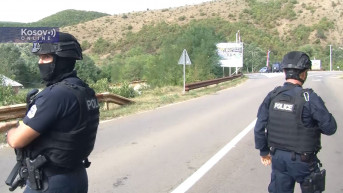
The investigation into the events in Banjska should be credible, objective, independent, transparent, detailed, and comprehensive. These are all requirements made by foreign officials when talking about the events on September 24 in northern Kosovo, which had a tragic outcome with three Serb fatalities and one member of the Kosovo Police.
Both Belgrade and Pristina are working extensively on this case. The question, however, is who, from a legal perspective, has the jurisdiction to conduct the investigation? Also, will Belgrade trust the results of an investigation conducted by Pristina, and vice versa? Finally, can a third party have the final say, someone both sides would consider impartial?
The Chair of the Foreign Affairs Committee in the British Parliament, Alicia Kearns, stated at the beginning of this week that the investigation into the events in Banjska was "led by one state", without specifying which state. German Chancellor Olaf Scholz stated that "everyone should support the investigation conducted by Kosovo authorities", and it would be good if Serbian authorities cooperated with Kosovo on this matter. Former US Assistant Secretary of State Thomas Countryman believes that due to the completely different positions of Belgrade and Pristina, the investigation should be carried out by EULEX.
The European Council, in its conclusions yesterday, noted that the "EU expects that the perpetrators be arrested and swiftly brought to justice and that Serbia fully cooperates and takes all necessary steps in this regard".
Dusko Celic from the University of Pristina with a temporary seat in Kosovska Mitrovica says to Kosovo Online that only the authorities of the Republic of Serbia can conduct the investigation into the events in Banjska. According to Serbian regulations, as he points out, there is no possibility of entrusting the investigation to anyone, not even an international body.
"Strictly from a legal perspective, there are absolutely no legal impediments for the Republic of Serbia and its judicial authorities to conduct the investigation, neither in procedural laws nor in substantive laws, which, as we lawyers say, determine the actual and territorial jurisdiction of the judiciary. There is no prohibition on acting concerning the territory of Kosovo and Metohija. It is possible for the competent Prosecution to conduct and lead the investigation. However, there are problems of a dual nature. The first problem is that the authorities of Serbia, which have legal jurisdiction, cannot obtain some of the evidence on the ground because they cannot practically operate at the scene of the events in Banjska on the territory of Kosovo and Metohija. The second, more significant problem is of a political nature. The question here is who will believe in the objectivity of the investigation. By the nature of things, the investigation must be objective, no matter which competent prosecution is leading it. However, this raises the issue of the relationship between Belgrade and Pristina. Whoever, theoretically speaking, conducts the investigation, whether it's the authorities of the Republic of Serbia or the authorities in Pristina, there would be a lack of trust, so the question arises as to whether a third party can conduct the investigation," Celic says.
As he further explains, in the criminal procedural regulations of Serbia, there is no possibility to entrust the investigation to anyone, even if it were an international body.
"International bodies do not have jurisdiction within the territory of the Republic of Serbia, and in that regard, they cannot establish it. There is no judicial cooperation between the Republic of Serbia and Pristina, so it is absolutely impossible to hand over this case to Pristina, even theoretically, even if it were about a state, and Pristina (Kosovo) is not a state according to the legal order of the Republic of Serbia. So, the obvious and only possibility is for the investigation to be conducted by the authorities of the state of Serbia. Perhaps it is possible to make an ad hoc agreement to involve some observers in the sense of foreign missions, and nothing more than that. Whether Pristina will accept the results of that investigation is a purely political question, not of a legal nature," Celic says.
Even if the issue of status were disregarded, as our interlocutor assesses, when it comes to the authorities in Pristina, it is a "quasi-legal order that has disqualified itself from dealing with these matters at all".
"In recent weeks, months, and even years, we have seen how the quasi-justice system in Pristina treats the Serbs. The Serbs are arrested without a warrant from the competent prosecutor or judge, arbitrary detention is imposed on them, and detention ceases to be a measure to secure the presence of the suspect, practically becoming a punishment for the Serbs. The conditions under which they are detained are extremely inhumane, there is evidence for this, and measures are imposed on them beyond the legal maximum, something a layperson wouldn't allow. There is a discriminatory and biased conduct of colleagues, whom I can't even call colleagues when they can abuse the judicial functions they hold. So, it absolutely seems to me that any idea of Pristina being involved in any way in the investigation regarding the events in Banjska should be dismissed. In circumstances where a policy with elements of apartheid towards the Serbs in Kosovo and Metohija, especially in the north, is being implemented, trust is difficult to gain. What has been happening there in recent months, unfortunately, reminds me of the Gaza Strip, except that we don't have the destruction by bombing of that territory, but we practically have an almost identical arsenal of collective measures against the Serbs in the north," Celic points out.
He notes that it is probably important for Serbia that the international community understands that the investigation will be objective, and in that regard, it might be possible to make an ad hoc agreement with one of the international missions.
"Perhaps the most desirable would be some form of monitoring by the United Nations in accordance with Resolution 1244 because the procedure is taking place within the territory of central Serbia but is related to the event in the north of Kosovo and Metohija. Therefore, it might be possible for the UN to be involved as observers without having executive powers, and for the international community to be convinced of the objectivity of the actions of the judiciary in Belgrade. It seems to me that this is the maximum that can be achieved, and there is no legal basis for other options, nor would it be good for the dignity of judicial functions in Serbia," Celic concludes.
However, Pristina is already conducting its own investigation and has announced that it will present its results to the international community. When asked about the significance of what the Kosovo authorities were doing, our interlocutor says he is "extremely suspicious" about it, even though he is not familiar with the details.
"The fact is that they did not allow our pathologists to participate in the autopsy of those who died in Banjska, and the role of the foreign pathologist who may have been involved is highly questionable. We don't even have a forensic report, and that is likely where we should start. We don't know how the three individuals of Serbian nationality in that incident were killed. Based on the actions of the Pristina authorities, we can assume the manner in which they may have obtained statements from those arrested. Was there coercion or not? We could even see on social media how those arrested were treated; many of them were subjected to psychological and physical torture, so the question of the validity of those statements is wide open. The question is, what about the material evidence in Banjska, was it collected in accordance with forensic standards? We don't even know if international missions were involved. We know that UNMIK was not on the ground those days, but whether the EULEX mission conducted any investigative actions or simply acted as witnesses, as they say, which is most likely the case? So, all of this indicates that the results that Pristina will reach and publicly present, from the standpoint of the Republic of Serbia and its legal system, cannot be considered valid," Celic concludes.
According to the assessment of the Professor of Constitutional Law at the University of Priština, Mazllum Baraliu, to uncover the truth about the events in Banjska, it is necessary to establish an international commission that would be neutral and, with the assistance of KFOR and EULEX, obtain credible data.
"It is necessary to form an international commission that would encompass all possible investigative actions both in Kosovo and in Serbia and to utilize international presence here - KFOR, EULEX, and embassies that have their sources of information. It doesn't have to be a formally and legally formed commission, but all possible attempts and actions, investigative actions, should be united in the sense of obtaining a true and accurate picture of what happened that day in Banjska," Baraliu said to Kosovo Online.
Although Alicia Kearns stated that an investigation was already being conducted by one state, Baraliu still believes that "combined forces" are needed for the investigation. He does not rule out the possibility of a neutral state taking over the investigation.
"If, for example, the EU or some institution decides that it should be an independent commission of a credible democratic tradition and democratic institutions, as Austria has, which would be neutral to everything that happened and would attempt to find out everything that happened truthfully, authentically, and accurately, then there is nothing controversial about it, but it would be best if all forces were united," Baraliu said.
He emphasizes that Belgrade and Pristina cannot conduct the investigation on their own due to a lack of equipment and mutual distrust.
"Since there is distrust between Kosovo and Serbia and since the technical-technological level, the technology, equipment, and instruments that would be used to conduct the investigation according to international laws and the laws of Kosovo and Serbia are not developed, I believe that this must be an international commission, international presence that could neutrally conduct all actions and the investigation to reach a credible investigation," Baraliu concluded.
Assistant Professor at the Department of Criminal Law at the Faculty of Law, University of Belgrade, Aleksa Skundric, says from a legal perspective, based on the Constitution and all other laws in Serbia, Serbian state authorities are the only ones competent to conduct an investigation into the events in Banjska from September 24, as it is the Serbian part of the territory.
"From the perspective of Serbia's applicable law, including constitutional and other laws, the situation is clear. Serbian state authorities are competent for this case, as, according to our Constitution, it concerns our territory. In that sense, the authority for the investigation is solely held by our state authorities, and a proceeding is already underway with our authorities here in Belgrade," Skundric explained.
He points out that there is a possibility that EULEX could assist in the investigation or the criminal procedure conducted by Serbian state authorities, but there is no possibility or legal basis for someone else to take over the investigation.
"There may be room for a kind of collaboration and assistance with EULEX. However, there is no possibility or legal basis for someone else to conduct the investigation because it's a criminal proceeding, and the exclusive jurisdiction belongs to the state conducting the procedure. Of course, there are situations when multiple states can have jurisdiction over a specific case. However, Serbia does not recognize the independence and sovereignty of Kosovo as a state, and there is no relationship between the two states, so there is no conflict of jurisdiction in criminal matters between the two parties," Skundric explained.
Pristina has already initiated an investigation into the events in Banjska, and when asked whether the results of that investigation could be legally relevant for Belgrade, Skundric stated that there was no legal framework for such a situation.
"Belgrade does not recognize Kosovo's state authorities or institutions, nor the results of their work. This is in line with the applicable law in Serbia," he concluded.


0 comments