
Whose interests do the International Crisis Group’s recommendations serve, and are they feasible?
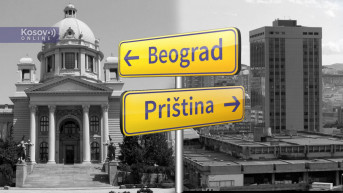
The picture of the political and social reality in Kosovo presented in the latest International Crisis Group (ICG) report is considered fairly realistic by analysts. However, they argue that the recommendations offered by the organization—particularly those concerning the Belgrade–Pristina dialogue—are either difficult to implement or clearly aligned with the goals of Kosovo Albanians. This is how interlocutors for Kosovo Online interpret the ICG’s report, which focuses on how the European Union could support the dialogue and sustain Kosovo’s institutions. While ICG’s advice continues to be read by policymakers, its influence today is far from what it was two decades ago.
Written by: Dusica Radeka Djordjevic
Published on 16 October, the report titled “Kosovo Tests the Limits of the EU’s Patience” recommends that the EU should focus the dialogue between Kosovo and Serbia on practical issues that provide tangible benefits for citizens on both sides. This, it states, includes ensuring full implementation of previous agreements, particularly those on border management and mutual recognition of diplomas, which remain only partially fulfilled.
The report further argues that EU member states could enhance their credibility by bridging their own internal divisions over Kosovo’s status.
“Countries that currently do not recognize Kosovo should signal that, with the full normalization of relations between Serbia and Kosovo, they will not stand in the way of Kosovo’s recognition. Meanwhile, the EU as a whole should consistently emphasize that the future of the entire Western Balkans, including Kosovo, lies within the Union,” the document states.
The ICG also suggests that the EU should double its efforts to use its leverage—particularly the accession perspective—to pressure Pristina to protect the rights of the Serb minority and ensure local autonomy, including the establishment of the Community of Serb-Majority Municipalities (CSM).
Pressure on Non-Recognizers of Kosovo
According to Aleksandar Mitic, Senior Research Fellow at the Institute of International Politics and Economics in Belgrade, the notion of the EU pressuring Pristina is “laughable.”
“Over the past few years, Brussels has had numerous opportunities to influence Pristina—during ethnic cleansing campaigns, or even now, when a form of apartheid is tolerated in Europe in 2025. Everything is tolerated, including the expansionist ‘Greater Albania’ policy,” Mitic told Kosovo Online.
He argues that there are two faces of Brussels: the official Brussels, which represents the EU’s institutions, and the “deep Brussels state”, which tolerates Albin Kurti and his policies—supported primarily by Berlin. Meanwhile, within the formal EU framework, there is no consensus, given that five member states do not recognize Kosovo.
“The ICG’s message is directed at that first Brussels—the one that, in effect, ignores the existence of non-recognizers and pushes Pristina toward EU integration, despite the fact that Kosovo is not a state. The issue of non-recognizers is crucial yet often overlooked in official EU discourse,” Mitic explained.
He stressed that no EU accession process for so-called Kosovo can begin until the stance of the non-recognizing states changes, and that the ICG’s recommendations essentially advocate for pressuring both Brussels and non-recognizers to allow Pristina to formally launch this process.
However, Mitic added that such a development remains unlikely at this stage, viewing the report as an attempt to prepare the ground for future policy shifts, much like ICG’s actions in the early 2000s.
“Their role has always been to set the agenda and prepare the ground for what EU institutions and member states would later take up,” he said.
According to Mitic, the latest recommendations are fully consistent with ICG’s long-standing approach—to “find mechanisms that would help Kosovo Albanians achieve their maximalist political goals.”
Appeasing Pristina
Aleksandar Sljuka of the NGO New Social Initiative told Kosovo Online that while ICG’s recommendations may not be entirely realistic, the report does accurately reflect the situation on the ground.
He explained that although the EU has mechanisms it could employ, it is unrealistic to expect that it will apply additional pressure on Kosovo’s government at this time.
“The EU’s attention is limited due to much larger global crises, and Brussels lacks the leverage to change the situation in Kosovo meaningfully,” Sljuka noted.
He reminded that the EU’s restrictive measures against Kosovo, introduced in 2023, are now being gradually lifted—and were never fully implemented, especially concerning bilateral contacts with EU officials, since some meetings still took place. Therefore, it is unlikely that stronger or new sanctions will be imposed, given the lack of consensus among EU member states.
“Financial restrictions did not yield significant results. The situation remains tense, unresolved issues persist, and many Serbs still boycott institutions. These mechanisms have not altered Kurti’s approach,” Sljuka emphasized.
He further noted that the EU itself wields less influence than its member states acting individually, adding that future developments may depend more on direct pressure from key states or other powerful actors, whether through formal or informal channels.
The ICG report mentions that Albin Kurti continues to promote the principle of full reciprocity, meaning that Kosovo would treat Serbia and its Serb population as Serbia treats Kosovo and Albanians in Serbia—an idea that the report describes as “appealing at first glance but one that overlooks essential differences.”
Sljuka called the concept of reciprocity “a wrong perspective”:
“This is pandering to Pristina’s narrative, which has long been pushing the idea of trading the CSM for a so-called association of Albanian municipalities in Serbia. That was never part of the dialogue and would amount to granting additional concessions to Pristina without them having done anything to protect Serb rights. It would be a fundamentally misguided approach,” he stated.
Different Approach – Different Results
The ICG also observes that repressive measures against Kosovo Serbs have hindered the continuation of bilateral dialogue between Belgrade and Pristina, obstructed progress on the Association of Serb-Majority Municipalities, and prompted the EU to impose measures on Kosovo in 2023. According to the report, the EU should maintain the dialogue, leveraging financial support and the accession process as tools.
Alma Lama, a political analyst from Pristina, told Kosovo Online that the EU has mechanisms to condition both Serbia and Kosovo.
“The EU can condition Serbia through the accession process and Kosovo as well, even though Kosovo’s integration path has so far been ineffective. A new strategy is needed—one that accounts for security and geopolitical changes—to produce better results,” Lama said.
She pointed out that the report includes serious criticism of the Kosovo government’s treatment of Serbs in the north and the EU’s response measures, but argued that the EU’s approach to Serbia and Kosovo remains asymmetric.
“Brussels did not sanction Serbia for the Banjska incident in 2023, when armed groups entered Kosovo to destabilize the north. Milan Radoicic remains free and protected. Serbia faced no consequences, while Kosovo, under EU measures, lost around €500 million and even its bid for Council of Europe membership. This asymmetry does not help relations,” Lama stressed.
She added that rule of law in northern Kosovo and Serb participation in institutions are essential, but that Belgrade plays a negative role by urging Serbs to withdraw from institutions, which ultimately harmed their interests and made reintegration difficult, particularly in police and judiciary structures.
“A new EU approach is needed—one that includes a change of policy in both Belgrade and Pristina. Only then can we achieve new results in our region,” she concluded.
How Much Influence Does the ICG Still Have?
Commenting on the influence of ICG recommendations, Sljuka explained that they continue to be widely read among decision-makers:
“They don’t directly shape policy but do influence strategic and tactical thinking. In principle, the recommendations are sound—but in practice, they rarely translate into concrete action. In such a polarized environment, it is extremely difficult to expect implementation without the goodwill of both sides,” he said.
Mitic added that the ICG’s role today is nowhere near what it was 20 years ago, though its recommendations often align with certain Western agendas:
“That doesn’t mean their advice isn’t coordinated with some EU or Washington actors—the so-called ‘deep state’,” he remarked.
He recalled that, over the past two decades, ICG’s Kosovo-related recommendations have consistently aligned with what later became Western policy, citing examples such as 2004, following the March pogrom, when ICG proposed accelerating negotiations and abandoning the ‘standards before status’ policy, and 2007, when it advocated Kosovo’s unilateral declaration of independence as the “only viable solution.”
“That approach undermined diplomatic efforts and effectively set the foundation for what became official Western policy—leading to consequences that still affect not only Kosovo and Metohija but global security as a whole,” Mitic concluded.
0 comments