
Vucic on license for NIS: I don’t understand what the Americans are doing now, there is no logic
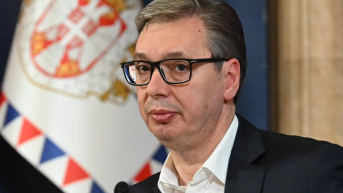
President of Serbia Aleksandar Vucic stated today that he does not understand what the Americans are doing regarding the decision on the operating license for NIS, given that Serbia has provided the requested guarantees, recalling that the Pancevo Refinery will stop operating on Tuesday. Vucic expressed confidence that U.S. President Donald Trump is not familiar with the details.
“The Americans initially said that they imposed sanctions on NIS with the aim of removing the Russian management, and then at the end of September or beginning of October, for the first time clearly stated that they were demanding the exclusion of Russian ownership. This is not based on international law, but these are the things that happen in an era of lawlessness and force,” Vucic told TV Informer.
He stressed that Serbia is a small country that cannot function without oil, recalling that not a single drop of oil has come through the pipeline via Croatia for 52 days.
Vucic pointed out the problem of secondary sanctions, which threaten banks, the National Bank of Serbia, and the financial system.
He said that discussions have been held with everyone, including Russia, which has on several occasions been asked to find a natural and reasonable solution.
Vucic emphasized that he does not know exactly what the Americans are doing now.
“I do not understand their tactic. When I ask why they are not issuing the license now, when the refinery officially stops working on Tuesday, they say that sanctions must be respected and that they had stated that Russian ownership must be excluded. We said that we would comply with the sanctions and that this would happen within 50 days. You have the state’s guarantees that the sanctions will be respected. They say they announced this eight or nine months ago… They could have said it 900 months ago, because we are not the owners of the company and cannot decide on behalf of the Russians,” Vucic said.
He recalled that Serbia has three times so far waived its right of first refusal, because that is fair given that the exit from ownership is happening under pressure.
“And now we have waived it again so the Russians can do it the way they want. I don’t understand what the Americans are doing now. I am sure that President Trump is not familiar with the details,” Vucic stressed.
He emphasized that citizens should not worry and that Serbia will import oil and oil derivatives in different ways.
“We spoke with the Hungarians about building a multi-pipe oil pipeline so that in the future we can exchange all oil derivatives. We will solve all of this. But why they are doing this—I don’t understand. We could only get involved in resolving the issue once they said that the requirement was to remove Russian ownership,” Vucic repeated.
He noted that it is obvious that tensions around Ukraine are increasing and that a small state will pay the price.
He announced that an important meeting regarding NIS will be held tomorrow, as he perceives the situation as if the Americans have not taken a clear position at all.
“They will say they did not receive enough information, and the Russians are also not in a great hurry, because for them the most important thing is to retain ownership as long as possible. But I cannot say they are to blame for this, because others created this situation. We are in a difficult situation, but we will solve the problems—under harsh, almost impossible circumstances, attacked from all sides,” the Serbian President underlined.
He added that he will hold further talks with the Americans tonight, although it will be difficult because the NIS issue is now under strict control of the State Department.
“Even from a political-rational standpoint, I did not understand the U.S. decision. There is no logic after our guarantees,” Vucic reiterated.
Regarding criticism about allegedly poor relations with Russia, he asked—when were those relations ever truly good?
“As for relations between Russia and Serbia, when were they good? During Lenin, Stalin, Khrushchev, during the brief détente, or with Chernenko and Andropov, Gorbachev and Yeltsin? Back then, when they could have abstained in the UN Security Council, they voted for sanctions. But we do not hold that against them, because at that time they did not act in the best interest of Russians either. We have good relations as much as possible, but respecting ourselves and always our Russian friends,” Vucic said.
He added that no other country would treat Russia the way Serbia does.
At the same time, he recalled that Serbia has a gas arrangement with Russia until 31 December, meaning there is one month left before it expires, and that the Russian side is delaying the signing of a new agreement.
“We will soon start another round of talks with the Russians, and if that does not work, with everyone else,” Vucic announced.
Regarding allegations of arms and ammunition deliveries to Ukraine, Vucic said Serbia has never sent weapons to Russia or Ukraine.
“We have never sent weapons or ammunition to Russia or Ukraine. And let’s not even start discussing who has armed whom,” the Serbian President added.
He admitted that he had hoped that after his recent address regarding NIS the American partners would make a decision.
“At that time I expected it; now I no longer do. We must prepare, work for our country, secure everything, because they will drag this out as well. And no one will allow us to remain neutral,” Vucic said with certainty.
He warned that the era ahead is neither pleasant nor good, expressing fear that even a cessation of hostilities between Russia and Ukraine would only be a pause before a larger war.
“And I want to preserve peace, prosperity, and freedom for Serbia—to protect our children, because there has been too much conflict and too many mothers have cried for their sons. It is time to fight for life, for life to prevail,” Vucic concluded.
0 comments