
South African artist tells the story of Kosovo Serbs through photography: persecuted people are not always portrayed accurately
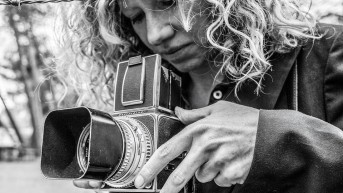
“The Bozovic family from the village of Crkolez left a particularly strong impression on me. The children were remarkable – a girl and two boys. We walked together and picked vegetables. The relationship between the children and their mother was wonderful. The way the children were raised, their values, traditions, and healthy lifestyle left a profound impression on me and reinforced my belief that they will have a bright future,” South African artist Catherine Cooper said in an interview with Kosovo Online.
Cooper is the author of the exhibition “Endangered and Forgotten People – From Kosovo and Metohija to South Africa and the Middle East,” which opened in Zurich on Thursday.
She explains that for years she has sought to challenge prejudices surrounding certain communities, which, she says, are often rooted in ignorance and negative media portrayals.
She also spoke about how her journey led her to Kosovo.
“At first, I was not fully aware of the situation, but I knew some Serbian people from the diaspora who were living in Zimbabwe. I had some understanding of the circumstances, but later I visited Kosovo and met members of the Serbian community. In 2016, I produced my first small photo reportage there, spending several days on the ground, and the photographs were very powerful. Then I returned in 2025 and took a new series of photographs, which fits into my broader mission and passion of telling stories that are rarely told,” Catherine explained at the beginning of the interview.
Was there a particular story that left a special impression on you?
There was the Bozovic family in the village of Crkolez. The children were exceptional – a girl and two boys. We walked together and harvested vegetables. The relationship between the children and their mother was beautiful. Growing up in a rural environment, the children may not have had all the modern conveniences, but they possessed something far more valuable – a close connection with nature.
The girl was especially intelligent and very mature. She wanted to study medicine. Despite the difficult circumstances, it was clear that these children had potential and a future. The way they were raised, their values and traditions, as well as their healthy way of life, left a lasting impression on me and strengthened my conviction that they will have a bright future.
Your work also features photographs of monasteries and clergy. Why was that important to you?
Another story focuses on Father Hristofor from the monastery in Draganac – an exceptionally dedicated man who cares for animals and has a strong connection with the local community. He conducts liturgies attended by young people and truly lives his mission through his daily work.
In Velika Hoca, I also photographed the restoration of the Church of St. Nicholas, where the priest worked alongside volunteers, painting doors and carrying out physical labor. He was not simply sitting in an office; he was actively involved and leading by example.
Did You See Evidence of Destruction During Your Stay in Kosovo?
I saw damaged and destroyed churches, including a church in Prizren. It was enclosed with barbed wire, with beautiful frescoes that had been damaged and covered with graffiti and markings. In some places, the frescoes had been partially restored. Both the damage and the beauty that still shines through leave a powerful impression. It is one of my favorite churches. All churches in Kosovo have exceptional frescoes, but this one stands out because of its condition and atmosphere.
I am not someone who is easily surprised. I do not have preconceived notions. Through my work, I have seen many things, and I do not judge. When I photograph, I meet people and try not to draw conclusions in advance.
Were You Surprised by the Situation?
I would say that what struck me was the continued presence of KFOR, the closed bridge in Mitrovica, and the presence of police and international forces near churches and monasteries.
That indicates that the situation remains unstable a quarter of a century after the war, and that a sense of security pressure still exists.
I would like to return to Kosovo and see the people I met once again.
One of the guides asked me whether I would come back as a tourist, but you need to know where you are going and whom you are meeting.
Where Else Have You Worked Over the Years?
The issue of white minorities in South Africa and Zimbabwe was important to me because many people have very negative perceptions of them, which are also based on ignorance. I wanted to photograph these communities in order to show the world the reality of their lives.
Those photographs were very successful.
Then I worked in Iraq and Syria because of the war in 2015, at a time when the conflict with ISIS was nearing its end but still dominated public attention through powerful and often one-sided media narratives.
It seemed to me that many issues were viewed exclusively through the lens of media coverage that did not fully reflect the reality of ordinary people, overlooking genuine human stories and everyday life beyond political interpretations.
Why Have You Chosen This Particular Approach to the Issue of Endangered Minorities?
Persecuted people, members of minority communities, and those who are often politically mislabeled are not always portrayed accurately.
I do not want to focus solely on positive or negative aspects. Rather, I want to tell stories about human beings and reality.
Colonialism and similar historical issues belong to the past, but we are still talking about human beings, and that conversation should include both positive and negative perspectives, especially when reality does not correspond to the picture presented by mainstream media.
Journalists often do not cover these subjects, and their media outlets frequently do not publish such stories if they do not align with dominant narratives.
I go to these places with the aim of using photography to portray humanity and the human spirit through suffering and through stories that have remained untold.


0 comments