
Kosovo heads to the polls again tomorrow – end or continuation of the institutional crisis?
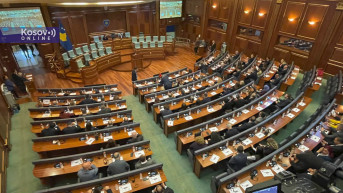
Citizens of Kosovo will return to the polls tomorrow for the fifth time in 16 months. For the third time, following the elections of 9 February and 28 December last year, they will vote in parliamentary elections. However, the key question is whether tomorrow’s vote will enable Kosovo to overcome its institutional crisis, as analysts expect similar results and continued uncertainty regarding a political agreement on the election of a president, which has so far remained elusive.
A total of 21 political entities will appear on the ballot paper – three coalitions, 17 political parties, and one independent candidate.
The Central Election Commission determined the order of political entities by lot, meaning that tomorrow’s ballot papers will feature the following: PSA, the New Democratic Initiative of Kosovo (IRDK), the Democratic League of Kosovo (LDK), the United Gorani Party, the Social Democratic Union, Self-Determination, KNRP, the New Democratic Party, the Serbian List, independent candidate Esmir Kasi, United Ashkali, the Turkish Democratic Party of Kosovo (KDTP), the Progressive Movement of Kosovo Roma, the Fjala Party, the Democratic Party of Kosovo (PDK), the Vakat Coalition, the Party for Freedom, Justice and Survival, the Alliance, the Social Democratic Party, the United Roma Party of Kosovo, and the Egyptian Liberal Party.
Osmani’s Return to the LDK and Heated Rhetoric
The Speaker of Parliament in the previous legislature, Albulena Haxhiu, called snap elections for 7 June after lawmakers failed to elect a President of Kosovo within the prescribed deadline.
The election campaign officially began on 28 May and runs until tomorrow, ending one minute before polling stations open at 6:59 a.m. Nevertheless, political parties and candidates have effectively been campaigning continuously for almost a year.
Among other developments, the campaign was marked by the return of Vjosa Osmani to her “old political home” – the Democratic League of Kosovo (LDK), which she left in 2021 when she founded the Guxo List and moved closer to Albin Kurti. Following her coalition with Self-Determination, she became President of Kosovo.
After failing to secure Kurti’s support for re-election, Osmani turned back to her former party colleagues and is now officially the LDK’s candidate for president.
The campaign was also dominated by harsh rhetoric, accusations, and mutual attempts to shift responsibility for the failure to elect a president and for triggering yet another electoral process. Analysts largely agreed that the campaign was characterized by hate speech rather than substantive policy proposals.
Promises, however, were not in short supply. Judging by reactions from residents of Pristina, voters appeared largely unconvinced by them.
Pressure on the Serbian Community
Like previous election cycles, these elections are taking place amid pressure on the Serbian community and on the Serbian List, the strongest Serbian political party in Kosovo.
During the campaign, seven directors of healthcare and educational institutions operating within the Serbian system were arrested on charges of “violating the free will of voters.”
The Serbian List has no doubt that these actions are part of a pre-planned intimidation campaign orchestrated from Pristina.
Two days before the elections, a Serbian List activist from Ugljare was arrested and placed in detention for up to 30 days. Yesterday, the Mayor of North Mitrovica, Milan Radojevic, and the President of the Municipal Assembly, Ivan Zaporožac, were briefly detained and subsequently released after municipal inspectors attempted to remove the “I Love Mitrovica” sign pursuant to a decision adopted by the local assembly.
Recently, officials from Kosovo’s Ministry of Economy also entered facilities belonging to Serbian Railways Infrastructure in Zvečan, Leposavic, Lesak, and Ibarska Slatina, removing Cyrillic signs and replacing them with signs first in Albanian and subsequently in Serbian.
In addition to the Serbian List, the Party for Freedom, Justice and Survival is also representing the Serbian community in these elections. Following the previous elections, the party secured one of the ten parliamentary seats reserved for Serbs.
However, data from the Central Election Commission showed that a significant portion of the party’s votes came from Albanian-majority areas where no Serbian population resides.
The Serbian List has called on Serbs in Kosovo to remain united. Its president, Professor Dr. Zlatan Elek, stressed that others must not be allowed to make decisions on behalf of the Serbian people.
The message from today’s final campaign convention was that tomorrow is the most important day, when the future will be decided and the survival and continued presence of Serbs in Kosovo defended, while voters were urged to demonstrate wisdom, courage, and unity.
Senior Serbian officials have likewise called on Kosovo Serbs to vote for the Serbian List, describing it as the only genuine representative of Serbs in Kosovo that will truly fight for their interests. Serbia has also urged internally displaced persons to participate in the elections.
Nearly 16,000 More Voters Than in the Previous Election
A total of 2,092,174 voters are eligible to vote, representing an increase of 15,884 compared to the snap parliamentary elections held on 28 December last year.
Of that number, 22,685 citizens will be voting for the first time.
A total of 1,959,962 voters will cast their ballots at polling stations within Kosovo, while 132,212 citizens have registered to vote abroad.
Voting will take place at 949 polling centres comprising 2,550 polling stations.
Of these, 911 centres with 2,498 polling stations are designated for regular voting, while each municipality will have one polling centre with a total of 52 polling stations to facilitate conditional voting.
End of the Crisis or Extension of the Agony?
Whether tomorrow’s elections will resolve Kosovo’s political deadlock remains uncertain.
Agreement on the election of a new President of Kosovo failed because no party or coalition was able to secure the required two-thirds parliamentary majority – 80 votes – for any candidate.
Ahead of the elections, analysts repeatedly warned that this would remain a problem after the vote, as no political party is expected to be capable of securing 80 parliamentary votes for the election of a new president.
Political observers interviewed by Kosovo Online predicted a similar balance of power between the governing camp and the opposition, while expecting lower voter turnout due to voter fatigue, given that this will be the fifth election cycle in less than a year and a half.
International partners have also made it clear that Kosovo must overcome its institutional crisis.
Acting President Albulena Haxhiu stated yesterday from Tivat, where the EU–Western Balkans Summit was held, that it is important for Kosovo to constitute its parliament, elect a government, and choose a president as soon as possible, noting that discussions at the summit highlighted the lack of stable institutions.
Foreign diplomatic representatives in Kosovo have repeatedly stressed the need to overcome the political blockade, while similar messages have come from Brussels.
Former U.S. Ambassador to Kosovo, Jeffrey Hovenier, stated in an interview with Kosovo Online several days ago that Kosovo’s reputation in Washington had been seriously damaged over the past 16 months due to political instability, repeated elections, and institutional paralysis. He added that the United States expects the new government to play a role in reducing tensions both within Kosovo and throughout the region.
The Institutional Knot First Tightened After the 9 February Election
The parliamentary elections held on 9 February last year were the only regular elections.
They were marked by the collapse of the Central Election Commission’s website immediately after polling stations closed, leaving it non-functional for several days.
The Commission required more than a month to announce the final results, which left no party with a convincing majority to form a government.
Several months were then needed to elect a parliamentary speaker, as Self-Determination, together with non-Serb minorities and one
Serbian MP from Nenad Rasic’s party, still lacked sufficient votes to elect its preferred candidate, Albulena Haxhiu.
The Assembly of Kosovo was finally constituted eight months after the elections and after more than fifty attempts, with Dimal Basha becoming Speaker of Parliament.
However, a new obstacle soon emerged – the lack of a parliamentary majority to form a government.
Then-President Vjosa Osmani first entrusted the mandate to Self-Determination leader Albin Kurti. He presented his government programme but failed to secure support.
The opportunity then passed to his party colleague Glauk Konjufca, who was equally unsuccessful.
The outcome was the snap elections of 28 December.
That date suited Self-Determination, which anticipated an influx of diaspora voters during the New Year holidays, while the opposition criticised Vjosa Osmani for choosing the date, viewing it as support for Albin Kurti.
Same Target, Same Distance
Those elections were not without controversy either.
They were marked by allegations of vote manipulation involving candidates, prompting the Commission to order a full recount in 28 municipalities.
Final results were announced 43 days after the election. Self-Determination secured 57 seats, PDK 22, LDK 15, and the Alliance for the Future of Kosovo six.
At first glance, it appeared that the year-long political blockade might finally be resolved.
Relatively quickly, following significant criticism from the international community and the need to adopt important legislation and agreements related to the EU Growth Plan, parliament elected Albulena Haxhiu as speaker and Kosovo formed a new government headed by Albin Kurti.
However, the issue of electing a new president soon emerged as an insurmountable obstacle, given that Vjosa Osmani’s term was due to expire on 5 April.
Despite several rounds of talks between Albin Kurti and the leaders of the two largest opposition parties, Bedri Hamza and Lumir Abdixhiku, no solution was found, further complicating Kosovo’s political deadlock.
On 6 March, Osmani issued a decree dissolving parliament after lawmakers failed to elect a new president one day earlier – the constitutional deadline of 30 days before the expiration of her mandate.
The Constitutional Court subsequently ruled that the decree “produced no legal effect” and granted lawmakers until 28 April to elect a president.
The stalemate continued, accompanied by mutual accusations between the government and opposition.
Ultimately, during the night of 28–29 April, it became clear that Kosovo would not elect a new president and that citizens would once again return to the polls.
Several days later, Albulena Haxhiu called the snap parliamentary elections that will be held tomorrow.
0 comments