
Gouillon: Only a small amount of pressure on Pristina would be enough to stop the violation of the basic human rights of the Serbs

Kosovo, which is not a member of the United Nations, couldn't exist without the support of the countries that have recognized it, and only a small amount of pressure from these countries would be sufficient to encourage Pristina to implement what has been agreed upon in the dialogue with Belgrade and to cease violations of the basic human rights of the Serbs and non-Albanians. This is what Arnaud Gouillon, the Director of the Office for Cooperation with the Diaspora and the Serbs in the Region in the Government of Serbia and the founder of the humanitarian organization "Solidarity for Kosovo", says in an interview for Kosovo Online.
As he says, at the beginning of the 21st century, we cannot allow people in Europe, particularly the Serbs in Kosovo, to live in enclaves. The fate of the children in Kosovo, he notes, is what concerns him the most as a father and as a person who established a humanitarian organization to assist these children. Children, he emphasizes, find it difficult to understand hatred and why some people mistreat them.
On October 21st, a delegation of five diplomats, including Emmanuel Bonne, the Foreign Policy Advisor to the French President for the Western Balkans, and Jens Plotner, Advisor to the German Chancellor Scholz, will visit Belgrade. They will also visit Pristina. Do you think they have a plan on how to steer the dialogue between Belgrade and Pristina toward a path that will yield results? And does this involve new forms of pressure on Belgrade?
To develop a plan to resolve the problems we currently face in Kosovo and Metohija, they should first understand what preceded and led to these issues we face today in Kosovo and Metohija. Here, I'm not talking about history but about the political decisions made over the past 23 years. The core of the problem lies in the disregard for three things: international public law, agreements reached, such as the Brussels Agreement, and the violation of basic human rights of the Serbs in Kosovo and Metohija. If the Brussels Agreement reached ten years ago, were respected – where it's stipulated that Serbian Police, prosecutors, and judges should be present in northern Kosovo and that Kosovo Security Forces cannot enter northern Kosovo without the permission of the mayors of the four northern municipalities – if this were respected, we wouldn't have the terror that has been carried out in northern Kosovo and Metohija in recent years. We wouldn't have incidents like the Banjska incident. If the CSM, which is also a part of that agreement, were formed, with provisions for healthcare, education, culture, and spatial planning to be within that entity funded by Belgrade, we wouldn't have problems with shortages of medication and other issues that exist both north and south of the Ibar River, including the disregard for basic human rights, where people lack freedom of speech, freedom of movement, freedom of thought, and where a young man was arrested because of a T-shirt. Are we in Iran or in Europe? Are we allowed to dress as we please or not? These are fundamental violations that have led to these problems. I believe they are aware of this, and I hope they will act differently in accordance with this. The only thing they have yet to try to resolve the problems in our entire region is to listen to the Serbian side and stop applying double standards. That's all we're asking for. And, of course, we seek peace, survival, and the return of the Serbs to Kosovo and Metohija.
Why should the Serbian side believe that Pristina will fulfill any new agreement when, for ten years, it hasn't established the CSM? Messages from the West indicate that the CSM should be formed. Are these genuine incentives for Pristina to fulfill that obligation?
Kosovo has been recognized as a state in certain countries, mostly in the West. This so-called state wouldn't have a significant budget without external donations, it lacks its own army, and it cannot defend itself. This so-called state is not a member of the United Nations, and it could not exist without the support of the countries that have recognized it. What does this mean? It means that even a small amount of pressure would be sufficient for this so-called state to implement what has been agreed upon and cease the violation of the basic human rights of the Serbs and non-Albanians in Kosovo and Metohija. We cannot allow people to live in enclaves in Europe in the early 21st century. Since Albin Kurti came to power in 2021, there have been 419 incidents, including killings, shootings, and even children being injured by firearms. This should not be happening. Only a small amount of pressure is needed. I expect and believe that this will happen sooner or later because this situation cannot last indefinitely.
During the stay of Serbian children from Croatia in Belgrade in August, you said, "Being a Serb is not a reason to be afraid". What message would you send to Serbian children in Kosovo whose daily lives include seeing heavily armed members of the Kosovo Police near their preschools and schools?
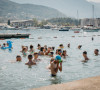
The fate of these children is what concerns me the most, both as a father and as a person who founded a humanitarian organization specifically to help these children. Children find it difficult to understand hatred and why some people mistreat them. Recently, one of my friends in Gracanica wanted to take a child to a slightly larger playground. People should know that when you live in enclaves, you live in villages, and if you want to access the amenities offered by a city, you have to go to Albanian areas where, unfortunately, you are not welcome. In that playground, there were preschool-aged children, and when they saw that the child spoke the Serbian language and was a Serb, they began to call him "a pig" because "shkije" in Albanian means "Serbs". So you wonder: Is the problem so deep that even preschool children know how to derogatorily refer to the Serbs? Should we close ourselves off in our enclaves and ghettos and never leave them because of such things? That's why my humanitarian organization takes children from enclaves to the seaside every year and renovates schools and preschools so that these children, even in abnormal conditions, can have a normal childhood.
Does the average citizen of France know anything about how the Serbs in Kosovo live in enclaves, constantly facing provocations from the Albanians, being at risk of arbitrary arrest, only for it to later be revealed as a "mistaken identity", and that Serbian hospitals are running out of medicines and medical supplies?
The average French citizen, like the average Westerner, unfortunately, doesn't have a complete picture of what is happening in Kosovo and Metohija, just as they may not have a complete picture of many global events that don't make it into mainstream media because they don't conform to official policies or aren't politically correct. However, there are people who do know. For example, we recently wrote an informative letter about all the events in Kosovo and Metohija for our 12,000 donors and for a thousand French individuals who are journalists, parliamentarians, and influential figures, to inform them about it. That's what we can do. Breaking through that media blackout is challenging, but sometimes we succeed. The most important thing is to make what's happening in the heart of Europe known to as many people as possible and not give up. As the Office for Cooperation with the Diaspora and the Serbs in the Region, in May, when there were significant tensions in northern Kosovo and Metohija, we decided to involve our diaspora in working with foreign media, foreign officials, and foreign NGOs so that we could all work together in the same direction and make the global public aware of what is happening. Everyone responded to our call, from the USA to Australia, and across Europe. After that, we had articles in Italian, German, French, English, and even in Swedish.
Do you still believe that Pristina will eventually lift the ban on your entry to Kosovo?
That ban has been in place for five years now. I was arrested, searched, and threatened back then, and I haven't been able to enter Kosovo and Metohija since. But I believe that it will be lifted sooner or later. I am in legal proceedings with them in all the courts, but, of course, it's a political issue, and the decision was made at the political level. However, pride comes before a fall. At some point, justice must be served. I believe that I will see Gracanica, Visoki Decani, Strpce, Leposavic, and all the places I used to visit regularly over the past 18 years. I believe that I will return to Kosovo and Metohija, and that will be a sign that the situation is somewhat calmer and more normal and that the return of the 250,000 displaced Serbs to Kosovo and Metohija is also possible.
Despite that ban, your foundation "Solidarity for Kosovo" is very active and helps the Serbs in Kosovo. What projects are you currently working on?
Currently, in cooperation with the Eparchy of Raska and Prizren and the humanitarian organization "Majka devet Jugovica", which operate community kitchens in Kosovo and Metohija, we are jointly implementing projects worth 76,000 euros. These projects involve providing support for farms and self-sustainable projects in agriculture and animal husbandry. We also assisted the Visoki Decani Monastery in purchasing a tractor worth 30,000 euros and financed a part of the renovation of a church in Gorazdevac with 30,000 euros. We are also preparing for new livestock distributions, including goats, sheep, and cows, to help the Serbs engaged in animal husbandry in the enclaves. Meanwhile, my volunteers in France are actively preparing for the 19th Christmas Convoy, which will depart from France at the end of December. This is a significant event when the French come to show the Serbs in the enclaves that they are not alone, that there are people who think about them throughout the year, and who are there when it is coldest and most challenging. They provide not only humanitarian aid but also moral support, which is crucial.
How realistic is it for the European Union to open its doors to Western Balkan countries by 2030, considering all the previous promises and shifting deadlines?
When the events of October 5, 2000, happened, the talk was about Serbia joining the EU in 2007. When 2007 arrived, the talk was about it happening in 2012. I came to live in Serbia in 2012, and at that time, we were talking about the possibility of it happening in 2019. Today we are in 2023, and we are talking about 2030. Imagine a girl who was 30 years old in 2000; if Serbia's EU accession happens in 2030, she will then be a pensioner, and her life will have passed by in a flash. What is certain is that this is a political issue and a matter of their decision, not ours, as to whether they want to accept us or not. From a demographic, economic, and political perspective, the entry of all non-EU Western Balkan countries would be inconspicuous for the EU, as it represents around 15 million inhabitants, which would be manageable. Moreover, I think that Serbia is more prepared today than Romania was in 2007 or Bulgaria. However, there was a political consensus to accept them at that time. Whether there will be a consensus for us in 2030, I cannot know. What I do know and what is up to us is to continue implementing reforms that are good for us, our citizens, and our country, to influence what we can, and see what the geopolitical situation will be like in seven years, and then we can discuss it again.
You've stated that the Serbian diaspora knows how to be united when necessary. What convinced you of that?
The Serbian diaspora knows how to be united when necessary, and I became convinced of this back in 2014 when, together with Serbian communities from all over Europe, we organized many humanitarian convoys for Serbia and Republika Srpska that were severely affected by devastating floods. Several convoys departed from Paris, Switzerland, and Austria, and they were all united. All the differences that existed, as there are some variations within each group, were not felt because we all worked toward the same goal. This unity will be demonstrated again in a few days in Washington, where I am going at the invitation of our ambassador, Marko Djuric, and where we will have a large gathering of the Serbian diaspora from the US regarding Kosovo and Metohija. The aim is to better network and work together to ensure that people in the US and around the world get a better understanding of the events in Kosovo and Metohija and are presented with an accurate picture. That is very important. Our diaspora is united when Serbia needs it. It has demonstrated this in the past, is showing it today, and will continue to do so in the future. On the other hand, it's essential for the Serbian state through the Office for Cooperation with the Diaspora and the Serbs in the Region, the Government of Serbia, and other institutions to show solidarity toward them and enable them to contribute their full potential to our common struggle, as this is our shared fight for Serbia and the Serbs, wherever they may live.
You recently joined the Serbian Progressive Party. What motivated you to engage in politics through party membership?
The Serbian Progressive Party upholds the values I believe in, including patriotism, freedom, sovereignty, and family values. It is a party with more than 700,000 members, making it one of the largest not only in Serbia but also in Europe today. That's why it's the only party capable of promoting these values and turning these ideals into concrete actions. For me, politics is not a derogatory term. If you don't engage in politics, politics will engage with you. Now, through party engagement, I can work to achieve my ideals. I'm extremely grateful to the President of the Serbian Progressive Party, Milos Vucevic, who invited me to become a party member and a member of the Presidency, which is the highest decision-making body in the party. It's a significant achievement, and I'm thankful to him and President Vucic for their trust. Now, we work together at that level for the benefit of our country.
comments