
Council of Europe back on Pristina’s radar after Hague judgment: Are the previous membership conditions still in place?
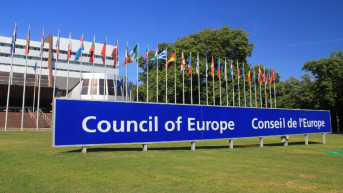
The guilty verdict handed down by the Specialist Chambers to former KLA leaders for war crimes has brought the issue of Kosovo’s membership in the Council of Europe back into the political spotlight in Pristina. Kosovo’s accession to the organization would allow those convicted in The Hague to apply to the European Court of Human Rights after exhausting the appeals process, but it would not bring an end to the Specialist Chambers, Kosovo Online’s interlocutors point out. They also believe that Kosovo has little chance of crossing the threshold of the Palace of Europe in Strasbourg as a full member until the draft European statute of the Community of Serb Municipalities is submitted to the Constitutional Court for review.
Written by: Dusica Radeka Djordjevic
Two and a half years have passed since the Parliamentary Assembly of the Council of Europe (PACE) recommended Kosovo’s admission to the organization, but the issue has not been placed on the agenda of meetings of the Council of Europe’s Committee of Ministers, which has the final say on membership.
Even Kosovo’s request to obtain special guest status in PACE has remained on the sidelines.
Calls in Pristina for Council of Europe membership to be treated as a priority have grown louder since September 16, when the Specialist Chambers in The Hague found former KLA leaders Hashim Thaci, Kadri Veseli, Rexhep Selimi and Jakup Krasniqi guilty of the war crimes of arbitrary arrest and detention, cruel treatment, torture and murder.
Speaking about foreign policy objectives, Kosovo Prime Minister Albin Kurti placed Council of Europe membership high on the list.
“Membership in the Council of Europe would, for example, give all citizens of Kosovo access to the European Court of Human Rights and the broader European human rights protection system,” he said.
The Council of Europe was also discussed last week at a meeting of the Presidency of the Kosovo Assembly and the Committee on Foreign Affairs.
“For the PDK and the entire Kosovo Assembly, two issues are of particular importance: the appeals process in The Hague and the Council of Europe,” said Vlora Citaku, Deputy Speaker of the Assembly from the Democratic Party of Kosovo.
Publicist Veton Surroi likewise believes that Kosovo’s main interest is to become a member of the Council of Europe and that this objective is connected with resolving the issue of the Specialist Chambers.
“Only by joining the Council of Europe can we create a legal environment in which the issue of the Specialist Chambers could be addressed,” Surroi said.
Appeals to the European Court of Human Rights
Researcher at the Faculty of Political Sciences in Belgrade Goran Sandic told Kosovo Online that he did not see a clear link between the Specialist Chambers and Kosovo’s accession to the Council of Europe.
“Kosovo’s accession to the Council of Europe would not in itself lead to the abolition of the Specialist Chambers, nor would the European Court of Human Rights have the authority to order such a measure. Reducing the jurisdiction of the Chambers or potentially abolishing them before Kosovo potentially becomes a member of the Council of Europe would only create an obstacle for Kosovo on that path,” Sandic said.
If Kosovo became a member of the Council of Europe, he explained, the significance in the context of the Hague judgments would be that those convicted could apply to the European Court of Human Rights after the appeals process had confirmed or amended the judgment but left the conviction in place.
“However, hypothetically speaking, that seems a long way off to me, given that the Specialist Chambers themselves apply the human rights standards guaranteed by the European Convention on Human Rights. The Convention has applied in Kosovo since it formed part of the UNMIK regulatory framework and is also applied informally as part of the efforts of the Pristina authorities to demonstrate that Kosovo respects these values and is capable of becoming part of the Council of Europe,” he said.
Lawsuit against Serbia not possible
Sandic said that there was a certain, even populist, narrative suggesting that by joining the Council of Europe, Kosovo could bring a case against Serbia for genocide, war crimes and similar offenses. He pointed out that proceedings before the European Court of Human Rights could be initiated against any state alleged to have violated the European Convention, but that the Convention did not deal with genocide or war crimes as such. Rather, it primarily concerned civil and political rights, including the right to life, the prohibition of torture, freedom of assembly and association, and the right to a fair trial.
“Even if Kosovo became a member of the Council of Europe and acceded to the European Convention on Human Rights, it could not bring proceedings against Serbia over anything that happened before Serbia ratified the European Convention, which was in 2004, while most of the events Kosovo politicians refer to occurred significantly before 2004,” he pointed out.
Lobbying and demands
Explaining why the issue of Council of Europe membership had gained renewed prominence following the judgments against the former KLA leaders in The Hague, constitutional law professor Mazlum Baraliu said that if Kosovo were admitted to the Council of Europe as a full member, Kosovo citizens would be entitled to apply to the European Court of Human Rights in Strasbourg. This would also apply to the four former KLA leaders convicted by the Specialist Chambers in The Hague.
“If Kosovo joins the Council of Europe, they too would be able to invoke the European Convention and apply to the European Court in Strasbourg regarding their rights, because many aspects of these proceedings were outside all principles and standards, not only of Kosovo’s law on that court, but also in terms of criminal procedure and even international criminal procedure. It is also believed that draconian sentences were imposed on them, because such sentences have never been handed down before,” Baraliu told Kosovo Online.
He added that there were many other applications and complaints by Kosovo citizens concerning what he described as the irresponsibility and inefficiency of the courts, making Council of Europe membership significant in that respect as well.
“However, I am not sure that we will succeed because there is propaganda, lobbying and diplomacy by those who do not want this. These include Russia and Serbia, as well as some other countries, even Western ones, which do not want Kosovo in European institutions. Clear evidence of this is the fact that for more than two or three years Kosovo’s application to obtain candidate status for European Union membership has not even been considered, and I do not believe they are prepared to vote for Kosovo to become a full member of the Council of Europe,” Baraliu assessed.
In his view, various requirements are being imposed on Pristina regarding Kosovo’s bid to join the Council of Europe that are unrelated to the criteria and standards normally required for membership.
Regarding the condition related to the CSM, he described it as “hypocritical behavior by the European Union” and recalled that another condition had concerned the Visoki Decani Monastery, namely implementation of the Kosovo Constitutional Court ruling recognizing the monastery’s ownership of approximately 24 hectares of surrounding land.
“And that was done, although even the Constitutional Court had no basis for it. Nevertheless, it was accepted by this government. There was also a letter from the main representatives of Kosovo’s institutions saying that they would accept whatever the Council requested, yet they still did not vote in favor. So, at the last moment, they impose conditions that cannot be fulfilled because every government is responsible first and foremost to its own citizens and only then to the international community,” Baraliu said.
CSM remains a condition
Although the German and French embassies in Pristina indicated two and a half years ago that submitting the draft statute of the Community of Serb Municipalities to the Constitutional Court for review would be a step toward securing support for Council of Europe membership, Kosovo officials have yet to do so.
Former Yugoslav Ambassador to Germany Zoran Jeremic believes that until Kosovo takes that step, it cannot count on support from leading EU member states for its Council of Europe membership bid.
However, in his assessment, Kosovo is not currently in a position to take such a step.
“They are still in the process of dismantling Serbian institutions and driving the Serbian population out of Kosovo so that one day, when they agree to draw up the statute of the Community of Serb Municipalities, it will either have become meaningless or will no longer have the same substance. That is, of course, still a long way off, and until they have neutralized the purpose of the Community of Serb Municipalities, they will not submit the statute at all. In that way, they will block themselves for quite some time,” Jeremic told Kosovo Online.
He believes that Germany and France will maintain their previous position on the issue because it is linked to a series of other agreements and arrangements that have been reached.
“I do not believe that, because of such a trivial issue as the problem of the Specialist Court and its judgments, they will make any crucial decisions in a different direction,” Jeremic said.
In his assessment, interpretations suggesting that Kosovo could find an exit strategy from the guilty verdicts against former KLA leaders for war crimes by joining the Council of Europe amounted to attempts to find secondary solutions or alternative routes.
“For now, there are no indications that this could succeed. There is a clear legal avenue through which the judgment can potentially be challenged—the appeal is currently the only available route for doing anything about it,” Jeremic said.



0 comments