
Hargreaves: The UK expects Kosovo to establish the Community of Serb-Majority Municipalities in 2026
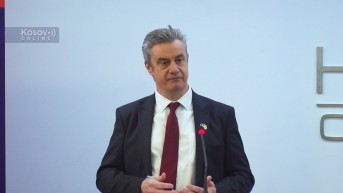
The United Kingdom’s Ambassador to Kosovo, Jonathan Hargreaves, has assessed that the establishment of the Community of Serb Majority Municipalities must be completed in 2026. He described 2025 as a “wasted year” for Kosovo, directly linking the lack of political and institutional progress to the inability to advance the dialogue with Serbia and Kosovo’s Euro-Atlantic agenda.
According to him, the internal political stalemate and delays in forming functional institutions have produced real consequences for Kosovo’s stability, governance, and international credibility.
In an interview with Gazeta Express, Hargreaves said that Kosovo faces important challenges and that the United Kingdom expects the swift formation of a new government after the elections on 28 December. As he noted, this will require cooperation and compromise among political actors. He expects progress in the dialogue with Serbia in the coming year, including the establishment of the Community of Serb-Majority Municipalities.
How does the United Kingdom assess the current phase of the Kosovo–Serbia dialogue? What are your concrete expectations for the parties in 2026? What role should the international community play in bringing the sides back to the negotiating table?
“I have called 2025 a ‘wasted year’ for Kosovo. The unwillingness of politicians to reach the necessary agreements to form a functional government has held Kosovo back in many areas, including progress in the EU-facilitated dialogue. The United Kingdom continues to fully support the dialogue because, although it can be challenging, it is essential for long-term stability in the region. It is also crucial for Kosovo’s progress toward the EU, NATO, and other international organizations.
“In 2026, we expect both Kosovo and Serbia to engage constructively and to implement existing agreements in good faith—including the establishment of the Community of Serb-Majority Municipalities—and to prioritize practical steps that improve the lives of all communities. Moreover, these agreements form the foundation of Kosovo’s statehood and its path toward resolving its status with states that have not yet recognized it. The international community should—and will—remain actively engaged, providing political support and clear incentives for progress. The United Kingdom will continue to view this as essential to our partnership with Kosovo. However, the international community cannot want sustainable normalization more than the countries involved in the dialogue themselves—the primary responsibility for progress lies with the political leaders of both states.”
What is your message regarding the electoral process on 28 December?
“Kosovo has an impressive record of free and fair elections. I hope the electoral process on 28 December will be peaceful and transparent and conducted fully in line with democratic standards. Elections are the cornerstone of Kosovo’s democracy, and it is vital that all actors—institutions, political parties, and citizens—play their role to guarantee credibility and fairness. The leadership of the Central Election Commission, the Election Complaints and Appeals Panel, and the Supreme Court have played key roles in safeguarding the integrity of past electoral processes, and I would like to thank them for that.
“Above all, I hope this will be the last election for a considerable period. Kosovo needs a stable and decisive government, not another cycle of electoral uncertainty. My message to political parties is clear: whatever the outcome, cooperation and compromise will be essential for the swift formation of institutions in the new year. Kosovo faces important challenges and opportunities, and prolonged political deadlock will only delay progress. A calmer and more civil tone among the parties, compared to what we heard in February, would help create the conditions for constructive dialogue and stability.”
What does the United Kingdom expect regarding the formation of new institutions?
“The United Kingdom’s main expectation is that new institutions be formed quickly and effectively. A functional assembly is essential to address urgent priorities, beginning with the adoption of the national budget for 2026. Without that budget, Kosovo risks facing significant financial and operational challenges by the end of February. The inability to spend public funds would have a serious impact on public services and economic stability, as well as on the lives of many dedicated public servants who are due to receive salaries in March. Recent visits I made to municipalities left me with the impression that ordinary citizens waiting for basic services would suffer the most.
“Citizens of Kosovo have the right to expect a government capable of improving their well-being, prosperity, and security, and of ensuring that their country is seen as a positive and reliable partner in the region. I hope the future government will show greater commitment to Kosovo’s strategic objectives, including advancing the EU-facilitated dialogue, accelerating progress in European integration, and taking active measures to strengthen the inclusion of non-majority communities. The United Kingdom will continue to support Kosovo in these efforts, but decisive political will and cooperation among parties will be crucial. Inclusive, transparent institutions focused on delivering services to citizens will send a strong signal—both domestically and internationally—that Kosovo is ready to move forward.”
How does the United Kingdom view the process of lifting EU measures against Kosovo?
“The United Kingdom welcomes the European Union’s announcement that measures against Kosovo will be lifted by the end of January, enabling Kosovo to access financial assistance worth several million euros. This decision will boost administrative integration, increase trust among citizens and international partners, and strengthen Kosovo’s European trajectory.”
How does the United Kingdom assess the security situation in Kosovo, particularly in the north?
“The United Kingdom’s assessment of the security situation in Kosovo—especially across the north—is that it is ‘calm but fragile.’ We remain concerned about inter-community tensions and continue to encourage Kosovo’s caretaker government, non-majority communities, and their representatives to ensure that all rhetoric and activities are consistent with the rule of law and avoid provoking further divisions. We continue to call for restraint and dialogue and work closely with international partners to help reduce tensions. Our continued contribution to KFOR reflects the United Kingdom’s unwavering commitment to preserving peace and security for all communities in Kosovo.”
Kosovo has fallen on the Reporters Without Borders Index. How do you assess freedom of expression in Kosovo, and how does harsh rhetoric by caretaker-government officials toward the media affect the environment for free expression?
“The United Kingdom recognizes that Kosovo has made progress on freedom of expression, but challenges remain. We are concerned about political interference in media regulation and about the harassment women face online and in public discourse. I was particularly disappointed by degrading and sexist language directed at an elected official earlier this month and during the 16 Days of Activism against Gender-Based Violence, which focused precisely on the new challenges posed by online abuse. Recent documentaries by Kallxo, sponsored by the United Kingdom, clearly show that hostile forces seek to undermine Kosovo’s democracy through disinformation. Promoting strong, independent journalism and ensuring that women’s voices are heard without fear of threats are essential to protecting Kosovo’s democracy. The United Kingdom will continue to support efforts to strengthen these safeguards. All countries face challenges in adapting to the rapid flow of information from multiple sources, and Kosovo is no exception: transparency, fact-checking, and media literacy can help Kosovo preserve a pluralistic media and social-media landscape, protecting people from abuse and disinformation.”
What are the main priorities of UK foreign policy in Kosovo?
“The United Kingdom is very proud of its deep friendship with Kosovo. The UK’s chairmanship of the Berlin Process this year has demonstrated the importance we attach to the security and prosperity of the Western Balkans. Kosovo remains a very important part of the UK’s strategy for a safe, stable, and secure region in the broader European context. We will continue to work with Kosovo’s government, institutions, and civil society to promote long-term security and stability in the region, jointly combat illegal activities that harm Kosovo, the United Kingdom, and the rest of Europe, and build stronger economic and cultural ties that further connect our countries. We remain committed to Kosovo’s Euro-Atlantic future, including its path toward integration into the EU and NATO, and will continue to work with partners to ensure long-term peace and prosperity for all communities.”
Do you foresee deepening Kosovo–UK cooperation in new areas?
“Kosovo and the United Kingdom enjoy a strong and forward-looking partnership based on shared commitments to open markets, sustainable growth, and democratic values. The United Kingdom was among the first to recognize Kosovo’s independence and continues to support its sovereign development, grounded in the values and obligations enshrined in Kosovo’s Constitution. Today, both our countries see each other as strategic partners in addressing Europe’s shared security and economic challenges.
“The UK–Kosovo partnership is strong and expanding. We have long enjoyed close cooperation in security, which we intend to deepen further to meet shared security needs. There is significant potential for closer partnership in digital innovation, education, and other fields, where we can stimulate trade and mutual investment, which to date have remained at very low levels.”

comments