
Kami: Kosovo will not be a success story until Serbs enjoy full rights
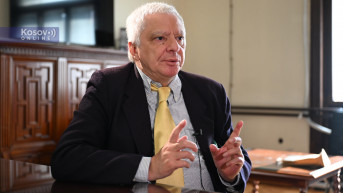
French political scientist and associate of the Institute for International and Strategic Relations in Paris, Jean-Yves Kami, in an interview with Kosovo Online, assessed that until all parties in Kosovo agree that there is a Serbian population that should enjoy full rights, particularly the right to express their culture and language, Kosovo will not be a completely successful story.
Some French politicians, like Bernard Kouchner, who, according to Kami, were so eager to recognize Kosovo's independence, made a significant mistake by forgetting the Serbian minority in Kosovo. He warns that there are other entities in Europe striving for independence, and border adjustments within Europe could occur, even though it was thought that they were settled.
February 17th will mark 17 years since Kosovo unilaterally declared independence. Today, it is recognized by less than half of the United Nations member states. Is Kosovo a success story, as officials in Pristina and some of their allies are inclined to say?
It is a success story only if every part of the population has the right to express itself, to enjoy a full cultural life. Until that is achieved, it is not a complete success story. You cannot build a national narrative on the superiority of one part of the population over others. I know that Kosovo is very important to Serbs because of its history, as it is the cradle of their cultural and historical heritage. All parties in Kosovo must agree that there is a Serbian population that should enjoy full rights, the full right to express their culture and language. Until then, it will not be a completely successful story.
Twelve years ago, Kosovo committed in the dialogue with Belgrade to form the Community of Serb Municipalities, which Serbs see as an umbrella organization that will be a guarantor of their rights. To this day, Pristina has not established the CSM. What model would be suitable for protecting the rights of Serbs in Kosovo?
To protect Serbian rights in Kosovo, there certainly needs to be some form of international oversight to ensure that Serbian rights are fully respected. What kind of oversight and under which body remains to be seen. From my French perspective, I think it was a major mistake made by some French politicians who were so eager to recognize Kosovo's independence. I can mention one, former Foreign Minister Bernard Kouchner, who was so eager for Kosovo's recognition that he completely forgot about the Serbian minority. We have a long story of friendship between France and the Serbian people that goes back well before World War I, and at one point, that was completely forgotten. The Serbian population was more or less a victim of French diplomacy at that time. Recognizing the rights of Serbian municipalities requires a permanent body to oversee the full implementation of these rights. But, if you have a body overseeing whether these rights are respected, there also need to be sanctions if they are not respected. What kind of sanctions and which body might impose them, there is no good answer. I'm not sure that the EU is willing to have a mechanism to ensure that Serbian rights are respected.
Does the EU, as a mediator, have the capacity to bring Belgrade and Pristina to sign an agreement with which both sides would be equally satisfied and equally dissatisfied if that is inevitable?
The EU is too weak. It lacks a common defense policy, common diplomacy, and is not successful in being strong enough to enforce agreements. I'm not so sure that today's EU, which I would say is torn internally by different national interests, has the strength to impose this agreement. I'm not critical of the EU as such; I'm not saying it's not useful. What I see is that today, whether it's under Trump's new presidency in the US, or the situation in Russia and Ukraine, the EU is actually quite weak.
When Kosovo declared independence, it was asserted to be a "sui generis" case, meaning a unique situation that wouldn't set a precedent. However, whether time has shown this to be true or not, it has certainly produced certain consequences.
There are other entities that strive for independence and wish to secede from other states. When Kosovo became independent, there were voices suggesting that this might be just the starting point for something bigger, leading to an increase in the number of states in Europe. Scotland continues to seek independence, and there is a strong movement in Catalonia. In Italy, the Northern League previously demanded the independence of the northern part of Italy, not anymore, but I think there's a possibility that in the coming years we will see other regions seeking independence. Even in France, for example, the island of Corsica, located in the south of the country, where a significant political movement demands at least very wide autonomy, and some people sitting in the local parliament want to achieve independence. In the 1990s, we thought the borders of Europe were settled. I'm not so sure anymore. The proliferation of states is something that could happen, and the borders of Europe might be revised by independence movements eventually achieving their goal. This is a possibility, I'm not sure about it. For example, the Spanish central state is very opposed to the independence of Catalonia. Catalonia enjoys very wide autonomy with the use of its own language and culture. The Spanish state does not want to go further. And I think that's wise. But, we have political movements that say, maybe the borders that were set in 1945 are not fair and not just and should be revised.
The law and the Kosovo constitution guarantee the equal use of Serbian and Albanian languages, but institutions at both central and local levels do not respect these regulations. This is just one example of the violation of Serbs' rights. Is Kosovo, with such a "reputation," a desirable member of the Council of Europe?
The admission of Kosovo should be postponed; there is already some kind of agreement on this, but let's not think that the Council of Europe has the means to enforce any policy. It's just a formality. For example, when the war broke out between Armenia and Azerbaijan, and Azerbaijan invaded the region of Nagorno-Karabakh, what did the Council of Europe do? What did they say about the situation that is quite similar to that in Kosovo? What did they do to protect the rights of the Armenian people in Nagorno-Karabakh and what are they doing now to protect all those Orthodox churches in Nagorno-Karabakh that are being destroyed daily by Azerbaijan with the support of Turkey? They pass a resolution. Okay, but I think they let 150,000 Armenians be expelled from their homeland. The Council of Europe is a very interesting forum for discussion, but when it comes to enforcing peace agreements, it's just a consultative body that doesn't have its own peace forces.



0 comments