
Zaner: Strategic dialogue is not a blank check, but a framework for strengthening Serbia–U.S. relations
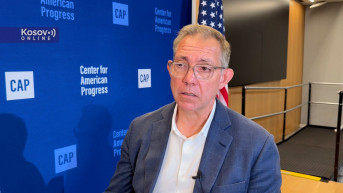
Luke Zaner, Senior Fellow in the National Security and International Policy Department at the Center for American Progress in Washington, believes that the launch of the strategic dialogue between Serbia and the United States is an important step toward institutionalizing bilateral relations, but does not amount to a fundamental transformation of those ties. He adds that establishing a regular channel of communication between Belgrade and Washington is undoubtedly useful and significant.
In an interview with Kosovo Online, Zaner said that the mechanism will enable more regular and structured communication between Belgrade and Washington, which could help strengthen cooperation and prevent crises. He added that the current U.S. administration approaches international relations from a transactional perspective, meaning that the strategic dialogue should not be interpreted as the creation of a special partnership with Serbia, but rather as part of Washington's broader policy toward the Western Balkans.
Zaner believes that no immediate impact on the Belgrade–Pristina dialogue should be expected. However, he argues that Serbia may gain more opportunities, though not a blank check of support. He also emphasized that the strategic dialogue could contribute to more stable bilateral relations, encourage investment, and create greater scope for cooperation in areas of mutual interest.
The United States and Serbia are launching a strategic dialogue for the first time. How significant is this development, and could closer U.S.–Serbia relations create a more favorable environment for resolving difficult issues, such as Kosovo, through dialogue rather than confrontation?
The strategic dialogue is important, but it is equally important to understand that it is a dialogue, not a strategy. It represents an opportunity, but it does not, by itself, transform relations between the two countries. It is an important and highly useful step, but it should be viewed in its proper context. Establishing a regular channel of communication between Belgrade and Washington is extremely useful and important, particularly in helping prevent the escalation of potential crises or resolve disputes that may arise.
However, it is part of a long-term process of relationship-building that the United States is pursuing throughout the region. Therefore, I do not believe this move should be interpreted as representing more than it actually does. What is important to understand is that mechanisms of this kind are extremely valuable.
Do you expect the new strategic dialogue between Washington and Belgrade to provide fresh momentum for the Belgrade–Pristina dialogue? What role could the United States play in encouraging pragmatic solutions that contribute to long-term regional stability?
I believe it can help improve the overall atmosphere because any time you establish dialogue and create clear, effective, and particularly structured communication, it is highly beneficial. At the same time, I do not think too much should be expected from the dialogue itself. Its value depends on what is accomplished through it. Above all, it is a structure and an important mechanism that contributes to more stable bilateral relations.
I do not believe it will necessarily have direct consequences for issues such as Serbia–Kosovo relations, but it has the potential to become a very positive instrument that will help the United States contribute to de-escalating potential problems. It also provides another communication channel through which the United States can, when it chooses, support the European Union's efforts in the region.
It appears that Washington is placing greater emphasis on its relationship with Serbia. What does this say about Serbia's growing strategic importance in the Western Balkans, and how could it influence U.S. policy toward the region in the coming years?
The current U.S. administration views international relations through a highly transactional lens, and it approaches its relationship with Serbia in the same way it approaches relations with other countries in the region. For that reason, I do not think too many conclusions should be drawn as to whether Serbia's relationship with the United States has somehow moved ahead of Washington's relations with other regional states. The launch of the strategic dialogue is certainly a very positive development because it contributes to stabilizing and institutionalizing relations between the two countries.
However, I do not believe it signifies the emergence of a special relationship between Serbia and the United States. This administration takes a highly transactional approach to international affairs. The most important thing for Serbia is that this mechanism becomes a long-term one. The Trump administration has just over two years remaining in office, but Serbia should focus on institutionalizing relations that transcend individual administrations, political parties, and institutions, ensuring that Washington's interest in Serbia and the region endures over time.
Beyond its political symbolism, what concrete benefits can Serbia expect from the Strategic Dialogue with the United States in areas such as economic cooperation, regional security, energy, and the protection of Serbian interests in the Western Balkans, including the dialogue with Pristina?
Serbia can expect more opportunities from this dialogue, but it should not be viewed as a blank check of support. The United States maintains strategic dialogues with other countries in the region as well, so this initiative, to some extent, normalizes relations with Serbia in the same way it has done with other countries, including North Macedonia.
What this type of structured communication provides is a framework that facilitates the development of investment in key sectors of mutual interest, including the energy sector, which you mentioned. At the same time, it offers a way to formalize numerous contacts between the institutions of the two countries across various fields. This will inevitably create more opportunities and increase the likelihood of identifying common interests that can lead to agreements and cooperation.



0 comments