
Cechova: In Kosovo I became disillusioned with the international community, but won over by ordinary people
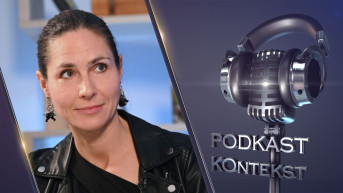
“I have traveled a great deal, but there are only a few places I fell in love with at first sight. You see and feel something—you have to sit down because you can’t stay on your feet. That’s how it was with Mitrovica—love at first breath, even though the air I breathed there was terrible, suffocating. I fell in love with the story of that city, so much so that even readers from Kosovo told me they cried when they read my description of Mitrovica in the book Total Balkan. And that’s not because of the city’s beauty or landmarks. A few years later I took my husband, who is originally from Dubrovnik, from the seaside, surrounded by beauty his entire life. Walking around Mitrovica, he said he knew people who had fallen in love with Paris, but couldn’t understand how anyone could fall in love with Mitrovica. It doesn’t affect everyone, but it worked on me from the very first moment, and I thought I would spend my life in Mitrovica,” said Blanka Cechova, a Czech writer and lawyer, speaking on the Context podcast.
A guest on Context, Cechova studied law at Charles University in Prague and creative writing at Oxford. As a young lawyer, she began her career at the European Court of Human Rights in Strasbourg.
“I went to Strasbourg at 25, and you can imagine how a young person feels when given such an opportunity to work as a legal assistant at the Court. You have enormous expectations, and idealism at that age is normal and justified. But very quickly you realize that nothing is the way you thought it would be. The Court has its own rules and processes. You feel sorry for people waiting for judgments that may end up being contrary to their expectations, even though they aren’t aware of it. It weighed heavily on me, and I resigned. I decided I wanted nothing to do with the international community—I was disappointed,” Cechova said.
The international community soon received a second chance. After leaving the Court, she came across a job posting that took her to Kosovo.
“It was a field mission, and I believed it would be different—that there were people there who were fixing things, carrying sacks of flour, bringing the internet to isolated villages, actually doing something. I went, and after just 48 hours I realized it wasn’t like that there either, and that hit me hard,” she recalled.
Her motivation to apply stemmed from an article about a school in Kosovo reportedly built with international funds. Upon arrival, she decided to look for the village presented as a successful project.
“I searched for that village and arrived at utter poverty, with barefoot children walking around. I asked them where the school was, and they didn’t know what I was talking about. I genuinely thought I had made a mistake because I was new—I was convinced I had misread the map,” the Czech writer recounted.
Today she knows she read the map correctly—as well as the organization she worked for. Still, she did not abandon the mission that brought her to Kosovo; instead, she looked for ways to help the most vulnerable.
“When the inefficiency of my official mandate became unbearable, I figured out how to help isolated schools. I realized children needed modern English textbooks—or fluorescent armbands for kids who walked to school in the dark along unsafe roads. I came up with the idea of connecting local schools with secondary schools in the Czech Republic and England, where I had also studied. I created a website listing what schools in Kosovo needed. Schools in the Czech Republic and England prepared the supplies, and I drove the packages by car and personally delivered them to the children. It’s a tiny thing, a drop in the ocean, but proof that transparent work is possible if there’s the will,” she said on the podcast.
Before moving, she knew little about Kosovo—nor did her family, who found her departure into uncertainty difficult.
“From today’s perspective, my family’s attitude was absurd and a bit amusing. Everyone had been manipulated by the media and kept asking: where are you going, do you have body armor, will someone shoot you in the head, don’t go anywhere, finish your mission and come home. I went to Kosovo convinced I was heading into an open conflict—and this was in 2007, when the war was long over and no one was shooting, but there were other problems,” Cechova said.
She says that what ultimately won her over in Kosovo were ordinary people, with whom she spent most of her time. She does not know how they perceived her, but she knows that she felt accepted.
“I came to Kosovo and moved into my wonderful apartment, which I never locked—nor did I ever lock my car. I don’t know if I have ever felt safer—perhaps now in Belgrade, where I am staying these days and where I also feel comfortable,” she said.
Although she never wanted to leave Kosovo, she stayed for only a year. That period is documented in her book Total Balkan, which was translated from Czech into Serbian in 2020.
“I regret that the book was never translated into Albanian, even though that was the idea from the very beginning. I don’t understand Albanian, and there are many moments in the book where translation can completely change the story. That is why it is important for the author to at least know the language, so they can have the final say in the translation process,” Cechova noted.
The author emphasizes that the book is not autobiographical, but written in the form of a diary. Among other things, it also describes her departure from Kosovo.
“I describe the feeling of leaving Kosovo. I categorically did not want to go, but I felt that I had to, with the idea that I would return,” explained the Context guest.
She last visited Kosovo five years ago and hopes to return with her three children. She has remained in contact with some friends—both Serbs and Albanians—to this day. She says they talk little about politics and more about life, personal matters, and their families. They often ask her when she will come to celebrate a slava (St’s Day) with them.
“They live the same as before, which in the context of Kosovo is not good, because they should be living better. When I look at how much life has progressed and how many more opportunities people have today, Kosovo seems to be stagnating. It suits someone to keep everything frozen in place, and I am sorry that this is the case,” Cechova said.
She describes both Serbs and Albanians as having left a strong and positive impression on her. She believes that relations between the two peoples are burdened primarily by uncertainty, which is a daily reality in Kosovo.
“My experience is that conflicts and incidents are often imposed from above. Ordinary people who live in villages or have regular jobs want their children to grow up normally and do not want conflict. That is the same everywhere in the world,” Cechova believes.
She describes the Balkans as the last island of freedom in Europe, although things here, too, are changing rapidly.
In the Czech Republic, where she comes from, the topic of Kosovo has, over time, faded and in a way grown tiresome for people. Still, she is encouraged by the fact that in her country there is a large group of tourists who come to the Balkans—not only because of the Adriatic coast, but also to visit Kosovo and the interior of Serbia. She is proud that her book has inspired several hundred Czechs to visit Kosovo and that, thanks to this, the Kosovo issue remains alive.
The full appearance of Blanka Cechova on the Context podcast can be viewed in the accompanying video.
0 comments