
Ciric: UNESCO’s lack of response is concerning; Church in Rakitnica near Podujevo dates from the 14th century
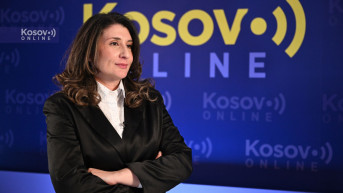
Art historian Jasmina Ciric stated that the Church of the Holy Archangel Michael in Rakitnica near Podujevo, which self-proclaimed Archbishop Nikola Xhufka has been attempting to appropriate for years, is a structure dating from the second half of the 14th century and is most directly associated with the period of Prince Lazar. She added that UNESCO’s failure to respond to attempts to appropriate Serbian cultural heritage in Kosovo was a cause for concern, RTS reports.
According to Ciric, the Church of the Holy Archangel Michael in Rakitnica unquestionably dates from the 14th century.
“This is evidenced by the material remains at the site, from the foundations up to the middle section of the church. It is a structure from the second half of the 14th century, most directly associated with the period of Holy Prince Lazar, as confirmed by the surviving remains, primarily the form of the Morava-style rosette on the façade,” the art historian explained.
She added that the church was renovated during the 16th and 17th centuries, while by the middle of the 19th century, traces indicating a more substantial presence of the Serbian population in the area had disappeared.
“However, what we can certainly confirm on the basis of the material remains and the appearance of the church itself is that it is a single-nave church associated with the secondary currents of architecture from the period of Prince Lazar, which is also confirmed by the local toponymy,” she emphasised.
Toponyms and Tradition as Evidence
Even local Albanians, according to the testimony of journalist and writer Zivojin Rakocevic, referred to the church before the 1999 conflict as “Lazar’s Church”, believing the tradition that the body of Prince Lazar had rested there overnight after the Battle of Kosovo.
“When we look at a map of Kosovo and Metohija, the majority of place names are indisputably of Serbian origin, whether we are referring to Rakitnica, Bistrica, Decani, Podujevo or Pec. They have since been Albanianised and adapted to the local linguistic environment. All these place names are connected with Serbian medieval heritage and culture, which can be traced back to the time of Simeon Nemanja,” Ciric said.
Historical Falsification without a Response from the International Community
Nikola Xhufka is not recognised by any canonical church, including the Albanian Orthodox Church itself. In his latest interview with a Kosovo media outlet, he claimed that he had won a court case against the Serbian Orthodox Church and had proved the Albanian origin of the church in the village of Rakitnica.
“It is clear from a whole series of incidents that the objective is to establish a new Orthodox church, as he himself indicated in his posts. The first step is the appropriation of material traces. If you have a simulacrum in the form of a state, you then create a simulacrum in the form of cultural heritage, followed by the establishment of a new church that has no connection whatsoever with the canonical order of the Serbian Orthodox Church,” the art historian warned.
She recalled that UN Security Council Resolution 1244 was clear and that the Serbian Orthodox Church was the sole legitimate owner of the religious and spiritual heritage in Kosovo.
Although there has been no response from the institutions in Pristina, she said that the silence of international organisations was particularly concerning.
“UNESCO’s lack of response is concerning. We have buildings that are directly inscribed on the World Heritage List as sites of significance to humanity as a whole, such as Decani, Gracanica and the Patriarchate of Pec. We are witnessing continuous attempts to Albanianise and ‘Kosovarise’ these sites, even through organised school excursions during which false narratives and identities are promoted,” the art historian stated.
Asked how smaller churches such as this one near Podujevo, which have neither physical nor institutional protection and of which there are hundreds throughout Kosovo, could be protected, she replied that the key lay in documenting them and raising awareness of their origins.
“These smaller churches are metochia of larger monastic complexes. In a way, Podujevo has become an emblematic location for the misuse of cultural heritage since 1999 and the March 2004 pogrom. Lesser-known churches are more easily misused in order to present a false identity to the international community. Nevertheless, the fact that these sites are metochia, as confirmed by the very name Metohija, clearly demonstrates the canonical jurisdiction of the Serbian Orthodox Church,” the art historian concluded.
She stated that protection was linked, on the one hand, to the presence of the Serbian Orthodox Church and, on the other, to the safeguarding of material remains through the work of the Institute for the Protection of Cultural Monuments of Serbia, in cooperation with the international community and UNESCO. She added that the work of the Institute’s experts in the field was hindered, although it remained crucial to the preservation of Serbian heritage.

0 comments