
How will extreme Albanian politics affect further relations between Skopje, Belgrade, and Pristina
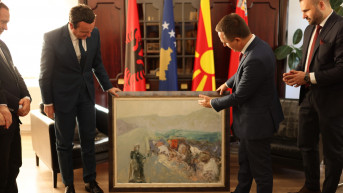
"A large number of ethnic Macedonians currently view the political and social situation in the country as very humiliating, partly due to the open interference of Albanian politics from Kosovo in the decisions of official Skopje."
Prepared by: Milos Garic
North Macedonia is facing fateful decisions, and the presidential and parliamentary elections, the outcome of which we will learn in the next ten days, will have strong implications for many processes throughout the region, especially regarding events in Kosovo, relations with Belgrade and Pristina, and of course, Skopje's relationship with official Sofia and European institutions.
Of course, for North Macedonia itself, the path the internal state of society will take is of immense importance, taking into account the dramatic Albanization of political, public, and cultural life. The relationship between the Macedonian and Albanian communities is extremely tense, especially considering the undisguised ambitions of certain Albanian political parties under the direct influence of Albin Kurti for a "Greater Albania," so in that sense, the political course that the newly elected authorities will take is extremely important.
The Albanian party Democratic Union for Integration (DUI) has shamelessly used its current position in government to pursue its own policy on behalf of the Macedonian state, even signing agreements that literally negate the national identity of Macedonians as the majority people in North Macedonia.
Under direct Albanian influence, official Skopje has made some blatant anti-Serbian decisions in recent months, particularly evident in the Parliamentary Assembly of the Council of Europe, in voting for Kosovo's admission and co-sponsoring the UN resolution on Srebrenica.
VMRO announces changes
What can be expected after May 8th and the second round of presidential elections along with the voting of citizens in parliamentary elections? Can North Macedonia break free from the grip of extreme Albanian nationalism?
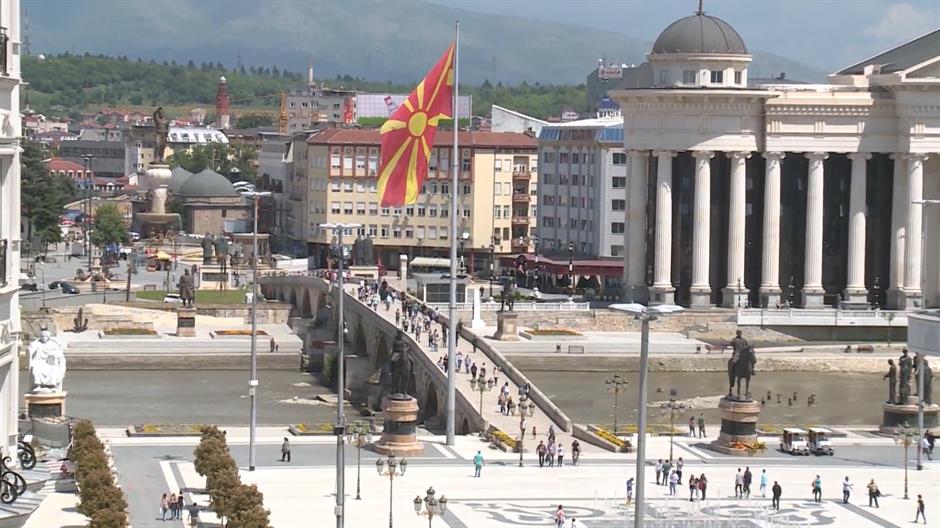
Candidate Gordana Siljanovska-Davkova of VMRO-DPMNE won around 40 percent of the votes in the first round of the presidential elections, ahead of SDSM candidate and incumbent president Stevo Pendarovski, who received half as much.
Within the Albanian voting body, there was a division of votes between Bujar Osmani (13.3%) and opposition candidate Arbën Taravari (9.2%), who had strong support from Albin Kurti and his party. Unexpectedly, Osmani garnered significant support from ethnic Albanians in that showdown. Both Albanian candidates were thus eliminated from contention for the second round, leading to criticism of Kurti by Albanian opposition parties in Pristina. Clearly, Kurti's idea was to affirm his candidates in Skopje and "enhance" his influence on politics in North Macedonia.
Ivanka Vasilevska, a professor at the Faculty of Law "Justinian the First," anticipates radical changes in Macedonian politics.
"Changes are coming. The citizens of Macedonia have expressed their opinion on the non-people-friendly and extremely humiliating rule of SDSM and DUI over the past seven years. Hope for the future is returning to Macedonia. We, as the largest opposition bloc led by VMRO-DPMNE, have made a serious offer to the public to find a way out of this extremely humiliating situation. The citizens of Macedonia have accepted it, and therefore, we are not surprised by the enormous support in the first round of the presidential elections and we expect an even greater result in the double elections on May 8th," says Vasilevska.
The open interference of extreme Albanian politics from Kosovo in processes in Skopje, through the influence of Albin Kurti's party and him personally, has brought even more dramatic consequences for the situation in Macedonia and the entire region.
"Criminality and corruption are the hallmarks of the coalition rule between SDSM and DUI. Placed in a desperate position, they perceive any other option as a hostile attack. Macedonian citizens of Albanian nationality are equally concerned as the Macedonian people and all smaller communities about the violence and abuse committed by the leaders of these two ruling entities. You cannot pretend to be pro-European while waving fingers and threatening violence. Such a phenomenon cannot be close to any mature politician in the Balkans. For these reasons, Albin Kurti's support for the Albanian opposition in Macedonia is a clear signal that the bad reputation is spreading beyond the borders of Macedonia," explains Vasilevska.
According to her, the increasingly certain victory of VMRO-DPMNE and the coalition for change will bring new freshness and space for cooperation with countries in the region.
"Based on the principles of international law and human rights protection, we plan to build neighborly relations, which must be maintained on equal terms and with the intention of both sides to mutually respect, support, and engage in principled cooperation. Our goal is to put Macedonia back on the right track and accelerate processes that should contribute to our accession to the European Union, and with that goal, our efforts will be directed towards strengthening Macedonia's economic growth and confronting corruption and crime, as important challenges that will help the integration process into the European family. To this end, we believe that strong regional cooperation is necessary, as well as Macedonia's proactive role in all areas of international cooperation to find solutions to key problems and challenges. The poor leadership of the outgoing government leaves us with a challenge that we will have to seriously address and resolve in the coming period. We appreciate that only in a transparent and public manner in policymaking can we improve Macedonia's poor image among regional and global partners," emphasized Vasilevska.
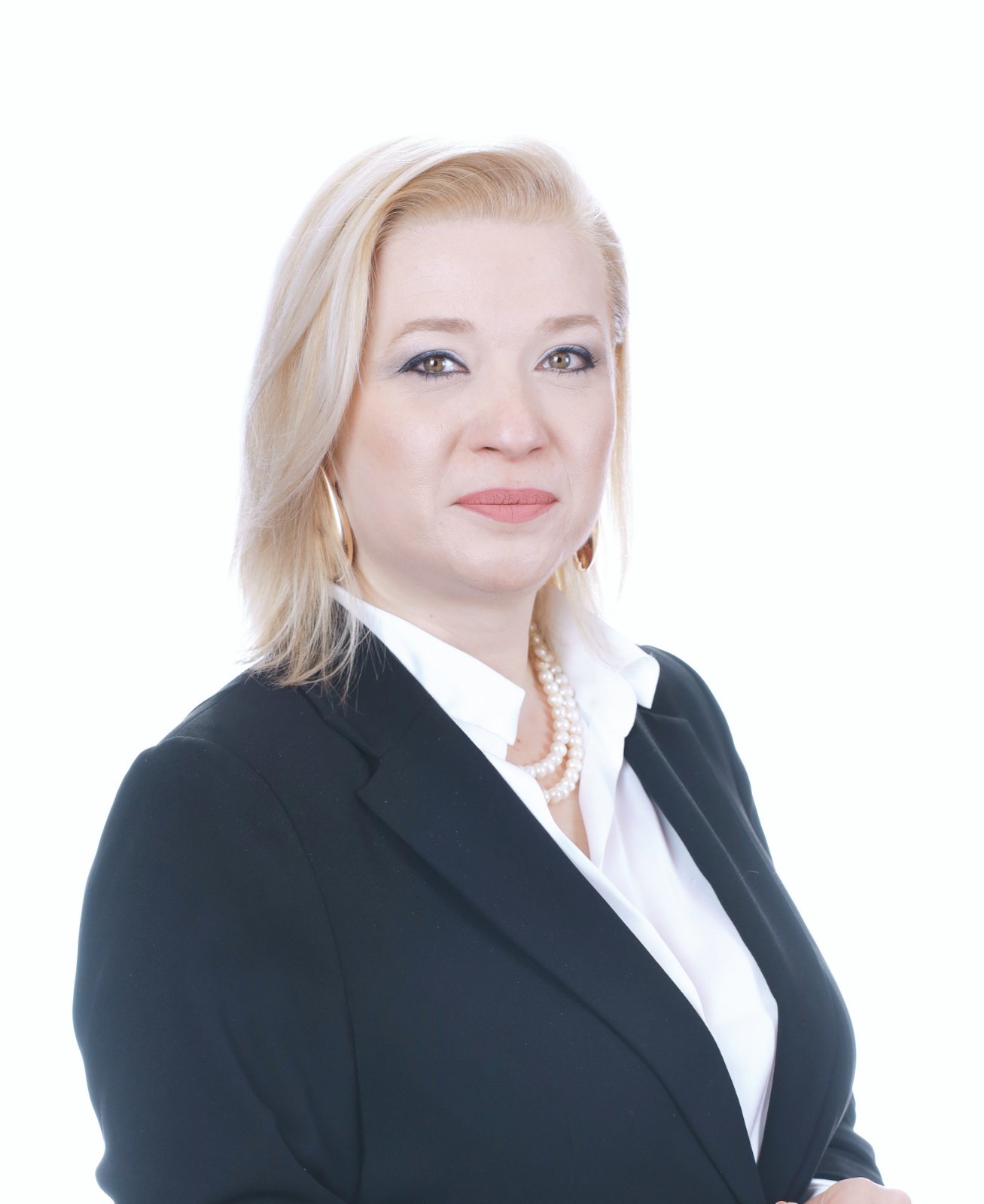
An emphatic victory for VMRO, she adds, would enable the country's recovery.
"Our focus is on addressing real problems to restore the full functionality of the system, protect national interests, and create an environment for implementing public policies that will yield results in healthcare and education. We have a serious number of concrete reform measures and policies that will create conditions for a better standard of living, restore confidence in the judiciary, and ensure equal opportunities for all citizens regardless of ethnicity. Of course, our priority is the protection of Macedonian national interests, extensive work on the normal functioning of the constitutional and political system, guaranteeing the undisputed right to equality for all. Naturally, the youth are one of the main targets of our Program, further care for vulnerable categories of citizens, a safe country for all, and of course, an economic offer full of serious measures that will affect our demographic policy so that the citizens of Macedonia can stay at home. With our concept, we believe that we will succeed in establishing new opportunities that will enable the citizens of Macedonia to have a better quality of life," Vasilevska emphasizes.
Two scenarios
Marko Trosanovski, President of the Institute for Democracy, highlights that the election outcome can affect the situation in the region in two ways.
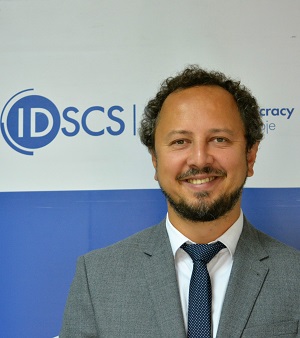
"First, if the Albanian opposition achieves a significant electoral result and manages to enter the future government coalition. This will increase Albin Kurti's influence on regional policies, given that Self-Determination supports the Albanian opposition and its part through its members. And the second way, if a government is formed that will make constitutional changes, decisive in negotiations for EU membership, which will positively affect the regional situation of European integration. Also, the potential entry of the Albanian opposition into power may mean less emphasis on the Open Balkans initiative, given their opposition to this initiative," Trosanovski points out.
Stefan Surlic, Assistant Professor at the Faculty of Political Sciences in Belgrade, does not expect significant changes in Macedonian politics after the elections.
"I think fundamentally we cannot expect any major change. Whoever comes to power, unless there is a radical break with the Ohrid Agreement and what its essence is, I mean the Macedonian Ohrid Framework Agreement, of course. Albanian parties will remain part of the ruling majority, and regarding Kosovo, the normalization of relations, they will always have a policy that must be 100 percent favorable to Pristina. We saw it now in the case of the United Nations, that despite the very close, friendly, and somewhat brotherly relations between Serbia and Macedonia, their hands are simply tied there. According to the veto system, Albanian representatives demand clear support for the independence of Kosovo and, of course, what interests them not only regarding Kosovo but also from a regional perspective, and they always put Serbia aside," Surlic concludes for Kontekst.



comments