
Cooperation as a common interest: Serbs in Kosovo caught between Students’ List and Serb List
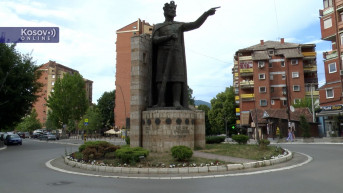
Following its victory in the parliamentary elections, representatives of the Students’ List said they would not cooperate politically with the Serb List, the leading party representing Serbs in Kosovo, which until now has operated with the support of the Serbian Progressive Party and former Serbian President Aleksandar Vucic. The Serb List holds nine of the ten seats reserved for the Serbian community in the Kosovo Assembly and governs all ten Serb-majority municipalities. As a result, Serbs in Kosovo have found themselves caught between two sides—the new authorities in Belgrade, which are seeking a break with and revision of the previous policy, and the Serb List, which continues to control key mechanisms at the local level. Kosovo Online’s interlocutors warn that, in the interests of the Serbian community and the protection of its interests and rights, at least technical coordination is necessary.
Written by: Ivana Sanjevic
Jugoslav Gasic, a Students’ List candidate for MP, said in the days following the election victory in Serbia that the Students’ List would have no communication whatsoever with the Serb List, although he explained that, should talks become necessary, communication would take place through the international community.
“We will change absolutely everyone in management positions within institutions operating under the system of the Republic of Serbia,” he said, adding that the newly appointed officials would cooperate with Serb List representatives in local institutions to resolve problems facing citizens.
The Serb List said that it did not wish to engage in “fruitless day-to-day political disputes” with representatives of the Students’ List, given the responsibility it said it bore toward the Serbian people in Kosovo and Metohija and the seriousness of the situation they currently faced.
“Nevertheless, in the interests of our citizens, who are understandably concerned about their future, we believe it is important to make clear that the Serb List will not abandon its struggle for the rights of the Serbian people, the preservation of Serbian institutions, every job and every social benefit, and the creation of conditions necessary for our people to remain in this area,” the statement said.
Radical break as a legitimate position
Political scientist Ivan Tomic believes that Serbia’s new authorities will make a radical break with the political model that has so far existed within Serbian institutions in Kosovo and will seek to create democratic pluralism.
“What is evident at this point is that the new authorities want to make a radical break with the political model that has existed until now, and they have valid reasons for doing so. It is also important to note that it is entirely legitimate for the new authorities to want to approach the issue of Kosovo and Metohija differently,” Tomic told Kosovo Online.
He added that it was legitimate for the new authorities to seek to create opportunities for other Serbs in Kosovo, but cautioned against sweeping statements about replacing all current officials, noting that many of them had managed their institutions effectively.
“We must avoid falling into the trap of having Belgrade simply issue instructions on who should be dismissed and who should be appointed, because then we would once again find ourselves in a situation where only the political actors have changed, while the philosophy of political governance over the lives of Serbs in this area remains unchanged. Most importantly, the people must not feel the consequences. They must be able to function normally, continue living here and remain here under the circumstances in which we currently operate,” the political scientist said.
Working-level coordination in the interests of the Serbian community
Milos Pavkovic, Strategy Director at the European Policy Centre in Belgrade, told Kosovo Online that, from a political and ideological standpoint, he understood the Students’ List’s position of refusing to cooperate with the Serb List in Kosovo, which it views as a “branch of the Serbian Progressive Party,” but stressed that technical coordination was necessary in the interests of national priorities and the rights of Serbs living in Kosovo.
“For the sake of national interests and, quite simply, the interests and rights of Serbs living in Kosovo and Metohija, I believe there needs to be at least some level of technical coordination, if not full-fledged cooperation, between the future government in Belgrade and the Serbian community. After all, the MPs in the Kosovo Assembly were, more or less, legitimately and democratically elected to represent the Serbian community, and the new authorities in Belgrade will have to establish some form of working relationship or working contact with them as such,” Pavkovic said.
Aleksandar Rapajic, Program Director of the NGO Advocacy Center for Democratic Culture, agrees, stressing that despite their mutual animosity, the new authorities in Belgrade and the Serb List should overcome their differences and establish cooperation in the interests of the Serbian people in Kosovo, who already face enough problems.
“At this point, we have different political authorities in Kosovo and in Belgrade. We can see that there is animosity between these two political currents, but I believe that, for the sake of the Serbian people in Kosovo, who should be their common priority, they must cooperate and support one another. Although the political current to which the Serb List belongs lost the elections in Serbia, in Kosovo the List holds seats in the Assembly and has all ten mayors in Serb-majority municipalities,” Rapajic told Kosovo Online.
Dialogue with Pristina overshadowed by animosity
Kosovo Online’s interlocutors agree that the Belgrade-Pristina dialogue is dysfunctional and that animosity between the Students’ List and the Serb List cannot have a significant impact on that process, although it could create new problems for the Serbian community.
“I think the dialogue is largely dysfunctional, and at this point we could even say that it is dead. So, can something weaken the position of a process that is not functioning? It cannot really weaken it. The problem is that it could create additional difficulties for the Serbian community living in Kosovo. We do not need new divisions and new problems now. We already have more than enough problems coming from the other side. I believe we should stand together and address those problems rather than divide among ourselves and create new ones,” Rapajic concluded.
Tomic does not expect representatives of the new authorities in Belgrade and the Serb List to take opposing positions in the dialogue with Pristina.
“The Serb List cannot come out and say that the biggest problem facing Serbs is that snow has fallen on the Sar Mountains. We know what the problems facing Serbs are, and a certain degree of synergy regarding our national interests will have to exist. That is precisely the kind of communication that will exist between representatives of the Serbian Government and the Serb List—that is, on the ground, between the people running Serbian institutions and those currently participating in the Kosovo system,” Tomic said.
Pavkovic reiterated that the dialogue with Pristina effectively does not exist, as political-level meetings between the two sides have not taken place for years. He therefore believes that the new authorities in Belgrade refusing to cooperate with the Serb List will have no particularly significant positive or negative impact on the dialogue.


comments