
Washington under Democratic scrutiny: New dynamics in the Balkans, but no tectonic shifts
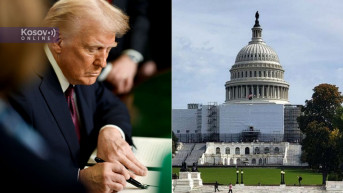
The results of the US midterm elections have changed the balance of power in Congress, but Kosovo Online’s interlocutors believe this will not significantly alter US foreign policy toward the Western Balkans. What they expect following the Democrats’ victories in the Senate and the House of Representatives is a change in regional dynamics, including greater insistence on fulfilling commitments agreed in the Belgrade-Pristina normalization dialogue and possibly a more favorable approach toward Kosovo among US lawmakers.
Written by: Ivana Sanjevic
US experts, including Edward Joseph of Johns Hopkins University, say that a Democratic-controlled Congress will increase pressure and call for a review of the Trump administration’s policy toward Serbia to date. Washington is expected to devote greater attention to stabilizing relations in the region, although analysts do not foresee major or rapid diplomatic initiatives in the near future.
Former State Department official Daniel Fried has predicted that the changes in Congress and the results of the recent elections in Serbia could create room for “more creative diplomacy” in the region. He believes Kosovo should also launch initiatives aimed at improving relations with Washington.
No tectonic shifts
The US congressional midterm elections will not lead to tectonic shifts in the United States’ approach or foreign policy toward the region, because foreign policy is conducted by the executive branch, led by President Donald Trump, said Petar Ivic of the Pupin Initiative. He noted that the election results could, however, affect the pace of confirmation of US ambassadors to Serbia, Bosnia and Herzegovina and Montenegro.
“The Trump administration has recognized Serbia’s importance as a key player in the region and has completely changed its approach. Under this administration, we have seen relations deepen, the launch of the Strategic Dialogue with Belgrade and the suspension of the dialogue with Pristina, so there is a strong possibility that these recognized interests will continue to shape policy and that cooperation will deepen,” he predicted.
Ivic pointed out, however, that Congress—and specifically the Senate—has authority over personnel appointments, which in the region includes the confirmation of ambassadors to Serbia, Bosnia and Herzegovina and Albania.
“The confirmation processes for the ambassadors to Serbia, Bosnia and Herzegovina and Montenegro are under way, and the administration has until January 3, when the new Senate with a Democratic majority takes office, to complete them. If that does not happen, the process would unfortunately have to start again from the beginning. The administration is aware of this, so we can expect the process to be accelerated and finalized,” Ivic told Kosovo Online.
Congress to push for commitments to be fulfilled
The shift resulting from the US midterm elections could change the dynamics of Washington’s approach toward the Western Balkans, as stronger congressional pressure on Belgrade and Pristina to fulfil commitments agreed under the normalization agreements can be expected from January next year, along with pressure on the US administration to reimpose sanctions on former Republic of Srpska President Milorad Dodik, according to Stefan Jovanovic of the Center for International Relations and Sustainable Development (CIRSD).
“At this point, Pristina has an opportunity to step up its lobbying efforts among Democrats, as we know that it has close ties with the Democratic Party in the United States. However, when it comes to Serbia and the normalization of relations, the State Department and the President have greater influence. A change in US foreign policy and its position on Kosovo can never be ruled out, but Albin Kurti’s government does not have good relations with the Trump administration,” he told Kosovo Online.
Amanda Thorp, Senior Associate at the Atlantic Council’s Europe Center focusing on the Western Balkans, holds a similar view, adding that implementation of commitments agreed in the Kosovo-Serbia normalization dialogue would be among the Democrats’ priorities.
She expects Democrats to engage on issues including new recognitions of Kosovo’s independence, NATO membership and progress on its European path, while also insisting that Pristina fulfil its obligation to establish the Community of Serb Municipalities (CSM).
“I expect Democrats to prioritize recognition of Kosovo, Kosovo’s membership in NATO, as well as the European Union accession process. At present, because of non-recognition, Kosovo cannot be a member of international organizations such as Interpol. I think that is a problem, a challenge and something Democrats will want to address in order to stabilize the region and support Kosovo,” Thorp told Kosovo Online.
According to her, the establishment of the Community of Serb Municipalities is a longstanding obligation, and because Kosovo Prime Minister Albin Kurti has not implemented that commitment, the process has reached an impasse.
“So, either he has to establish the CSM or there have to be new negotiations on the issue. At the moment, however, there is no movement whatsoever. It is stagnation. It is a problem. So he has to do it, and the United States must tell him absolutely clearly and unequivocally: ‘You have to establish the CSM,’” Thorp said.
Region awaits developments in Belgrade
Analyst Nexhmedin Spahiu does not expect sudden changes in US foreign policy toward Kosovo or the rest of the Western Balkans following the Democrats’ victory in the US congressional midterm elections.
Spahiu told Kosovo Online that he particularly did not expect major changes following the Students’ List’s rise to power in Belgrade, although this would affect political developments across the region because Serbia is the largest and most powerful country in the Western Balkans.
“America’s approach toward the Balkans is directly linked to who is in power in Serbia, as the key country in the region, and to the policies the new authorities in Belgrade will pursue,” he said. Spahiu added that “with Vucic, it was easier either to reach an agreement or end up in a war, while with the new authorities in Belgrade, neither is likely.”




comments