
New US Ambassador to Pristina: Continuation of current policy or hope for strategic dialogue?
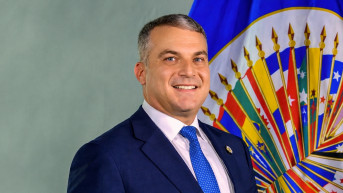
The nomination of Michael Bogachek as the new US Ambassador to Kosovo comes at a time when relations between Pristina and Washington are facing challenges. The resumption of the strategic dialogue still depends on meeting the conditions set by the US administration. Bogachek’s nomination raises the question of whether the arrival of a new ambassador will mark a new phase in US-Kosovo relations or whether the key directions of US policy toward Pristina will remain unchanged. Experts in Pristina are optimistic and say they hope relations will improve. In Belgrade, however, there is little expectation that current US policy toward Kosovo will change significantly, with observers noting that stabilization of relations with Serbia remains necessary for the strategic dialogue to resume.
Written by: Katarina Saicic
One thing is clear: not everything will depend solely on the personality of the new ambassador, but also on the willingness of Kosovo institutions to respond to Washington’s demands and rebuild trust in bilateral relations.
There has been public speculation that Bogachek’s selection may carry a message from US President Donald Trump, given the prospective ambassador’s extensive business experience. The US Embassy in Pristina welcomed his nomination as ambassador, although it remains unclear when the Senate will make its final decision and confirm the nomination.
Bogachek has more than 25 years of experience in healthcare, technology and institutional management, but no diplomatic career. If the US Senate confirms his nomination, he will take over the US Embassy in Pristina after the ambassadorial post has remained vacant for almost two years.
The previous US Ambassador, Jeffrey Hovenier, left Pristina in December 2024, and the Embassy has since been headed by chargés d’affaires.
Bogachek is an American entrepreneur and executive with a doctorate in bioengineering. He currently serves as Executive Secretary of the Organization of American States (OAS). In that position, he is responsible for overseeing various organizational sectors within the OAS, including general services, procurement, finance, human resources and information technology, as well as the Office of the Chief Risk Officer.
What could Bogachek’s experience mean for the Kosovo public? Experts in Pristina expect that the appointment of a new ambassador could contribute to the resumption of the strategic dialogue with Kosovo.
However, the appointment itself does not necessarily mean that this will happen. Significantly, on October 23, 2026, the US Embassy in Pristina reiterated that it expected the strategic dialogue to resume once the appropriate conditions were in place, including Kosovo’s fulfillment of its obligations toward the Serbian community.
This is an important indication that Washington has not abandoned its demands.
Nevertheless, analysts in Pristina welcomed Bogachek’s nomination as the new US Ambassador to Kosovo, describing it as a positive signal of the Trump administration’s engagement in the region and an opportunity to intensify relations between Pristina and Washington.
Best news
Former Kosovo Ambassador Syle Ukshini described the development to Kosovo Press as one of the best pieces of news for Kosovo, particularly in the current political and diplomatic circumstances, marked by developments surrounding the Specialist Court and challenges in relations with the European Union.
According to Ukshini, the role of the United States has been and remains crucial to Kosovo’s state-building process. He stressed that the institutions, the Ministry of Foreign Affairs, the Assembly and political parties should prepare for intensive communication with the new ambassador.
Ukshini believes that Kosovo should listen to and understand Washington’s expectations in order to create the conditions for resuming the strategic dialogue.
“Without a doubt, this is the best news at the end of the year, given the dramatic developments surrounding the Specialist Court and other developments concerning the European Union. This is good news coming from Washington. Without a doubt, we need to be clear—not about mythologized issues—but there is no question that the American imprint has been decisive in our state-building process. From this perspective, I believe that Kosovo’s institutions, the Ministry of Foreign Affairs, the Assembly and political parties should be prepared to establish intensive communication and listen to the new ambassador regarding Kosovo’s obligations in order for the strategic dialogue with the United States to be resumed,” Ukshini stressed.
Administration’s commitment
Political analyst Lutfi Bilalli views Bogachek’s nomination as evidence of the Trump administration’s commitment to this part of the Balkans.
According to Bilalli, the ambassadorial nominee’s managerial background could prove to be an interesting factor in the development of diplomatic cooperation and the advancement of domestic processes in Kosovo.
He said the new ambassador could provide impetus for a range of processes, not only with regard to the strategic dialogue but also in other areas, giving Kosovo institutions an additional opportunity to communicate directly with Washington’s representative and present their interests more clearly.
“This will deepen diplomatic cooperation and domestic processes. He will be a driving force and promoter of many processes. This will be useful in many areas, not only for the strategic dialogue. It will provide positive momentum and an incentive, because the Kosovo Government will have an opportunity to explain Kosovo’s interests directly and more clearly,” Bilalli added.
Continuation of current policy
Petar Donic, an associate at New Third Way, told Kosovo Online that the new US Ambassador, if confirmed by the Senate, would continue the White House’s current policy toward Pristina, with Kosovo expected to fulfill its obligations toward the Serbian community before the strategic dialogue could resume.
Donic recalled that the Kosovo administration led by Albin Kurti was known not to have the best relations with the White House and Donald Trump, as reflected in the fact that the strategic dialogue had been suspended and had not resumed pending fulfillment of conditions relating to the position of Serbs in Kosovo.
“That remains the case. A new person has been nominated who has experience in international organizations and, above all, experience in mining organizations. On the other hand, we should be realistic. The Americans have not suspended cooperation with Kosovo on energy and security projects,” Donic said.
He added that it would be important to monitor when the Senate confirmed Bogachek’s nomination, noting that he did not expect this to happen soon.
“We do not know whether the new ambassador will be appointed quickly enough before the situation in the lower and upper chambers changes. The Republicans suffered a major defeat in the midterm elections, which means that from the beginning of next year the Democrats will hold majorities in both the lower and upper chambers. Although he has been nominated, the ambassador must go through various hearings. We have seen that the Ambassador to Serbia, who was nominated some time ago, went through numerous hearings before various Senate bodies. Whether this can happen quickly enough remains to be seen. I am not optimistic because these processes take several months. On the other hand, it is even possible that the nomination will not make it onto the agenda if the Democrats decide so. It is uncertain. Trump accelerated the process bearing in mind that the situation in both chambers is changing dramatically,” Donic said.
Condition for strategic dialogue
Asked whether the new ambassador, if appointed, could exert pressure on Kosovo to fulfill its commitments, Donic said it was highly likely that there would be no major changes.
“According to current analyses, the new ambassador would accelerate Trump’s policy in the region, provided, of course, that he remains the ambassador. On the other hand, we should also consider the fact that the Republicans will have to adjust their policies to some extent in order to have a competitive political platform for the presidential election two years from now. We need to see what role Kosovo will play in that equation. US policy is like a tanker—it moves slowly. Policy has many layers. What was set out several years ago will not change significantly. This region is important, but not as strategically critical as some other parts of the world,” Donic said.
According to him, Trump has previously demonstrated that he places the greatest emphasis on the economy, making it unsurprising that he nominated someone with a business background for the post of US Ambassador in Pristina.
“Trump’s policy, both during his first term and now, has remained the same—‘economics before politics,’ meaning economic cooperation as the backbone and the creation of a bridge between the parties so that political cooperation can subsequently become easier. Trump has previously selected people from the business world because they are decisive and bring a new dynamic and new energy. Many of his nominees for senior positions in the administration have come from that background. There is nothing unusual or different about that in this context either. Nor should too much be read into the fact that the nominee is not a career State Department diplomat in terms of how much that could change. Nevertheless, the Americans tend to follow certain established paths, and in this particular case, if strategic dialogue is the framework they have chosen to pursue with Kosovo, as they have with Serbia, progress along that path will be expected. Part of that progress is the stabilization of relations with Serbia,” Donic concluded.
0 comments