
UN Security Council reform: Is there a model that works for everyone?
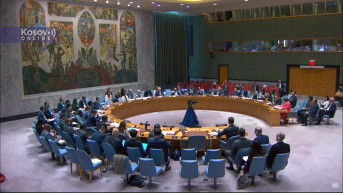
A United Nations Security Council with ten more members instead of the current 15? Two permanent representatives from Africa, plus two additional non-permanent members from the continent? Germany, Japan, India and Brazil joining the existing five major powers? The wish list for what the UN Security Council should look like today is a long one. Although some believe that an expansion of the Council is within reach, Kosovo Online’s interlocutors point out that any reform requires the green light from all veto-wielding members—and that such agreement does not exist. They also note that regional rivalries will be difficult to overcome when selecting any new members.
Written by: Dusica Radeka Djordjevic
There is virtually no disagreement that the world and its geopolitical realities are far removed from those of 1945, when the United Nations Charter was adopted. The question of what formula should be applied to ensure fair representation of the world organization’s members on the Security Council, while at the same time preserving the Council’s capacity to prevent conflicts and respond to threats to peace, was recently debated in the UN General Assembly.
United Nations membership has almost quadrupled since 1945, geopolitical realities have changed, and threats to peace have become more complex and interconnected, UN General Assembly President Khalilur Rahman of Bangladesh pointed out.
“Let us create a Security Council that is more inclusive, transparent, efficient, effective, democratic and accountable—one that people can trust and the world can rely on,” Rahman said.
One model for Security Council reform has been proposed by France. Under the proposal, the body would have 25 members, Africa would receive two permanent seats, and each member of the G4—Germany, Japan, India and Brazil—would also receive a permanent seat with veto power. France, which believes Security Council enlargement is within reach, is also promoting restrictions on the use of the veto in cases involving mass atrocities, an initiative supported by 128 UN Member States.
Russia, on the other hand, favors a Security Council of around 20 members and opposes initiatives that would undermine the prerogatives of the existing permanent members, including their veto rights.
African countries have long pointed to what they regard as a historical injustice toward the continent. At last month’s ministerial meeting of the African Committee of Ten (C10) in Tripoli, the participants reiterated the need to ensure equitable African representation on the Security Council, including two permanent seats with full prerogatives and two additional non-permanent seats.
For and against the French proposal
Mihajlo Vucic, Research Fellow at the Institute of International Politics and Economics, told Kosovo Online that there was agreement among United Nations Member States that the Security Council needed reform and that its membership should be expanded. However, he said it remained highly uncertain whether a consensus could be reached on which countries should ultimately become new permanent members.
Vucic said that France’s proposal for Security Council reform, which envisages increasing the number of permanent members and restricting the use of the veto in certain circumstances, enjoyed the support of an overwhelming majority of UN Member States, as well as that of another permanent Security Council member—the United Kingdom.
Nevertheless, he said reform could not be expected in the short term because the reasons Russia, China and even the United States had for opposing certain changes were enduring and related to their national security interests.
“The French have secured the support of the United Kingdom, another permanent member, for their initiative, so we can say that two of the five permanent members currently support the position that reform is necessary and that their proposals now coincide. Given the procedure for amending the UN Charter, which requires the consent of all five permanent members, that is not enough. Russia and China remain opposed and hold practically identical positions: as permanent members, they do not want to relinquish their veto power, nor do they want any potential new permanent Security Council members to be granted that right. They support enlargement, but at the same time favor a form of differentiation between the existing permanent members and any potential new ones,” Vucic said.
He explained that the French proposal did not call for abolishing the veto rights of permanent members, but rather for restricting their use in cases involving crimes such as genocide, mass war crimes and crimes against humanity, when Security Council action would be necessary. According to the French position, there would be neither a moral nor a legal basis for a permanent member to veto resolutions through which the Security Council sought to resolve such a conflict.
“The United States generally supports the proposal in terms of which countries should join an expanded Security Council, but it does not believe that those countries should be given veto power, nor does it believe that the United States itself should relinquish its veto as a permanent member, even in this limited form concerning mass atrocities around the world. Russia simply considers its Security Council veto to be, alongside its nuclear arsenal, its only strategic counterbalance to the collective West, which is currently effectively engaged in an indirect war with Russia. China likewise jealously guards the privilege it acquired when the People’s Republic of China took its seat on the Security Council and does not want to extend that privilege to other countries,” Vucic noted.
In addition, he said, China had no interest in seeing Japan become a permanent member because of the bilateral rivalry between the two countries, while Japan was included in the Franco-British proposal.
Russia, meanwhile, opposed Germany becoming a permanent member because it viewed Germany as a partner of the United States, with which Moscow currently had poor relations.
Veto power and the functionality of the Security Council
According to Vucic, if veto power were extended to a larger number of members, further dysfunction within the Security Council would be virtually inevitable.
“The veto has made the Security Council dysfunctional. Its current structure of 15 members, ten of which rotate and are non-permanent, is not actually that bad in terms of geographical distribution and the representation of power. The problem lies in the discriminatory distinction created by the different status of those five countries, which no longer represent the majority of today’s global community in any meaningful sense. If India or Brazil are not included, then in terms of population, economic strength and even military capabilities, those five countries no longer represent the majority of the world as they did in 1945,” Vucic explained.
Whether a reformed Security Council would function better, he added, depended on which proposal was adopted.
“The French proposal would considerably increase the number of members, but just as the General Assembly functions with around 190 states, decisions could also be reached here by voting. The problem, therefore, is simply to remove the blocking mechanisms—to eliminate the ability of one member to prevent a decision supported by everyone else, or at least by the majority. In my view, that is the essence of any genuine reform. Without that, we cannot speak of real reform. If the veto is retained, even if you have 45 members, you still cannot do anything if just one member objects,” Vucic said.
Pakistan opposes India, Argentina resists Brazil
Vucic also pointed out that it was often taken for granted that members of the UN General Assembly agreed on which countries should become new permanent members of the Security Council, with India, Japan, Brazil and South Africa most frequently mentioned. In reality, however, he said that was not the case.
“Within the General Assembly itself, there are groups of states that strongly oppose certain proposals because they are regional rivals of the countries concerned. Pakistan, for example, strongly opposes India obtaining a permanent seat, while Argentina opposes Brazil. They have even organized themselves into a kind of lobbying group that may vote against such a proposal in the General Assembly before the reform even reaches the Security Council, because the United Nations membership is quite divided over which countries should ultimately be included in an expanded permanent membership,” Vucic concluded.
Historian Vukan Markovic believes that the longer Security Council reform is delayed, the less the United Nations will reflect the demographic, economic and military-technological development of the contemporary world. He noted that the Security Council currently consisted of five countries from the Global North and ten members elected according to a formula that, in his view, essentially favored Europe and, to some extent, Latin America, while a vast proportion of humanity had only three or, at most, four seats on the Council.
Markovic pointed out that no reform decision could be implemented at the expense of the five existing Security Council members that hold veto power.
“Any decision that would deprive them of their veto power or in some way redistribute the veto within the existing Security Council will not be feasible,” he told Kosovo Online.
Given that many proposals for reforming the Security Council suggest that the African continent should have permanent representation on the body, Markovic said it was logical for Africa to be given a seat, particularly since Nigeria and Ethiopia were currently projected to be among the world’s most populous countries within the next 50 years.
Who can represent the interests of all of Africa?
Africa’s population growth, Markovic added, is exponential, while the Global North is experiencing population decline and a fall in natural population growth on a scale greater than ever before.
“It is logical for Africa to be given that seat, but the problem with Africa is that there is no single country capable of representing the interests of the entire continent in the way that, for example, the United States and the Soviet Union could in 1945, when the UN was established—one capitalist and one socialist country representing two models of development. If, for example, Nigeria were given a permanent seat on the Security Council with veto power, it is unclear how it would carry the weight of such a status, because it is an extremely heterogeneous country with inherent instability both domestically and in the region. Ethiopia, traditionally the most diplomatically influential sub-Saharan state, is also in a state approaching war, both internally and in relation to Somalia. As far as Mediterranean Africa and the Arab world are concerned, Egypt has always held the status of the dominant geopolitical power. We are talking about nearly a billion people gravitating toward that part of the world. The problem with Africa, therefore, is that it is not easy to determine which country should occupy that seat on the UN Security Council,” Markovic said.
He noted that there was also discussion in the literature about whether such a seat could rotate among countries.
“However, that formula has never been tested, particularly for a position of such importance, and it would require selecting individual countries that would share the veto. The fundamental problem is what happens if there is disagreement among the members between which the seat rotates. Africa is a natural candidate and absolutely deserves such a seat, and this is necessary for the future of the UN.
On the other hand, there are problems that do not appear likely to be resolved in the near future,” Markovic said.
A new UN headquarters
Given that Turkish President Recep Tayyip Erdogan recently called both for Security Council reform and for the United Nations headquarters to be relocated to Istanbul, Markovic said the problem with the proposal was that moving an organization of such size would be extremely expensive, while Turkey had too many internal and unresolved issues to be able to shoulder such a responsibility.
“Secondly, the UN has numerous centers and is already struggling with serious financial problems, particularly in its relations with major powers—above all the United States—which refuses to provide funding when the UN does something Trump does not like. So I think the proposal is unrealistic in the sense that it would be extremely difficult to implement, although it is interesting to consider the possibility of moving the headquarters somewhere more central, in the sense of being closer to all the other actors. Istanbul was the center of the Byzantine, Eastern Roman and Ottoman worlds, but I think that option is less feasible. Relocation to India might be more realistic, given that India is the country closest to actually obtaining a permanent seat on the Security Council,” Markovic said.

comments