
Kosovo as one of the key issues where a new model of relations among major powers could be tested
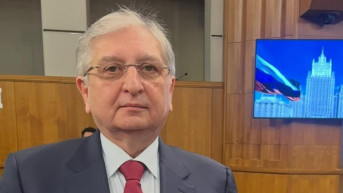
Written for Kosovo Online by Zeljko Sajn, Special Correspondent from Moscow
Sergey Lavrov’s conversation with journalists, as well as the discussion the author of this text had with him, represents more than routine diplomatic communication. It is a political signal of how Moscow views the Balkans in the context of global changes and, more importantly, how it sees the issue of Kosovo and Metohija as a test case for returning international law to the center of global politics.
Unlike the messages often sent by Vladimir Putin, colored by historical and geopolitical dramatism, Lavrov appears as a head of diplomacy who speaks the language of procedures, institutions, and rules. It is precisely this difference that gives weight to his words. While Putin marks the boundaries of conflict, Lavrov defines the potential space for agreement.
What is particularly evident in these talks is Russia’s readiness to cooperate with the United States in the Balkans. This readiness is not presented as a concession, but as a pragmatic choice within a new distribution of spheres of interest. In this framework, the Balkans—and especially the issue of Kosovo and Metohija—become one of the key arenas where a new model of relations among major powers could be tested.
In Lavrov’s messages, Kosovo and Metohija are not treated as a “settled issue,” but as an open international legal dispute. In this context, UN Security Council Resolution 1244 is not a matter of the past, but a valid legal foundation. Its constant emphasis serves a dual function: it is both a legal argument in support of Serbia and a reminder that the unilateral redefinition of borders runs counter to the system upon which the United Nations is based.
Particularly significant is the implicit message that returning the process to the UN framework is the only realistic perspective for preserving Serbia’s territorial integrity. Lavrov does not speak of quick solutions or imposed compromises, but of a long-term process in which the Security Council would once again become the central decision-making forum. This implies that the issue of Kosovo and Metohija should be removed from political pressure and ad hoc formats and returned to an institutional framework—the only one capable of addressing it.

0 comments