
Summary of the Week 31
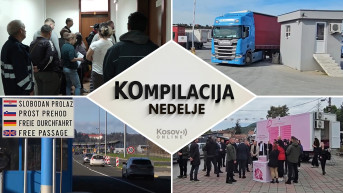
We didn't need a scanner to realize that we haven't made much progress this week either. Granted, some trucks carrying goods from Serbia have passed into Kosovo. And some Serbs with special passports, starting today, will be able to enter the European Union. Everyone else remains in the same positions.
It’s been known for some time that scanners are used for diagnostics and prevention. Sometimes, when necessary, they can also serve as an alibi—an explanation for why the ban on goods hasn’t been lifted at all border crossings.
“We want to buy scanners for our customs, but the Europeans also promised they would buy them for us. And the Americans too. Now, when that will happen, I don’t know,” said Kosovo’s Prime Minister Albin Kurti.
A gift, logically, cannot be sped up. Nor can the procedures until it arrives.
“He’ll now invent scanners, and then he’ll wait 11 months for them, which will actually turn into 22 months. And then he’ll invent something new again, and so it goes,” responded Serbian President Aleksandar Vucic to the explanations from Pristina.
The introduction of scanners as a topic isn't an invention, as it was cited as the reason for the ban on importing goods 15 months ago—though, as explained, no one has actually seen the reason, then or now. Dragisa Mijacic, coordinator of the Working Group of the National Convention for Chapter 35, commented on the situation:
"The decision by the Pristina government to lift the measures is as scandalous as the decision to impose them. Let me remind you," said Mijacic, "the decision was made verbally and has been enforced without any written records."
In addition to scanners, this week we also learned, during the Kosovo Government delegation’s visit to Leposavic, that a mammogram can be used both in medicine and politics. The most important thing, according to Deputy Mayor Marina Bogojevic, is to find an appropriate space.
"We plan to open a maternity clinic in the building that was recently vacated for us," Bogojevic announced, pointing to the building previously housing the Temporary Administrative Body.
Similarly, one by one, institutions in the north are being "freed." The next step is to free the residents from receiving social assistance. The director of the Center for Social Work, which is scheduled to be relocated tomorrow, warned:
"This is no longer about politics; this is about survival," said Natasa Nastic.
The fight for survival, along with the scrutiny of poor decisions by local authorities, as seen this week, can lead to arrests. Those protesting against the arrests made it clear they would not back down.
"A good number of us also protested, so by the same logic, we could all end up in jail," said Milica Rakic Andric, protesting as a citizen of North Mitrovica.
Those who don’t end up in jail could, as of today, if they wish, find themselves in the European Union. And without additional checks, visas, or scanners. Although they are the last in Europe to gain this right, it is still good news, according to Ambassador Danijel Apostolovic. After multiple announcements and delays, their right to free movement has finally made it into this week’s roundup.



0 comments