
Summary of the Week 29
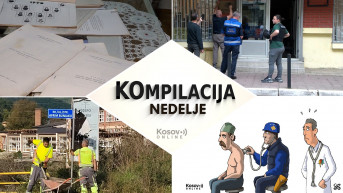
A Sunday like any other, except that some players have swapped roles. Some of them are still planning to take over someone else's positions, places, and tasks, while others have already been moved and replaced. Who managed to adapt to a place that doesn’t belong to them, and how?
Not everything works out when everyone sticks strictly to their job, so sometimes we try things differently. We switch roles and positions. For example, instead of being in Leposavic where it belongs, decades-old archival material is now in Pristina.
"Taking archival material from Leposavic is a kind of theft," says historian Aleksandar Rastovic.
Police officers should be responsible for addressing theft. But people say they don’t like to see them on every corner, not even those who sent them there. Prime Minister Kurti explains:
"We don't enjoy seeing special police on the streets, but they're there to prevent the worst from happening," says Albin Kurti.
Still, it will be a long time before there's agreement on what "the worst" actually is, and for whom. This was most evident during the anniversary of the Banjska incident. Choosing the right time and place for paying respects is not easy.
"Was it necessary to put up a plaque with the name of the fallen police officer precisely on the anniversary? I'm not sure," says German Ambassador to Kosovo, Jorn Rohde. He clarified that he's not sure it’s the path to reconciliation.
Opposition from Europe and the world can’t always halt plans. Sometimes, as in the case of the house of Xhafer Deva, personal motives, or even defiance, prevail.
"Since the opposition came from the Serbian community, it signaled to Albanians to persist, and they decided to restore the house using their own funds," explains historian Petar Ristanovic about these motives.
To meet everyday needs and secure a livelihood, citizens in the north require the old institutions. But for a whole month now, other people have been occupying those positions.
That’s why Mitrovica’s citizens are angry: "You can’t ask for and get something that never existed. Is that fair, is that normal?" asks one surveyed citizen.
Maybe it’s not fair, but it’s possible to obtain. Even for 99 years. That’s enough time for many plans to be realized and for messages to be clearly sent. At least, that’s what we conclude from the latest decision of the authorities in North Mitrovica.
"It’s about four parcels that have been designated as municipal property," says the President of the Municipal Assembly of North Mitrovica, Nexhat Ugljanin. Some institutions that will replace the old Serbian ones are already known. But not all of them yet.
We can sense from this week’s statements by Minister Sveçla that these selected and designated parcels and buildings won’t be the only ones to change their purpose.
That’s not a question for the police, says Dragisa Mijacic, Coordinator of the Working Group for Chapter 35.
"Through the Kosovo government's repressive policing system, a message is being sent to Serbs about whether they should have healthcare and under what conditions," explains Mijacic.
Currently, few can influence these conditions, or who will take on which role and what consequences this will bring.



0 comments