
Trump and the art of dealing with reality
Written for Kosovo Online by Srdjan Garcevic, founder of The Nutshell Times
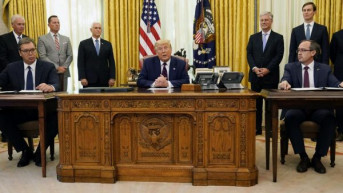
This week’s excellent analysis of the so-called Washington Agreement by Ivan Jakšić made me think about how the world has changed in the past four turbulent years. The deal, which places economic development as the basis for better regional relations, which Donald Trump wanted to broker between Belgrade and Priština, faced a lot of headwinds in Washington and Brussels. Its run-up led to the arrest of Hashim Thaci – who Joe Biden once famously proclaimed "George Washington of the Balkans" despite his war crimes and ties with the mafia - who was feared to have been intent on agreeing to anything with Trump in exchange for immunity. This practically cleared the way for Albin Kurti to take over the Priština regime and renege on any dialogue with Belgrade while constantly increasing the violence against the remaining Serbs in Kosovo.
Nevertheless, four years later, the US Ambassador to Belgrade, Christopher Hill, when pressed in an interview for the Serbian national broadcaster, sounded a lot like Trump when saying that Serbian and regional economic development is key and implying that Kurti is only being supported by stray elements of the US and transatlantic political machinery.
That would not be the first nor the last time Trump was proven correct in his political dealings after being derided as reckless, dangerous and delusional by the mainstream. The most famous instances of this are insistence on Europe picking up its bill for defence and relying less on Russia for cheap energy; however, to use a popular Trumpism, there are "many such cases" both in domestic and foreign policies.
Indeed, the reason behind the rise of Trumpisms in everyday speech is the same as the reason many of his policies were vindicated: He exposed the real workings of international and domestic politics and eliminated tired and untrue moralistic phrases like "rules-based international order."
In the context of the Balkans, that meant understanding that propping up ethnonationalist delusions of Priština and some other local elites is a costly and ultimately losing game for the USA and its allies in Europe, especially as it means constantly antagonizing most of the other, more economically, socially and geopolitically self-sufficient governments in the region. The former policy may have looked tempting in a world where the USA had no more pressing issues nor rivals and where the privatization of resources in Kosovo and Metohija could sustain members of the US elite, but less so in 2024. It could also be excused in the world where Priština elites did not manage to create instability which extends far beyond the Balkans, but not in the one where they are dealing with their developmental issues by exporting their excess human capital to Islamist plots or gangs ravaging Europe.
While these issues seem to be increasingly clear even to the former Kurti boosters, they still seem to lack the characteristic executive panache that made Trump world-famous in The Apprentice: to decisively tell "you're fired!” to those causing havoc. Therein, of course, lies the difference between the life-long mandarins and private sector executive types: the former think somebody else can wait and bear the costs of their indolence, while the latter know that it will ultimately be them bearing the expenses.



0 comments