
What does the new meeting between Vucic and Macron bring?
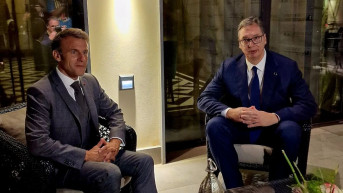
"If Emmanuel Macron has decided to take the fate of Europe into his own hands and show that he is a man committed to principles, his relationship towards Serbia and Vucic's arguments is an excellent opportunity to manifest this in action."
Prepared by: Milos Garic
In what ways will Serbia and France help each other further develop their strategic partnership? Can Presidents Aleksandar Vucic and Emmanuel Macron stop and reverse the current negative processes in the Balkans? Will Paris prevent the weakening and collapse of European institutions and take a leading role in the future of Europe? What will the continent look like after the war in Ukraine?
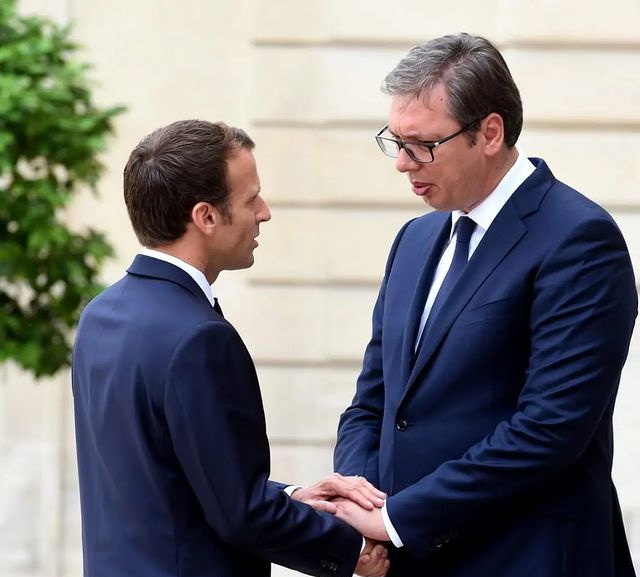
In the most complex international circumstances of the 21st century, the President of Serbia travels to Paris today for a two-day visit with his French counterpart, and their 20th meeting, due to the aforementioned questions, attracts great attention, not only in France and Serbia.
The French newspaper "Le Figaro" in announcing Vucic's arrival states that the discussion will focus on strengthening the cooperation between the two countries in defense, energy, and artificial intelligence, as well as on Serbia's European integrations and relations between Belgrade and Pristina.
There are many difficult topics, and time for the whole of Europe to find the right answers is running out. Both Vucic and Macron see very well where the planet is "sliding" and how their countries can further be affected by turbulent processes. The old friendship between the two nations and countries can be a good path for a better future. The stakes are huge.
On one hand, Vucic is defending national and state interests at a time when a hundred parameters are turned against Serbia, which is, by its significance and position, a key country in the Balkans. On the other hand, Macron, evidently, has the idea to impose his political personality and his political ideas as the leading ideas in Europe, and thereby, in some ways, in the world.
To what extent and in what way both leaders will succeed in their intentions, of course, depends not only on the two of them, but the degree of mutual understanding and joint effort can greatly contribute to achieving their goals.
Historical Character of the Meeting
It has been just over a century since the world was also breaking over the back of Serbia and when the verses from the title of this text were created, and political philosopher Dragoljub Kojcic agrees that the current meeting between Aleksandar Vucic and Emmanuel Macron has historical significance.
"History sometimes arranges for chess matches of epochal significance to be organized. I think that, this time, the meeting between Vucic and Macron has that character. Why? Because it involves two top players and two top political intelligences in the world today. Emmanuel Macron has recognized that the principles of the new international politics, if the world remains as it is, are actually going to be tested by the fate of Serbia. Because Serbia has done nothing to deserve being a pariah, being discriminated against, nor to be segregated, after all. On the contrary, Serbia alone promotes what represents the future of the world, which is the validity of the international public order. Macron recognizes this. And it's not just about the traditional relations between Serbia and France, which have had their ups and downs. I think Macron wants to show that he is a man committed to principles, which should lead the future of Europe. Serbia and Vucic's policy are the best way for him to manifest this," explains Kojcic for Kontekst.
"One of the important issues that the President of Serbia will open during the talks in Paris will be the attempt by some countries to 'push' Kosovo into its membership against all the principles of the Council of Europe.
'The Council of Europe is on the verge of embarrassing itself in the face of history because it changes the rules of the game from the moment the so-called Kosovo applied for membership. This isn’t done even in a village football match. Once the game starts, the rules do not change. From the condition that a new member's admission to the Council of Europe be voted on by consensus, they have lowered it to two-thirds because they estimated they have such a quotient, and if necessary, 27 percent support would have been the requirement. They would set that as the condition to what extent does that relativization of logic, law, dignity, and ethics in their minds go. But, as for the Council of Europe, we must understand and state that there are other obligations between member countries of the Western alliance, NATO, the European Union, and so forth. And nothing here is simple. Nor is Macron a complete master of situations, after all, he follows some logic of his own,' Kojcic notes.
Preventing the Council of Europe's Embarrassment
However, he emphasizes that Macron will find it very hard to dismiss Vucic's arguments.
'I do not know and am not sure if Macron can influence the Council of Europe, but I am sure that he must accept Vucic's argumentation. Vucic's argumentation is valid not only for this case, but it is actually a principle of validity for all future decisions. So, if Europe and the world want to survive, they will have to adhere to Vucic's arguments. This isn't a panegyric to Vucic, simply that's how it is, he has opted for such a policy. On the other hand, what I would expect Macron to consider are those three conditions that were placed before Pristina, which they then abandoned. As it was once said, standards before status, and then it was overlooked in 2008,' Kojcic reminds.
He points to the fact that three conditions were set for Kosovo's admission to the Council of Europe.
'Returning the land to the Decani Monastery, forming the Community of Serb Municipalities, and the third condition was the annulment of the illegal expropriation in Northern Kosovo. Instead of the Council of Europe sticking to the conditions for the so-called Kosovo and Kurti himself, it turned out that Kurti is conditioning them, saying, when you admit us, then we will fulfill the requirements. Only a perverted mind can accept such a relationship. That a great Council of Europe, which represents and in some ways is the political whole of the continent, accepts conditioning and blackmail by a minor, moreover, an illegal politician from the south of Serbia,' Dragoljub Kojcic points out.
He especially emphasizes the role of reporter Dora Bakoyannis.
'I had the opportunity to meet Dora Bakoyannis. So, it's surprising and really won't reflect well on her the report she submitted to the Political Committee of the Council of Europe. She is the direct descendant of a great Greek politician who determined the contemporary policy of Greece, was the greatest Serbian friend, Eleftherios Venizelos. She is his direct descendant, I believe his great-granddaughter. When the Serbian army was going through its ordeal in the First World War, he enabled them to cross into Greece and said that magnificent sentence, when some Germanophiles in the Greek parliament were against it. Refusing to leave the Serbian army in the lurch, he said one epic, ancient sentence - we are too small a nation for such a great crime,' Kojcic concluded.
Listening in Pristina, Berlin, London
Historian Aleksandra Kolakovic primarily focused on the economic themes of Vucic and Macron's meeting in Paris.
'Economic themes will dominate, especially those related to military cooperation, but they are also significant in a political sense. Of course, when we observe that this is actually the 20th meeting of the two presidents, it shows a significant continuity in communication between the two countries. With these projects that are currently active and indicated, this is very significant for further positioning of Serbia, but also for positioning France in terms of international relations. In the context of France, for its position in the Western Balkans, where it has shown exceptional interest since 2019,' Kolakovic notes.
She points out different views on Kosovo and Metohija.
'We know that France recognized Kosovo's independence, and in that context, I believe France will remain in that stance. Of course, it's known that the Serbian stance is different, and I think that conversation will definitely be directed as these latest events in Kosovo and Metohija and numerous problems, and this question of the Council of Europe, namely Kosovo's entry. Of course, and the further development of dialogue between Belgrade and Pristina. On the other hand, Eurointegrations are a dominant topic. I believe there will be discussions in the context of aligning Serbia's foreign policy with the European Union, especially around the war in Ukraine,' Kolakovic highlighted.
In any case, the meeting of Vucic and Macron in Paris, besides in France and Serbia, will be analyzed carefully in the neighborhood, especially in Pristina, Zagreb, and Sarajevo, and of course in Berlin, London, Washington, Moscow, and Beijing.

comments