
Berisha: The rights of Albanians are not endangered – issues are not resolved in Washington, but in Belgrade

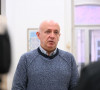
Minister for Human and Minority Rights and Social Dialogue of Serbia, Demo Berisha, said that human rights, including minority rights, are not being violated in Serbia and that there is no question of the rights of Albanians being endangered, stressing that the future of Albanian rights in Presevo, Bujanovac, and Medvedja is not decided in Washington, but through dialogue in Belgrade.
Commenting on the draft law proposed by Republican Congressman Keith Self on the position of minorities in Serbia, which was adopted by the Foreign Affairs Committee of the US House of Representatives, Berisha noted that this is only the beginning of a process and that it remains to be seen whether the act will ultimately be adopted at all.
He added that the proposal does not relate exclusively to the rights of Albanians in the “Presevo Valley”, but addresses human rights in Serbia in general, with a special focus on the “Presevo Valley”.
“As someone who heads the Ministry for Human and Minority Rights and Social Dialogue, I can say with full responsibility that there are no violations of either human or minority rights in Serbia. There are certain elements that should be raised to a higher level. But when you look at which issues are emphasized in that proposal, it is clear that this is an attempt at politicization,” Berisha told Kosovo Online.
Regarding the issue of address passivation mentioned in the act, he explained that this is a procedure applied to all citizens of Serbia, not exclusively to Albanians.
“Address passivation does not mean the loss of the right to housing. It implies a temporary interruption, because the legislator has allowed that within a certain period of eight or 20 days, when you appear before the competent state authority, namely the Ministry of Interior, you can regulate your status. However, at this moment we are facing a lack of interest from citizens of Serbia living in the areas of Presevo and Bujanovac. That is why they have raised this to the level of a political issue,” Berisha explained.
On the issue of recognizing diplomas issued by the University of Pristina, he recalled that this matter falls under the jurisdiction of the Serbian Ministry of Education and has been regulated through dialogue.
“For those diplomas, the Office for Kosovo and Metohija and the negotiating team reached certain solutions in talks with Pristina and Brussels that were acceptable to Serbia. This means that if you have a diploma from that university, you submit it to Brussels, which verifies it and forwards it to Belgrade for recognition. It is not true that we do not recognize these diplomas at all. What we do not recognize is the direct relationship insisted upon by the authorities in Pristina and those currently holding political positions in Presevo, Bujanovac, and Medvedja,” Berisha emphasized.
Recalling that Ardita Sinani, who heads the Municipality of Presevo, is also an adviser to Kosovo Prime Minister Albin Kurti, while Ragmi Mustafi is an adviser to Besnik Bislimi, Berisha pointed out that there is a direct “spillover of politics and drawing of lines” by creating such issues in the “Presevo Valley” with the aim of exerting pressure on the Serbian community in Kosovo.
He stressed that there is no question that the rights of Albanians are endangered in Serbia.
“To resolve your issues, you must cooperate with state institutions. If you do not cooperate, then we have a problem. We have the other side that does not want dialogue. Specifically, since I became minister, on four occasions I have sent a written invitation to the president of the National Council of the Albanian National Minority to attend a meeting where we would put on the table the issues troubling that Council,” Berisha said.
He noted that he himself is an Albanian heading a ministry, which demonstrates how democratic Serbia is.
“I have no problems whatsoever because of my origin. On the contrary, I have an advantage, because I have extremely good relations with my colleagues. It is easier for me to talk with any community than it would be for someone from the majority population,” Berisha said.
In a conversation last week with the Head of the OSCE Mission to Serbia, Marcel Pesko, the minister pointed out the absence of dialogue with representatives of the Albanian minority and asked him to mediate and persuade the National Council of the Albanian community and political structures to respond to the invitation for talks.
Berisha emphasized that there is no problem with Bujanovac, where the mayor is Arber Pajaziti, whom he described as cooperative, recalling that the municipality has a multiethnic government.
“In Bujanovac, Albanians and Serbs are again governing together after 22 years, and this has proven to be positive. Problems placed on the table are resolved quickly,” Berisha said.
He also recalled that he had sent a public invitation to the presidents of the municipalities of Presevo and Bujanovac to provide personnel, in line with decisions adopted by his ministry and the ministries of justice and foreign affairs, who would be prepared for inclusion in the judiciary, prosecution, and foreign service, but that there had been no response.
“You cannot say that Albanians are not included in the system at the level of central government if you do not participate. There is no trampling of human or minority rights when it comes to Albanians in the ‘Presevo Valley’; there is only a lack of expressed willingness to cooperate,” Berisha stressed.
Therefore, he said, it is time to enter into dialogue and see which issues can be resolved, while leaving those issues on which there is no agreement for later.
The minister also pointed to two problems.
“One is dangerous. The statement by Ragmi Mustafi, vice president of the Municipal Assembly of Presevo, given after the adoption of the draft law in the US, in which he spoke about what Serbia should expect. He clearly and precisely said that this was how Kosovo acted with Robert Dole and other American politicians in the 1990s, raising such issues that led to the outbreak of conflict in Kosovo in 1998. That is a dangerous thing,” Berisha warned.
On the other hand, he said, it is necessary to be aware of and accept the fact that Serbs also live in the area of Presevo, and that their rights must also be represented in the municipality. Currently, he noted, there is only one councilor from the SNS (Serbian Progressive Party) in the Municipal Assembly of Presevo.
“Linking the issues of Kosovo and the ‘Presevo Valley’ is an extremely wrong move and does not contribute to establishing peace in that area. Member of Parliament in the Serbian National Assembly Shaip Kamberi must contribute more to coexistence in these two municipalities, Presevo and Bujanovac. I am not speaking about Medvedja, because there is a smaller number of Albanians there and they live more harmoniously compared to these two municipalities. Kamberi must not keep Albanians ‘locked in’. They must participate in all events related to cooperation with Belgrade. The future of Albanian rights is not resolved in Washington, but through dialogue in Belgrade and with the competent ministry,” Berisha said.
He emphasized that the positions of the President of Serbia, the Prime Minister, and himself as the competent minister are well known, namely that there is no problem that cannot be resolved through dialogue.
“That is the message I would send to my compatriots. They must be much braver. I call on them once again to find the courage to resolve their problems with Belgrade, and not with Pristina, Tirana, or Washington. The problem is resolved in Belgrade, at home,” the minister stressed.
Drawing a parallel with the position of Serbs in Albania, Berisha noted that there were two waves of assimilation in that country, one in 1933 during the time of King Zog and another in the 1950s during the rule of Enver Hoxha.
“We know the problems facing the Serbian community in Albania. We are in contact with the Serbian association ‘Moraca-Rozafa’ in Shkodra. We know about Ecrem Suljevic in Fier. We will have an initiative whereby, since as a ministry we have mixed commissions dealing with minorities with Croatia, Hungary, Romania, and North Macedonia, we will propose to Albania the establishment of such a body as well,” the minister announced.
However, Berisha pointed out that the fact should not be ignored that Albania at one point ceded its territory while the war was ongoing in Kosovo, and that the plan and program of Albin Kurti and his Self-Determination Movement envision as a final goal unification and the creation of a “Greater Albania”, which would also include parts of North Macedonia.
He also recalled several moves made by the Albanian government regarding relations with Kosovo, including the abolition of border controls, the cession of maritime territory for a customs union, and joint exercises. He also mentioned the military alliance of Albania, Croatia, and Kosovo, which, he said, when viewed as a whole, has a clear objective, as these are countries that would like to weaken Serbia.
“At this moment, it is extremely important for us to know what they are planning, and we do know that. In that case, we will take the necessary measures, regardless of the policy pursued by Serbia, which is a policy of peace. Everything Serbia does is aimed at preserving peace in the region. But there are certain indicators that draw us into other considerations. We should not forget the Turkish arming of the KSF, the attempt to open an ammunition factory in Srbica, and drones. They are not arming themselves in order to defend themselves in any sense, because they have no need for that, since Serbia is certainly not preparing to attack anyone at this moment. At the same time, everyone must be clear and aware of the fact that Serbia will not allow what happened in 2004 to happen again to the Serbian community in Kosovo,” Berisha concluded.


0 comments