
Blanár: International law must be respected, which is why Slovakia does not recognize Kosovo
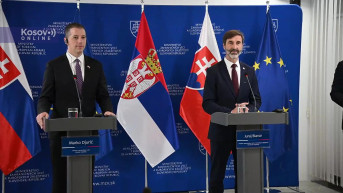
Slovak Foreign Minister Juraj Blanár stated today, following a meeting with Serbian Foreign Minister Marko Djuric, that Slovakia firmly maintains the position that international law must be respected and that, for this reason, it does not recognize Kosovo's independence, viewing it as a violation of Serbia’s territorial integrity. Djuric stressed that Serbia’s territorial integrity and sovereignty are no less important than the territorial integrity and sovereignty of any other country.
Speaking at a joint press conference with Djuric in Bratislava, Blanár said that both countries share the view that there can be no exceptions to international law.
“International law must be respected without additional explanations because it either applies or it does not. That is why Slovakia does not recognize Kosovo,” Blanár said.
He added that Slovakia regards the recognition of Kosovo’s independence as an undermining of Serbia’s territorial integrity.
“We believe that this issue can only be resolved once Pristina and Belgrade reach an agreement through dialogue, as well as within the framework of European integration,” Blanár stated.
Blanár emphasized that Slovakia would be prepared to recognize Kosovo’s independence only if such an arrangement were agreed upon between Belgrade and Pristina, and that recognition would not be possible under any other circumstances.
“We are prepared to recognize Kosovo only if Belgrade and Pristina—or Belgrade and Kosovo—reach such an agreement. Otherwise, no,” Blanár stressed in response to a journalist’s question about whether Slovakia faces undisclosed pressure, particularly in light of remarks by EU Commissioner Marta Kos, who recently described developments among states recognizing Kosovo as encouraging and said this formed the basis of her optimism.
Blanár said it was unclear to him on what basis Commissioner Kos had made such a statement. He added that Slovakia supports Serbia and other Western Balkan countries on their path toward membership in the European Union.
“At the same time, all related rules must be fulfilled, and everything must be based on international law and respect for international legal norms,” Blanár said, recalling that Slovakia is one of the five EU member states that do not recognize Kosovo’s independence.
He reiterated that Slovakia considers Kosovo’s independence to be a violation of the territorial integrity of the Republic of Serbia and added that other EU member states should also reflect on this issue, particularly in relation to other ongoing international conflicts.
“The dialogue between Pristina and Belgrade is extremely important both for the integration process and for regional security. It is absolutely crucial, yet the dialogue is in a certain sense frozen. Commitments agreed by one side or the other are not being implemented, resulting in political instability. This is a critical issue recognized by both Serbia and the European Union, and there is an awareness that the dialogue must continue,” Blanár stressed.
“There Are No Open Issues Between Serbia and Slovakia”
The Slovak foreign minister noted that relations between Serbia and Slovakia are remarkably close and burdened by no outstanding issues.
He highlighted that Slovaks living in Serbia, whose ancestors left Slovakia some two hundred years ago, have managed to preserve their language and culture to this day, thanks in part to the support of successive Serbian governments, including the current one.
“There are projects that the Government of Serbia has presented for the Slovak community, covering infrastructure and other areas. One of the most important is the construction of a Slovak House, where they will be able to preserve their identity,” Blanár said.
Speaking about Serbia’s EU accession process, Blanár said Slovakia believes that the obstacles coming from the European Union are more political than substantive in nature. He recalled that Serbia has opened 22 of 35 negotiating chapters, provisionally closed two chapters, opened two clusters, and has been ready for more than five years to open Cluster 3.
“It Is Not Good That Cluster 3 Has Still Not Been Opened for Serbia”
Slovakia believes it is not positive that Cluster 3 has still not been opened for Serbia, Blanár said, adding that this creates negative feelings among citizens.
He also stressed that Slovakia opposes any shortcuts for countries aspiring to join the European Union.
“We oppose double standards. We want to preserve the principle under which all candidate countries, including Slovakia itself, progressed through the accession process. Therefore, we support the Western Balkan countries and the support mechanisms the European Union has presented for them,” Blanár said.
He added that initiatives such as the SEPA payment system, which can significantly simplify trade among these countries, as well as the planned implementation of roaming arrangements, are important steps forward.
According to Blanár, Slovakia’s ambition is for the Western Balkan countries, including Serbia, to become EU members in line with promises previously made to them and in accordance with all established rules and procedures, without shortcuts.
He stressed that Serbia is ready to open Cluster 3 and noted the impression that political willingness to move the process forward appears to be lacking, especially when compared to other countries whose accession processes, in Slovakia’s view, seem to be progressing more quickly.
“We do not like the principle of double standards. If a country fulfills all the expected criteria, there should be no obstacles to moving forward. We always insist on a fair approach and advocate streamlining the process by combining certain unavoidable voting procedures in order to accelerate accession,” Blanár said.
He added that such reforms could reduce the number of votes required by as much as one quarter.
“If I am not mistaken, as far back as 2003 it was being said that the Western Balkan countries should become members of the European Union. Some of these countries submitted their applications more than twenty years ago. Only one Western Balkan country has joined so far, and that was Croatia. We clearly see obstruction, particularly in the fact that Cluster 3 has not been opened for Serbia despite its readiness for many years. We consistently raise this issue, including at meetings of the Friends of the Western Balkans group,” Blanár emphasized.
According to him, creating precedents through the application of double standards is not beneficial.
Referring to the EU Growth Plan, he noted that Serbia had received certain observations but had also demonstrated readiness to address them.
“In my view, the issue is not Serbia but rather the obstacles coming from the European Commission,” Blanár added.
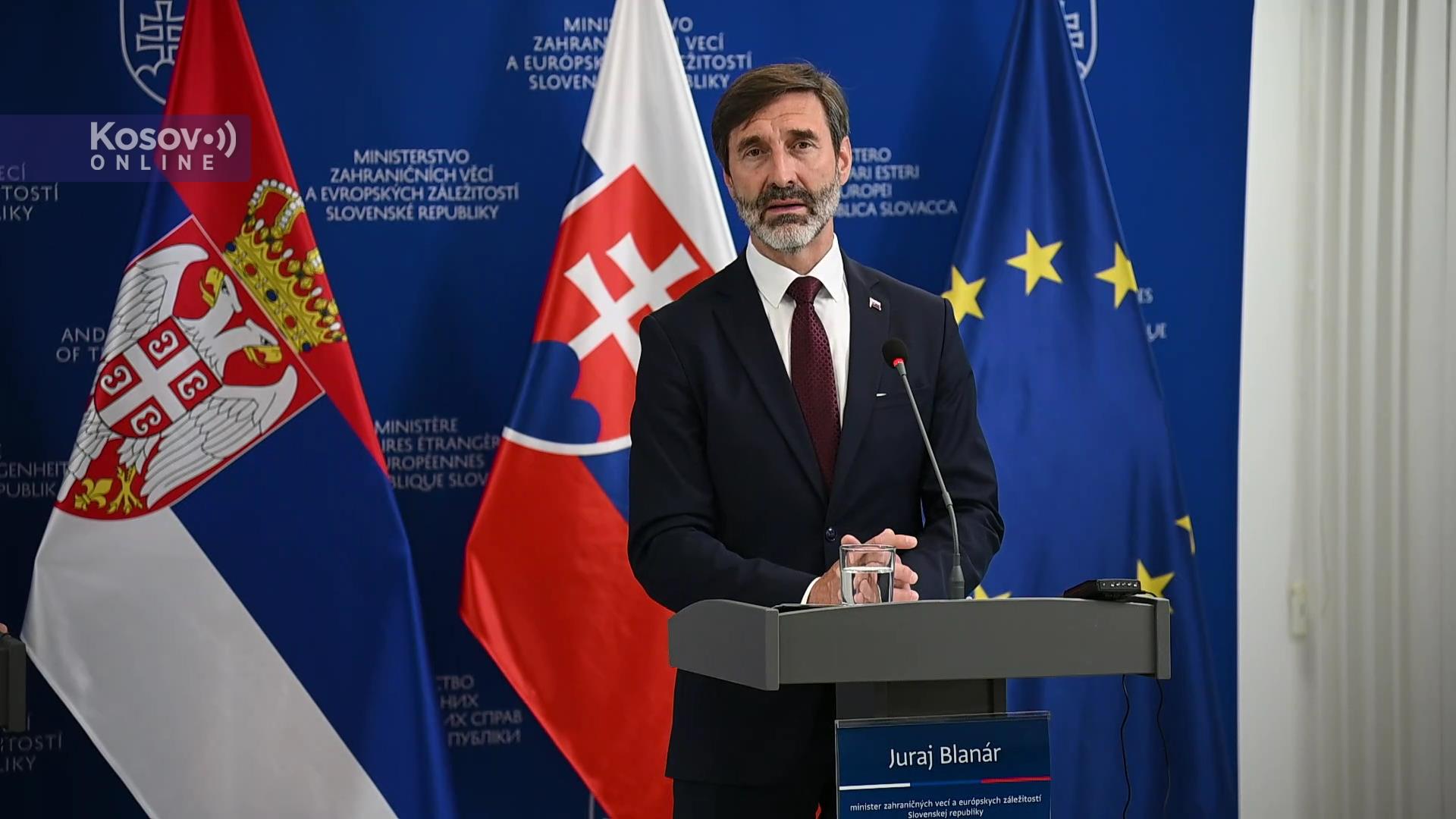
Speaking about economic cooperation, Blanár said relations between Serbia and Slovakia are particularly good and have reached a satisfactory level.
According to him, annual trade between the two countries has exceeded one billion euros.
“We believe the potential is much greater. We already see positive examples. I would therefore like to thank Serbia for supporting the investment by Tatravagónka in Subotica, where more than five hundred new jobs have been created,” Blanár said.
He also noted that Slovakia was the first country to sign an agreement on participation in Expo 2027 Belgrade and said that its pavilion would offer many interesting attractions.
“We have appointed a commissioner to present our participation in Expo 2027. We also discussed making visible something that unites us, namely our shared aspiration to have naïve art included on the UNESCO list,” Blanár said.
Regarding the United Nations Security Council, Blanár said Slovakia is prepared to support Serbia’s candidacies so that the two countries can support one another both at the highest international level and bilaterally.
The ministers also discussed closer cooperation between their embassies, enabling both countries to become more visible and active in regions where they maintain diplomatic missions.
Serbian Foreign Minister Marko Djuric stated that there is not a single Serb who is not grateful to friendly Slovakia for respecting Serbia’s territorial integrity and sovereignty, emphasizing that Serbia’s territorial integrity and sovereignty are no less important than those of any other country.
“The Same Principles Must Apply Everywhere”
Speaking at the joint press conference, Djuric said that discussions in Bratislava had also focused on shared values regarding respect for international law.
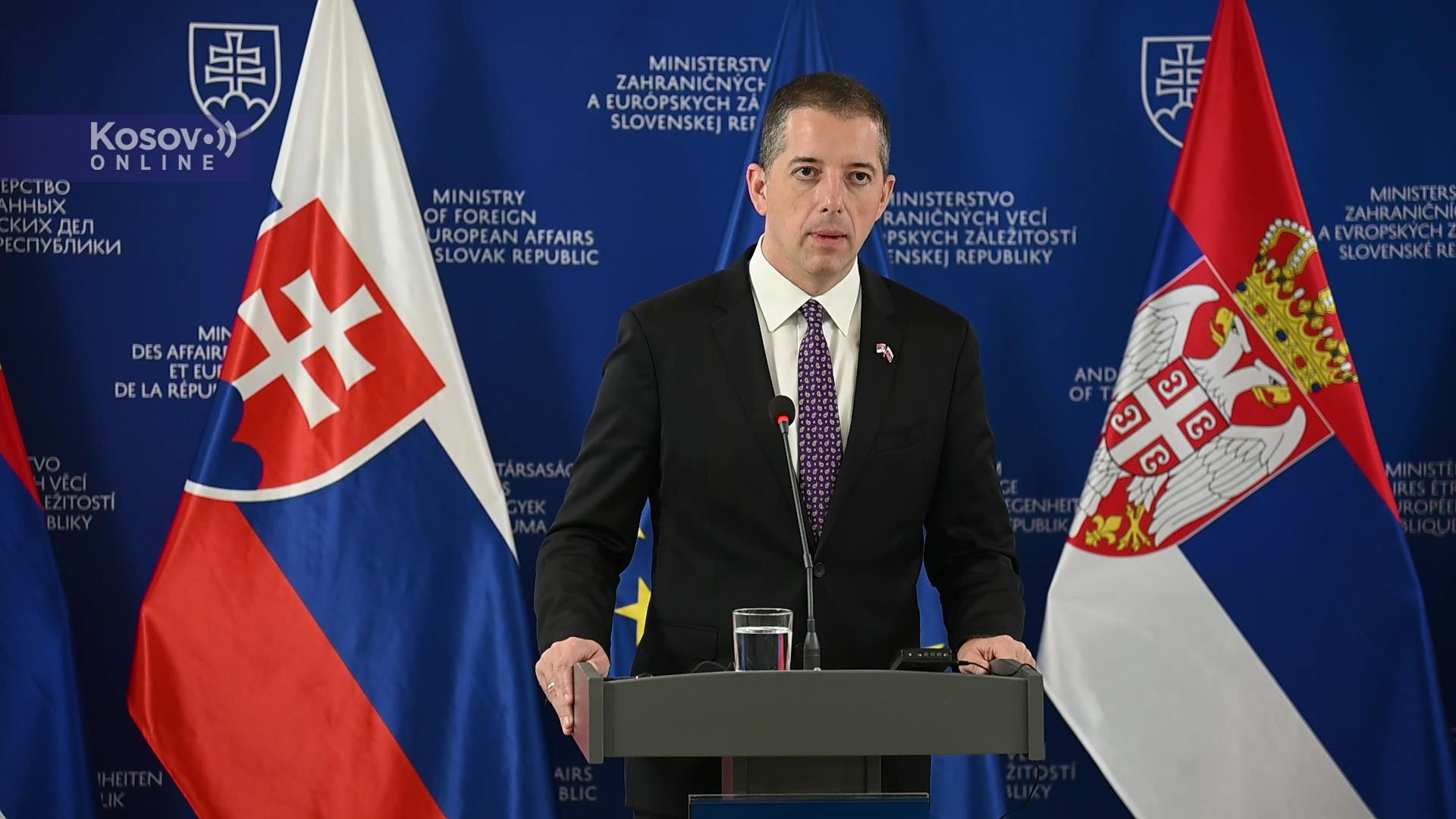
“I believe there is not a single Serb who is not grateful to our Slovak friends for supporting Serbia’s territorial integrity and sovereignty. Our territorial integrity and sovereignty are no less important than the territorial integrity and sovereignty of any other European country, and the same principles must apply everywhere—or not at all—as we concluded during our discussions,” Djuric said.
He added that Belgrade remains committed to dialogue and to resolving all outstanding issues through the EU-facilitated process.
“Of course, we also use every opportunity to inform our friends about the difficult position of the Serbian people in Kosovo and Metohija,” Djuric stressed.
He thanked Slovakia for its consistent support for Serbia’s European integration process, describing Slovakia as one of the strongest advocates of EU enlargement in the Balkans.
“I believe it is in the interest of the entire European Union, and certainly in the interest of our country, which is undertaking significant reforms, for both the Balkans and Serbia to become part of the EU. I presented our view that opening the region to the common European market and, in the future, to the Schengen area would strengthen interethnic and economic ties and contribute to regional stability,” Djuric said.
He emphasized that only a Balkan region fully integrated into Europe can make its full contribution to the development and growth of the continent.
“The accession of our region to the European Union could have long-term positive stabilizing and economic effects across the entire continent,” he said.
Djuric noted that they had also discussed ways to further strengthen the role of the Slovak community in Serbia as a bridge between the two countries through joint projects undertaken by Serbia and Slovakia, such as the Slovak House.
“Serbia is firmly committed at the highest political level — by President Aleksandar Vučić as well as by all members of the Government — to supporting the swift implementation of the Slovak House project in Serbia. I would like to emphasize that Slovak citizens in Serbia fully enjoy their rights, and we take great pride in their heritage. I would also recall that, through our joint efforts, the naïve art and painting tradition of our Slovak fellow citizens has been inscribed on UNESCO’s List of Intangible Cultural Heritage, which is a source of pride both for Slovakia and for everyone living in Serbia,” Djuric said.
Speaking about cooperation between the two countries’ diplomatic networks, the Serbian foreign minister noted that it would make perfect sense for Serbia and Slovakia to explore sharing diplomatic premises and coordinating joint activities in countries where both have interests, whether in Africa, Asia, Latin America, or elsewhere, in order to enhance efficiency and strengthen their diplomatic presence.
According to Djuric, economic cooperation between Serbia and Slovakia is highly positive and beneficial for both countries, generating significant revenue for both the Serbian and Slovak budgets.
He highlighted the Tatravagónka project in Subotica, which has created 500 new jobs in Serbia, and added that other Slovak investments are also being recorded throughout the country.
The Serbian foreign minister further announced that a meeting of the Joint Economic Committee would be convened in the near future to discuss opportunities for joint engagement in third-country markets.
“This has truly been an exceptional and friendly visit, marking another important chapter in the development of our bilateral relations. I am convinced that, at a time when the European continent finds itself at a crossroads, the future lies in stronger connectivity and closer cooperation between countries such as Slovakia and Serbia, which share not only many common historical values but, even more importantly, a common future,” Djuric stated.
“Attempts Are Being Made to Influence Domestic Political Relations”
Asked what specific steps Belgrade must take in the near future in order to achieve meaningful progress in the European integration process, Djuric said that EU membership is a strategic national priority for Serbia, but also a matter of overall European security, economic development, and stability.
“I truly believe that only a Europe that includes all the countries of the Balkans can be considered complete. However, I must be entirely candid in my response. I believe that certain political circles in some member states find it tempting to ideologize the accession process and, through political conditionality and decisions regarding membership consent, attempt to influence domestic political developments in our country. This is why we are particularly grateful to our Slovak friends, who base their approach to enlargement in the Balkans on objective and merit-based criteria and who consistently support the membership aspirations of both Serbia and other countries in the region,” Djuric said.
He added that compliance with accession criteria should be assessed exclusively on the basis of performance and results. According to him, if EU enlargement were evaluated solely on merit, there would be no doubt that Serbia should be among the first new member states.
The creation of any form of “sanitary corridors” or the selective separation of countries along the accession path, he said, would contribute neither to greater regional harmony nor to stronger public enthusiasm for EU membership.
“Serbia clearly sees its future within the European Union. Our President will attend the summit with European Union leaders to be held in Montenegro next Friday, and we aspire to be among the first new members of the European Union,” Djuric stated.
Following their tête-à-tête meeting at the Ministry, Djuric and Blanár were joined by their respective delegations for a working lunch.
Earlier today, Minister Djuric arrived in Bratislava for a one-day official visit to Slovakia.

comments